Sweet recipes made with coconut milk
You’re making porridge, chia pudding or a homemade dessert and want culinary coconut milk that’s explicitly reduced-fat, rather than automatically swapping it for a plant-based drink.


For a recipe that calls for culinary coconut milk, choose a reduced-fat version and compare its nutritional values before buying. If you’re looking for something to pour over cereal or blend into a smoothie, consider coconut plant-based drinks instead. Bjorg’s unsweetened coconut drink and its culinary coconut milk have very different fat contents, and they don’t serve the same purpose in a recipe. The word “light” isn’t enough to tell you how much sugar a product contains, either.
You’re making porridge, chia pudding or a homemade dessert and want culinary coconut milk that’s explicitly reduced-fat, rather than automatically swapping it for a plant-based drink.
You mainly want a product to pour or blend. A coconut plant-based drink may suit the way you plan to use it; compare its fat and sugar content with the other products you’re considering.
You’re looking at the fat and sugar content of the coconut product separately, as well as the ingredients you’ll be adding to breakfast, such as granola or syrup.
First, decide whether you need a cooking ingredient or a drink to pour. Then compare nutritional information on a like-for-like basis: figures per 100 g and per 100 ml aren’t directly interchangeable.
Consider it: for a sweet recipe that calls for culinary coconut milk, if you’d like to choose a version described as lower in fat.
Bear in mind: a relative reduction doesn’t tell you the fat content per 100 ml on its own. Also check the ingredients and whether it has the consistency you need.
Consider it: for pouring over cereal or making a smoothie when what you’re looking for is primarily a drink.
Bear in mind: it won’t necessarily replace culinary coconut milk in a recipe that relies on its texture.
Consider it: if your recipe calls for this type of product and reducing fat isn’t your main priority.
Bear in mind: “fluid” describes the consistency, not a reduced fat content. Bjorg’s fluid culinary coconut milk contains 15 g of fat per 100 ml.
| Criteria | What to check | Who is it for? |
|---|---|---|
| Fat | Compare fat and saturated fat on the same basis. If a product is labelled “reduced-fat”, also check which product the stated reduction is compared with. | I want to use coconut milk in my porridge, but reducing fat matters more to me than its texture. Around 36% of consumers prioritise this. |
| Texture and use | Check whether it’s culinary coconut milk or a coconut plant-based drink, then choose according to what you’re making. | For my chia pudding, I care more about the role coconut milk plays in the recipe than having a drink to pour. Texture is the top priority for around 29% of consumers. |
| Sugars | Check the “of which sugars” line separately from the ingredients list, and take into account what else you plan to add to the recipe. | If I’m adding granola or syrup, I want to know what’s already in the coconut product. Around 21% of consumers are mainly looking to compare sugar content. |
| Size and shopping | Choose a pack size that suits the amount you’ll use, and check the storage instructions after opening. Check availability at your chosen shop. | For a small recipe, I prefer a quantity I can use without leaving too much product open. Pack size and purchasing options come first for around 14% of consumers. |
Bjorg’s fluid culinary coconut milk contains 15 g of fat per 100 ml, compared with 1.4 g in its unsweetened coconut plant-based drink. These products don’t play the same role in a sweet recipe.
Before swapping one for the other, work out whether your recipe needs a cooking ingredient or simply a liquid to pour or blend.
Auchan describes Kara light coconut milk as having 30% less fat. This percentage shows a relative reduction; on its own, it doesn’t tell you how many grams of fat are in different products.
On the packaging, compare the stated amounts of fat, saturated fat and sugars on a like-for-like basis.
A product listed in a catalogue won’t necessarily be available from the shop or collection service you use.
Before making a special trip, check the pack size and availability of the product you’ve chosen. If it’s out of stock, look for another product in the same category rather than automatically swapping a cooking milk for a drink.
If a product is unavailable, you may need to make an extra trip or adapt your recipe.
These products show how types and pack sizes can differ. Choose based on the specific product and its label, not just the brand name.
Auchan lists a 200 ml carton of Kara light culinary coconut milk, described as having 30% less fat.
Carrefour lists reduced-fat Ayam coconut milk in a 330 ml carton.
Bjorg sells fluid culinary coconut milk and an unsweetened coconut plant-based drink. Here, “coconut” covers two distinct uses.
Aldi France has listed 200 ml packs of BIO® coconut milk in both regular and reduced-fat versions.
These three 400 ml products are described as reduced-fat coconut milk or labelled “Light”. For a sweet breakfast, choose according to how you plan to use it and compare the nutritional values on each pack on a like-for-like basis.
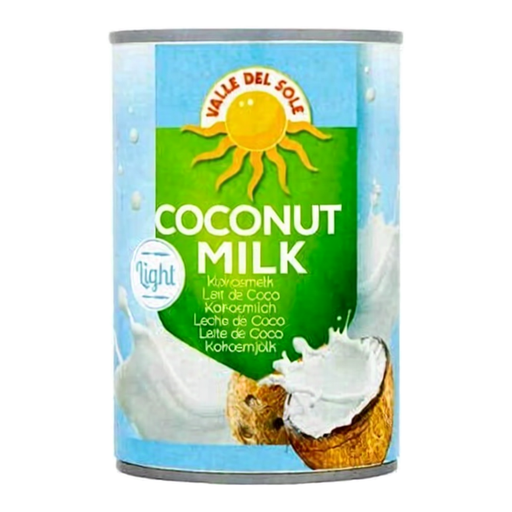 Image unavailable
Worth considering for a sweet recipe that calls for culinary coconut milk. The product is labelled “6 %”; compare the fat and sugar content shown on the packaging with other products, on the same basis.
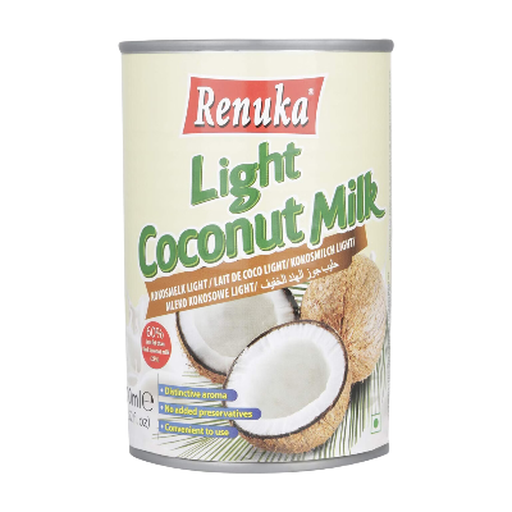 Image unavailable
Worth considering if your recipe calls for coconut milk rather than a plant-based drink. The “Light 9 %” label doesn’t tell you how much sugar it contains, so check the sugar and fat content separately on the packaging.
Image unavailable
For a smoothie or sweet recipe, check whether the consistency suits the way you plan to use it. “Light” doesn’t mean “sugar-free”: compare the sugar and fat content shown on the packaging.
No, these terms don’t necessarily describe products for the same use. Auchan describes Kara light coconut milk as a cooking ingredient with 30% less fat; Bjorg’s unsweetened coconut drink is intended for drinking or pouring and contains 1.4 g of fat per 100 ml. Choose according to what your recipe calls for.
Compare their fat and saturated fat on the same basis, then check sugars and energy separately. A table showing values per 100 g can’t be compared directly, figure for figure, with one showing values per 100 ml.
No, a claim about fat content doesn’t tell you how much sugar a product contains. Check the “of which sugars” line and the ingredients list, then take the rest of your breakfast ingredients into account if you want to compare the complete recipes.
To compare products, check the nutrition table on the pack available in store or delivered with your order. The DGCCRF describes nutrition declarations as labelling information; in particular, make sure the values you compare are for the same quantity of product.