People comparing their usual drinks
If you’re changing the drink you add to your coffee, cereal or a recipe, compare the nutritional values and the amount you use. The word ‘light’ doesn’t tell you everything about the meal as a whole.


When choosing an almond drink as part of a weight-management plan, compare the energy, sugars and fat using the same nutritional basis, rather than relying on the word ‘light’. A sugar-free recipe is not a weight-loss product: the amount you drink, the rest of your meal and, if it regularly replaces another food, its protein content and whether it is fortified with calcium also matter.
If you’re changing the drink you add to your coffee, cereal or a recipe, compare the nutritional values and the amount you use. The word ‘light’ doesn’t tell you everything about the meal as a whole.
If a plant-based drink regularly replaces milk in your diet, check whether calcium and vitamins have been added, as this varies by recipe. The Joybuy product page for Alpro Almond Unsweetened UHT 1 L states that it is fortified; this shouldn’t be assumed for all almond drinks.
When comparing unsweetened organic recipes, look at their nutritional values, almond content and ingredient lists. The Auchan, Carrefour and Ethiquable product pages feature different formulations.
Start with the reason you’re changing drinks, then check what else the recipe offers beyond that one factor. To compare two labels, use the same unit: the DGCCRF states that nutritional information is given per 100 g or per 100 ml.
| Criteria | What to check | Who is this useful for? |
|---|---|---|
| Energy, sugars and fat | Compare these three values on the same basis, then take into account how much you pour and any extras you add. | I want to replace the drink in my coffee or cereal and know what the recipe I actually use contributes. Around 46% of consumers would prioritise the drink’s energy and sugars. |
| Protein and calcium | Check the protein value and whether calcium has been added, without assuming that all recipes are fortified. | When almond drink regularly replaces another food in my meal, I don’t want to judge the swap on calories alone. Checking nutritional content would be a priority for around 36% of consumers. |
| Organic and ingredients | Check the ingredient list and the almond content if it’s shown on the packaging, then compare the nutritional values. | I prefer an organic recipe, but I also want to know what it contains before choosing. Around 18% of consumers would make ingredients their first priority. |
These claims relate to the drink, not the effect of your overall diet on your weight. They also don’t tell you how much you’ll drink.
Compare the nutrition panel and consider the other ingredients in your coffee, bowl of cereal or the recipe you’re using the drink in.
A low energy value doesn’t tell you how much protein the drink contains or whether calcium has been added. For example, the Joybuy product page for Alpro Almond Unsweetened UHT 1 L states that it contains 0.4 g of protein and 120 mg of calcium per 100 ml.
If almond drink regularly replaces another food, check these values and consider the rest of your meal.
These claims describe different characteristics. The organic almond products featured by Auchan, Carrefour and Ethiquable have different recipes and nutritional values.
Compare each product individually rather than guessing its calories or ingredients from the word ‘organic’ alone.
Almonds are an allergen. The DGCCRF states that allergenic ingredients must be highlighted on the label. Once opened, a carton should also be stored according to the instructions for that particular product.
Check for allergens before buying, then choose a pack size you can use as directed on the packaging.
An opened carton may go to waste if you don’t use it within the stated period after opening.
These examples relate to specific recipes: you can’t infer the nutritional values of all a brand’s almond drinks from its name alone.
The range includes Alpro Almond Unsweetened UHT 1 L, which is fortified with calcium and vitamins.
The own-label range includes unsweetened almond drinks, including a separate organic recipe.
An organic unsweetened almond drink is listed on a Carrefour product page.
The brand offers an organic unsweetened almond drink listed by Auchan.
The range includes a 1 L organic almond drink with no added sugars.
These almond drinks offer a range of recipes to try in coffee or cereal, or to enjoy on their own. Compare their labels on a consistent basis: terms such as ‘0%’, ‘sugar-free’ and ‘Barista’ don’t tell you the same thing as the fat content.
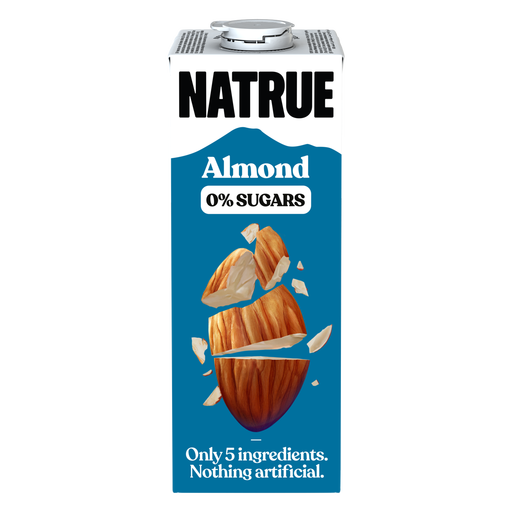 Image unavailable
If you’re comparing an almond drink for use in coffee or cereal, check its nutrition panel for energy, sugars and fat. ‘0%’ doesn’t mean the drink contains no fat.
The recipe contains almonds and soya lecithin, so check the allergens before buying.
 Image unavailable
If you’re looking for an unsweetened recipe with added calcium, the Joybuy product page for Alpro Almond Unsweetened UHT 1 L states that it contains 13 kcal, 0 g of sugars, 0.4 g of protein and 120 mg of calcium per 100 ml.
If fat content is your main concern, check that value on the label too. The drink contains almonds.
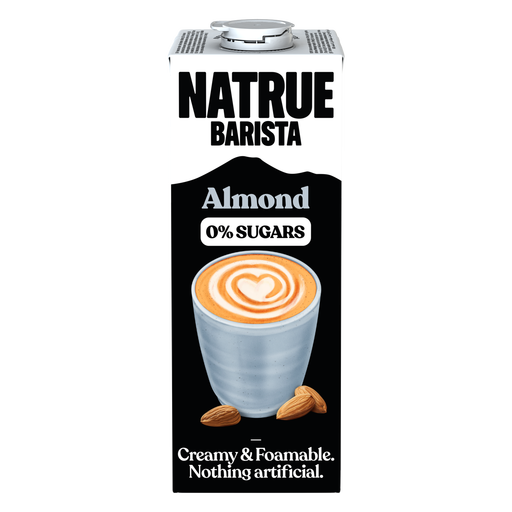 Image unavailable
This Barista Edition is for anyone looking for an almond drink to use in coffee. If you’re after a low-fat recipe, check the ‘fat’ value: ‘0%’ doesn’t mean zero fat.
Also check the allergens listed on the packaging; the recipe contains almonds.
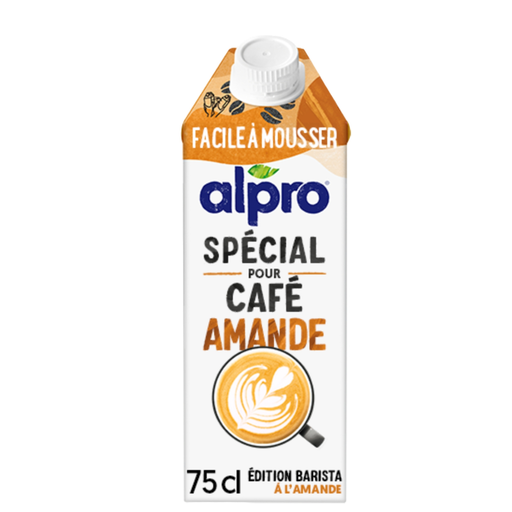 Image unavailable
If you’re using it in coffee, you can compare this Barista version with unsweetened recipes by checking its sugar content, rather than relying on its stated use.
The product page gives nutritional values per 100 g, so don’t compare them directly with values per 100 ml. The recipe contains almonds.
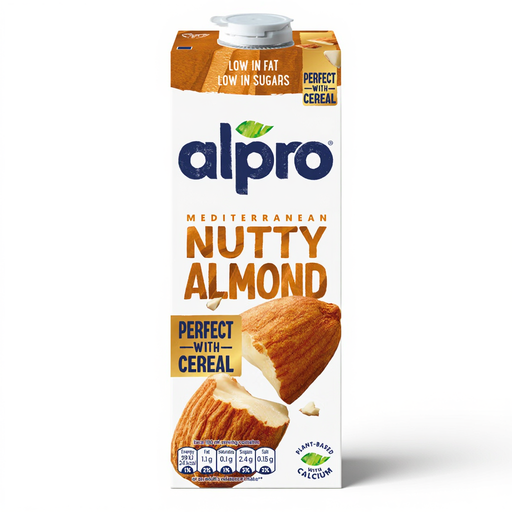 Image unavailable
If you’re comparing an almond drink for cereal or to enjoy on its own, remember that this recipe is different from Alpro’s unsweetened version. Check the ‘sugars’ value before choosing.
Check the fat content and ingredients on the label too. The drink contains almonds.
No: the word ‘light’ isn’t a promise of weight loss. If you’re replacing a more energy-dense drink, compare the amounts you actually consume and consider the rest of your diet.
Compare energy, fat, sugars and protein using the same basis: per 100 ml or per 100 g, depending on the information given for each product. The DGCCRF states that these units are used to present nutritional information, so check the unit before comparing two figures.
No: a low energy value doesn’t tell you the protein content. The Joybuy product page for Alpro Almond Unsweetened UHT 1 L states that it contains 0.4 g of protein per 100 ml. If you regularly replace another food, check this value for the recipe you choose.
Check the ingredients and any ‘may contain traces’ warnings before choosing an almond drink. Almonds are an allergen and, according to the DGCCRF, allergenic ingredients must be highlighted on the labels of pre-packed foods.
Follow the storage instructions and use-by period shown on the carton you choose. If you only drink a little at a time, consider the pack size before buying so you can use it as directed.