
Livraison le jour même ou le lendemain

Qualité garantie

Débloquez vos offres de bienvenue: Livraison GRATUITE | Jusqu'à -80 % | 30 jours d'essai gratuits à JoyPlus
Téléchargez l'application
The Lian Li O11 series of PC cases has established itself as a benchmark for gamers, content creators, and hardware enthusiasts. With a growing number of models (Vision, Flow, Mini, Compact), it's easy to feel lost. Have you fallen for the O11's dual-chamber design but are still unsure which version will best showcase your future build?? This guide is for you.
Our team of experts has broken down the key differences between the flagship models in the O11 series. The goal?: to help you make the right choice based on your components, budget, and priorities, whether you're looking for pure aesthetics or extreme cooling performance.
Before diving into our selection, let's review the essential criteria that will guide your choice.
The main distinction within the O11 range is between the "Vision" and "Flow" models.
This is a crucial technical point and a common source of error. Be aware that not all O11 cases are compatible with standard ATX power supplies.
Make sure the case can accommodate all your hardware. The three main checkpoints are?:
Here is our selection of the best Lian Li O11 cases, designed for distinct use cases, from the pure performance-focused gamer PC case to the minimalist-design workstation.
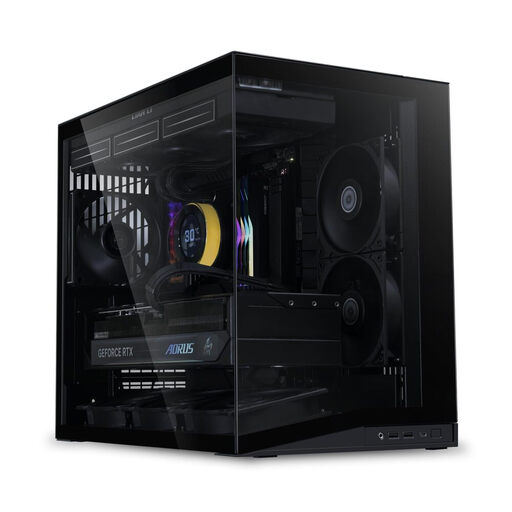
Why We Chose It
The O11D Mini V2 Flow is the ideal solution for performance enthusiasts looking for a more compact form factor. Its dual-chamber chassis is optimised for maximum ventilation thanks to high-density mesh panels on the front and side. Its modularity is a key advantage?: the sliding rear panel allows you to choose between 3, 5, or 7 expansion slots, offering rare flexibility to adapt to ATX, M-ATX, or ITX motherboards.
Key Features
Who Is It For??
This case is for users who prioritise thermal performance above all else. It is particularly well-suited for powerful and compact builds, especially those using a custom or AIO water-cooling system. Note that this model requires an SFX or SFX-L power supply.
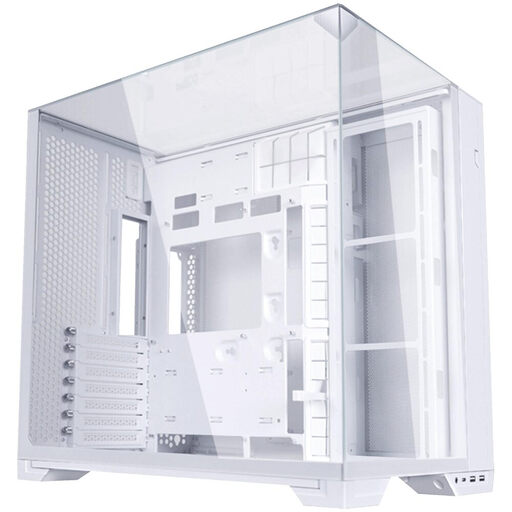
Why We Chose It
The Lian Li O11 Vision Compact lives up to its name. Its design removes the metal pillar between the front and side glass panels, offering a completely unobstructed 270° panoramic view of your components. In its white finish, it adds a bright, modern touch, perfect for builds that heavily feature RGB lighting.
Key Features
Who Is It For??
This model is the go-to choice for PC building enthusiasts who love to showcase their hardware. If your goal is to create a visually spectacular machine where every component is highlighted, the O11 Vision Compact is a first-class foundation.
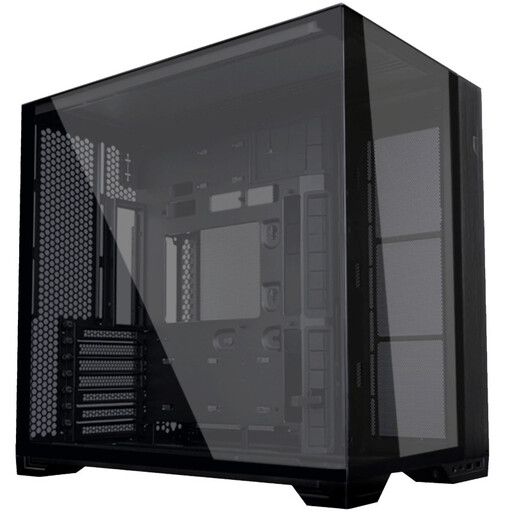
Why We Chose It
Inheriting all the qualities of the white version, the black O11 Vision offers a more understated and classic alternative. The black finish and tinted glass (on some versions) create a striking contrast with illuminated components, for a look that is both sleek and aggressive. It retains the pillarless 270° panoramic view that is the signature of the Vision series.
Key Features
Who Is It For??
The black O11 Vision is for those seeking the same visual experience but with a more discreet aesthetic or a trendy "stealth" look. It's perfect for content creators or gamers who want a high-performance, visually impressive machine without opting for a bright colour.
Your case is chosen, but is your setup complete?? If you're looking to boost your productivity or game on the go, check out our selection of portable monitors.
1. What is the difference between an ATX and an SFX power supply?? The ATX power supply is the standard and most common format for desktop PCs. The SFX power supply (and its slightly longer variant, SFX-L) is a much more compact format designed for small form factor (SFF) cases. The choice depends entirely on the case: a model designed for an SFX power supply, like the O11D Mini, simply cannot accommodate a standard ATX unit.
2. Are Lian Li O11 cases suitable for water-cooling?? Absolutely. The O11 series is especially popular among water-cooling enthusiasts. Their dual-chamber structure frees up a large amount of space in the main compartment. Most models can accommodate multiple 240, 280, or 360 mm radiators, making them very flexible for custom water-cooling loops or for installing multiple AIO (All-In-One) coolers.
3. How do you manage airflow in a glass case like the O11 Vision?? Although the glass panels limit direct air intake, the O11 Vision is designed for optimised airflow. The most common configuration is to place intake fans at the bottom and side (to draw in cool air) and exhaust fans at the top and rear (to expel hot air). This vertical airflow ensures effective component cooling despite the glass structure.