
Livraison le jour même ou le lendemain

Qualité garantie

Débloquez vos offres de bienvenue: Livraison GRATUITE | Jusqu'à -80 % | 30 jours d'essai gratuits à JoyPlus
Téléchargez l'application
Choosing a PC case is about more than just dimensions. It's a decision that shapes the look of your setup, the cooling of your components, and even the ease of the building process. In this space, the Lian Li O11 series has established itself as an undisputed benchmark for enthusiasts, gamers, and creators, thanks to its iconic design and innovations.
But with Vision, Mini, and Flow versions to consider, it's not always easy to know which is which. This guide breaks down the specifics of each model to help you find the one that will elevate your next build.
Before diving into the comparison, let's review the essential criteria that will guide your decision.
The O11 series masterfully balances two distinct approaches.
A case, no matter how beautiful, must first be a perfect host for your components. The O11 range is renowned for its modularity, but pay close attention to the details.
One of the signatures of the O11 series is its dual-chamber architecture. This ingenious design isolates the visible, heat-producing components (motherboard, graphics card) from the more discreet ones (power supply, storage), which are housed in a hidden compartment. The advantages are clear: extremely simplified cable management, optimized airflow in the main chamber, and an impeccably clean visual result.
To help you choose, here are three emblematic models from the O11 range, each catering to a specific need, from pure visual spectacle to raw performance.
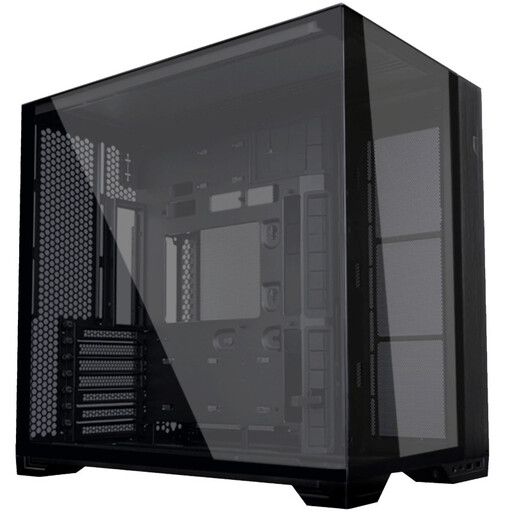
Why It Stands Out: The O11 Vision Compact is the epitome of the showcase case. With its three pillarless tempered glass panels, it offers a 270° panoramic view of your components. It's the top choice for those who want to turn their build into a true exhibition.
Pros:
Who is it for?: For hardware aesthetes who see their PC as a work of art and want to highlight every component with masterful RGB lighting.
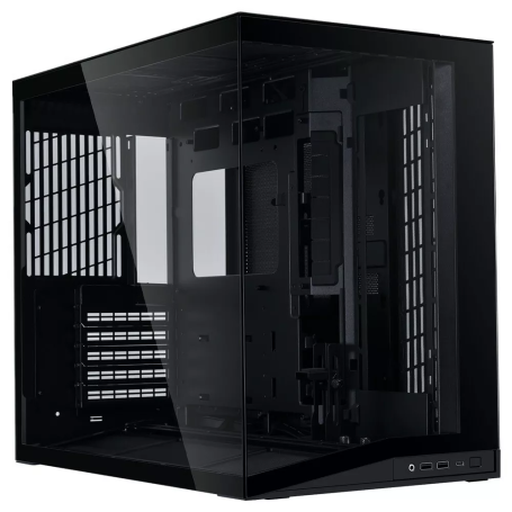
Why It Stands Out: The O11D Mini V2 rises to the challenge of condensing the full aesthetic and modular DNA of the O11 series into a compact form factor. Its key strength? Impressive versatility, capable of housing Mini-ITX, Micro-ATX, and even ATX motherboards, while also being compatible with new reverse-connector motherboards (ASUS BTF / MSI Project Zero) for a zero-visible-cable build.
Pros:
Who is it for?: For gamers looking for a high-end gaming case that retains the O11 spirit but who are short on space or prefer a more understated setup.
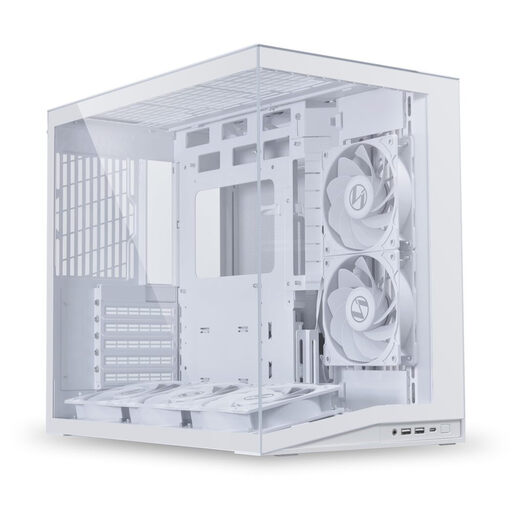
Why It Stands Out: As its name suggests, the "Flow" version of the O11 Dynamic Mini is built for pure performance. Its mesh front panel maximizes air intake, making it the ideal ally to tame the most power-hungry components. Its white design and modularity make it a perfect foundation for a build that is as powerful as it is elegant.
Pros:
Who is it for?: For demanding gamers and creators who place cooling at the top of their priority list, without sacrificing the elegance and modularity that the O11 series is famous for.
The Lian Li O11 series is a safe bet, but the world of hardware is vast. To discover other cases or to equip your entire digital ecosystem, from peripherals for your tower to accessories for your mobile devices, browse our selections.
? Discover our selection of computer and tablet accessories
1. What is the main difference between the Lian Li O11 Dynamic, Vision, and Flow? The difference mainly comes down to panel design. The Dynamic is the original model, a balance between glass and aluminum. The Vision is the "aquarium-style" model, which pushes visibility to the extreme with its pillarless glass panels. Finally, the Flow sacrifices glass in favor of mesh panels to optimize airflow.
2. Are Lian Li O11 cases a good foundation for water cooling? Absolutely. The O11 series is actually a favorite among water-cooling enthusiasts (AIO or custom). Most models can accommodate multiple large radiators (up to 360mm) simultaneously, and the dual-chamber architecture greatly simplifies routing tubes and installing the pump and reservoir.
3. Do I need a specific power supply for the Lian Li O11 Dynamic Mini? Yes, and this is a crucial point. Due to its compact size, the Lian Li O11 Dynamic Mini (and its Flow variant) is not compatible with standard ATX power supplies. It requires an SFX or SFX-L form factor power supply unit. Be sure to check this detail before your purchase to avoid any unpleasant surprises during assembly.