When choosing a spread for revision-time snacks, first distinguish between ‘no added sugars’ and ‘less sugar’, then compare the ‘of which sugars’ figure per 100 g. A recipe with no added sugars may still contain naturally occurring sugars, so check the other nutritional values, allergens and pack size before choosing a jar. In France, Nutri-Score can provide an additional point of reference when it appears on the packaging, but displaying it is voluntary, as Santé publique France explains.
Who is this choice for?
Anyone looking to limit added sugars
You’re looking for a cocoa and hazelnut spread for toast during revision sessions. Check that the claim appears on the jar you choose, then read the ‘of which sugars’ figure per 100 g: ‘no added sugars’ doesn’t mean ‘sugar-free’.
Anyone who loves the taste of cocoa and hazelnut
A spread described as less sugary may catch your eye if you want to stick with this type of spread. Compare the energy and fat content too: a claim about sugars alone doesn’t tell you everything about the recipe.
Anyone taking a snack with them
A biscuit or wafer in an individual portion is easier to carry than a jar. However, it’s a different product category: to assess the sugars you’ll consume, check the figures per portion without confusing them with those for a spread.
Which criteria should you compare?
For a spread, start by checking the exact claim, then compare the nutritional values on the same per-100 g basis. After that, choose a format to suit your revision routine, depending on whether you’ll be snacking at home or taking it with you.
| Criterion |
What to check |
Who it’s for |
| Added sugars |
The claim on the jar and the ‘of which sugars’ figure per 100 g; no added sugars does not mean no sugars. |
If I want to keep cocoa and hazelnut spread in my diet while prioritising lower added sugars, the exact claim matters just as much as the sugar figure. Around 50% of consumers put reducing added sugars at the top of their list of criteria. |
| Nutritional profile |
Energy, fat and fibre per 100 g; Nutri-Score as an additional guide, if displayed. |
A ‘less sugary’ claim isn’t enough for me if I want to compare the full nutritional profile of two jars. Getting the complete picture is the priority for around 30% of consumers. |
| Use and format |
Allergens and storage instructions; choose between a spread in a jar and a portioned product to suit how you plan to use it. |
For a snack on the go, I might prioritise the format; at home, the texture and ingredients may have more influence on my choice. Around 20% of consumers put these practical aspects and their personal preferences first. |
Common mix-ups to avoid
-
Assuming that no Nutri-Score is a bad sign
According to Santé publique France, producers display this logo voluntarily. Its absence alone is therefore no reason to judge a spread.
If the logo is displayed, use it as an additional guide and read the product’s nutritional information too.
-
Reading ‘no added sugars’ as ‘sugar-free’
Carrefour’s product information for Lucien Georgelin spread specifies that this recipe contains naturally occurring sugars.
Check the ‘of which sugars’ figure per 100 g on the pack you’re buying.
-
Assuming ‘less sugary’ means ‘lower in calories’
Carrefour’s product information describes Aline & Olivier spread as less sugary, while also stating that it contains 600 kcal and 47.7 g of fat per 100 g. The claim about sugars doesn’t sum up these other values.
Compare sugars, energy and fat on the same per-100 g basis.
-
Forgetting to check the ingredients and storage instructions after opening
The cocoa and hazelnut recipe from Lucien Georgelin, as described by the manufacturer, contains hazelnuts and milk; it may also separate.
If you have an allergy, check the jar’s label. Follow its storage instructions and stir the spread if the manufacturer recommends it.
Brands to know when comparing recipes
Lucien Georgelin
The brand offers a 280 g jar of cocoa and hazelnut spread labelled ‘no added sugars’.
- According to Lucien Georgelin, this product contains 20% French hazelnuts, 8.5 g of sugars and 43 g of fibre per 100 g. The brand also gives this format a Nutri-Score A.
- The recipe contains hazelnuts and milk, as well as naturally occurring sugars. Check the information on the format you buy.
Aline & Olivier
Carrefour describes this brand’s organic cocoa and hazelnut spread as less sugary.
- Carrefour’s product information states that this product contains 40% hazelnut paste.
- It also states that the spread contains 600 kcal and 47.7 g of fat per 100 g: consider these figures separately from the claim about sugars.
Gerblé
Gerblé’s range of spreads with no added sugars includes fruit recipes.
- These spreads may appeal if you’re looking for a fruity topping.
- A fruit spread doesn’t taste like cocoa and hazelnut spread and belongs to a different product category. Check the recipe if cocoa and hazelnut spread is what you’re after.
Joybuy product selection
These fruit spreads are options for a snack labelled as having no added sugars. They’re not a substitute for cocoa and hazelnut spread if that’s the flavour you’re looking for.
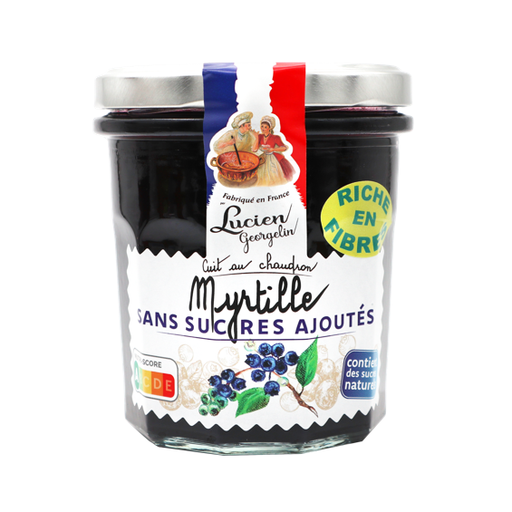 Image unavailable
Lucien Georgelin, blueberry spread with no added sugars, 320 g
Worth considering if you’d like a fruit spread rather than cocoa and hazelnut spread. ‘No added sugars’ doesn’t mean ‘sugar-free’, so check the nutritional information on the jar. Once opened, the instructions for this product say to refrigerate it and consume it within 10 days.
View on Joybuy
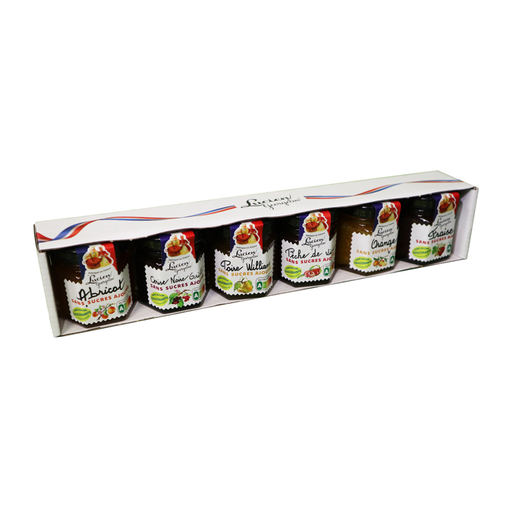 Image unavailable
Lucien Georgelin, selection with no added sugars, 6 x 47 g jars
The small jars are handy for individual portions if you prefer a fruit topping. Check the flavours in the selection and the nutritional information for each one before buying: sugar levels may vary from one recipe to another. This isn’t a cocoa and hazelnut spread.
View on Joybuy
Frequently asked questions
Is Nutri-Score mandatory on spreads in France?
No. Santé publique France says that producers display Nutri-Score voluntarily. If it appears, you can use it alongside the nutritional information; its absence alone is no way to judge the product.
Does a spread labelled ‘no added sugars’ contain no sugar at all?
No. Carrefour explains that the Lucien Georgelin spread carrying this claim contains naturally occurring sugars. To find out the amount declared, read the ‘of which sugars’ figure per 100 g on the jar in question.
Is a spread described as less sugary always lower in calories?
No: the claim about sugars doesn’t tell you the energy value on its own. Carrefour’s product information for the Aline & Olivier spread described as less sugary states that it contains 600 kcal and 47.7 g of fat per 100 g. Compare each figure on the same basis.
How should you store a spread after opening?
Follow the instructions on the jar you buy, as these depend on the recipe. For its 280 g spread with no added sugars, Lucien Georgelin recommends storing it away from heat and moisture, consuming it within a month of opening and stirring it if it separates.


