Parents comparing sugar levels
When serving pasta to children, the ‘sugars’ figure per 100 g lets you compare sauces of the same type without relying solely on the wording on the front of the jar.


To choose a less sugary pasta sauce for the children’s dinner, compare the ‘sugars’ figure per 100 g across sauces of the same type, rather than relying on a general claim or the Nutri-Score alone. Then check the ingredients, salt and, if needed, allergens on the jar you buy: these details can vary between recipes.
When serving pasta to children, the ‘sugars’ figure per 100 g lets you compare sauces of the same type without relying solely on the wording on the front of the jar.
If a child needs to avoid an ingredient, check the specific sauce you’re buying. According to the DGCCRF, allergenic ingredients in prepacked foods must be highlighted in the ingredients list. A ‘gluten-free’ claim applies to the product carrying it, not every sauce from that brand.
Jar size matters when you’re preparing a specific amount of pasta or expect to have sauce left after opening. Check the storage instructions for the product you’ve chosen before opting for a larger jar.
Start by comparing the nutritional information for similar sauces. If the meal needs to meet an allergen requirement, check the label of every product you’re considering too.
| Criterion | What to check | Who is it for? |
|---|---|---|
| Sugars | Compare the ‘sugars’ figure per 100 g across sauces of the same type, then read the ingredients. The DGCCRF says that nutrition information per 100 g makes comparisons easier. | For an evening pasta meal, I want to compare the actual sugar content rather than rely on the jar’s presentation; around 42% of consumers would put this criterion first. |
| Gluten and allergens | Read the highlighted allergens in the ingredients list and check for any ‘gluten-free’ claim on the specific product. If the meal is for school, check the school’s guidance too. | When a child needs to avoid an ingredient, I need to be able to identify what’s in the sauce I buy; around 25% of consumers would put this check ahead of the others. |
| Taste and serving | Look at the vegetables, herbs and other recipe ingredients, as well as how much you’ll need for the meal. | In the evening, I’m looking for a recipe with ingredients the child will enjoy and an easy-to-serve quantity; this would be a priority for around 17% of consumers. |
| Size | Check the net weight and storage instructions after opening against the amount you plan to use. | If I only use part of the jar, I want to be able to store the rest as instructed; around 16% of consumers would prioritise the size. |
A short ingredients list or a Nutri-Score on the pack doesn’t, on its own, tell you how much sugar a sauce contains compared with another.
Compare the ‘sugars’ figure per 100 g across similar recipes and check the exact wording of any claim on the product in question.
Barilla and Carrefour label certain specific cooked tomato sauces as ‘gluten-free’. This information doesn’t apply to their other products and doesn’t tell you about their other ingredients.
Check the pack you buy and the allergens listed in its ingredients. If the meal will be eaten at school, check the school’s guidance too.
Panzani sells its Cooked Tomato Sauce in 210 g, 400 g and 650 g sizes. The amount you need for the meal can help you choose the right size.
Check the net weight and storage instructions after opening before choosing a large jar.
Any sauce left over that isn’t stored as instructed may have to be thrown away.
Panzani sells its Cooked Tomato Sauce in several sizes, including 210 g, 400 g and 650 g.
Barilla describes its Cooked Tomato Sauce as a tomato sauce to serve with pasta.
Carrefour’s range includes a 420 g jar of Carrefour Classic’ Cooked Tomato Sauce.
E.Leclerc DRIVE describes the Nutri-Score as a simple summary shown when the data is available.
Auchan’s range includes a cooked tomato sauce in a jar.
Lidl’s range includes a tomato sauce under the Baresa brand.
This tomato sauce could be served with pasta for dinner. To see whether it meets your needs if you’re looking for a less sugary sauce, compare the nutrition information and ingredients on the product you buy with those of sauces of the same type.
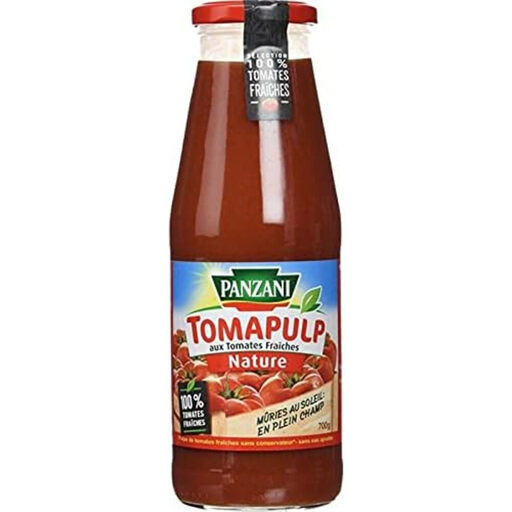 Image unavailable
A sauce to consider serving with pasta for a children’s dinner, after checking that the recipe is suitable for the meal.
Size: 700 g. Compare the ‘sugars’ figure per 100 g and check the ingredients, as well as any gluten information on the pack you buy if this is a concern for you.
Compare the ‘sugars’ figure per 100 g for sauces of the same type, then check their ingredients lists. The DGCCRF says that nutrition information per 100 g makes comparisons easier; an impression that a recipe is ‘light’ is no substitute for these figures.
No, it depends on the product. The product pages for Barilla Cooked Tomato Sauce and Carrefour Classic’ Cooked Tomato Sauce label these specific products ‘gluten-free’. Check the pack you buy if you need to avoid gluten.
Read the ingredients list and allergen information on the product you buy. According to the DGCCRF, allergenic ingredients must be highlighted on prepacked foods. If the meal is for school, check the school’s guidance separately.
No, the Nutri-Score doesn’t replace comparing the ‘sugars’ figure per 100 g. Use the nutrition information and ingredients list to assess the sauces you’re considering, rather than judging their sugar content from this score alone.