For your weekly shop, start by deciding what matters most: avoiding added sugars, choosing the product with the lowest declared sugar content, or opting for a recipe that contains sugar but has a higher fruit content. Then compare the ‘of which sugars’ value per 100 g and the ingredients for the flavour you’re considering. According to Anses, ‘no added sugars’ does not mean ‘sugar-free’.
Who are these recipes for?
People avoiding added sugars
You’re looking for a spread for everyday toast that contains no added sugar, while also comparing the naturally occurring sugars in different fruits. Anses points out that the claim ‘no added sugars’ does not mean there are no sugars.
People keeping an eye on declared sugar content
You compare the ‘of which sugars’ value per 100 g first and are happy to consider a recipe with sweeteners and polyols before choosing.
Fans of recipes with sugar and more fruit
You’d like to stick with a spread that contains sugar, but also check the fruit content and exactly what a ‘less sugary’ claim means.
What should you compare?
Three types of recipe suit different priorities; the same claim on the front of the jar isn’t enough to tell them apart.
Fruit with no added sugars
Worth considering: if you want to avoid added sugar and prefer a recipe with no declared sweeteners, such as the Lucien Georgelin 3 Agrumes and 4 Fruits Rouges varieties featured by the brand.
Bear in mind: fruit still contains sugars. Lucien Georgelin states that its 4 Fruits Rouges preparation contains 26 g of sugars per 100 g.
No added sugars, with sweeteners
Worth considering: if the amount of declared sugars matters more to you than choosing a recipe without sweeteners. Gerblé states that its strawberry variety contains 3.2 g per 100 g.
Bear in mind: Gerblé’s strawberry variety contains maltitol and sucralose, among other ingredients. Its nutrition table also lists 10 g of polyols per 100 g.
More fruit, with added sugar
Worth considering: if you’re looking for a spread that still contains sugar but gives fruit a prominent place in the recipe.
Bear in mind: the Vergers des Alpilles preparation featured by Carrefour contains 63% fruit, but also contains sugar, so it does not meet the ‘no added sugars’ criterion.
| Criterion | What to check | Who is it for? |
|---|
| Sugar content |
Compare the ‘of which sugars’ value per 100 g, then take into account how much you’ll actually use on a slice of toast. |
If my main aim is to reduce the amount of sugar on my toast, the declared figure matters more to me than the claim on the front of the jar; around 36% of consumers would put this criterion first. |
| Added sugars |
Read the claim and the ingredients, without confusing no added sugar with no naturally occurring sugars. |
For my usual toast, I mainly want a recipe with no added sugar, even if the fruit contains sugars; this would be the priority for around 29% of consumers. |
| Ingredients |
Check for sweeteners and polyols, and, if necessary, any allergens listed for the flavour you’ve chosen. |
I prefer to know what’s in the jar before choosing between two recipes with different values; around 21% of consumers would put ingredients first. |
| Size and storage |
Choose a jar size that suits how quickly you’ll use it, and read the storage instructions for after opening. |
If an opened jar might be in the fridge for a long time, I choose a size my household can finish within the time stated on the label; this would be the top criterion for around 14% of consumers. |
Mistakes to avoid
-
Reading ‘no added sugars’ as ‘sugar-free’
According to Anses, the ingredients in a product with no added sugars may contain naturally occurring sugars. Two flavours carrying the same claim may therefore have different values.
Compare the ‘of which sugars’ value per 100 g on the jars you’re considering.
-
Relying only on the claim on the front
A recipe described as ‘less sugary’ may contain added sugar, while a recipe with no added sugars may contain sweeteners.
Decide what you want to avoid, then read the ingredients for the specific product.
-
Forgetting to check sweeteners and allergens
The Gerblé strawberry and apricot varieties featured by Gerblé and Auchan contain sweeteners; check the ingredients and allergen information for each product.
Check the label on the flavour you buy rather than assuming the same applies to the whole range.
-
Buying several jars without checking how to store them
Having lots of open jars can be inconvenient if your household can’t finish them within the stated time.
Choose a number of jars that suits how much you use. For its 3 Agrumes preparation, Lucien Georgelin says to refrigerate after opening and consume within 10 days; check the instructions on every other jar.
Brands to know when comparing recipes
Lucien Georgelin
The brand offers fruit preparations with no added sugars, including its 3 Agrumes and 4 Fruits Rouges recipes.
- Lucien Georgelin states that 3 Agrumes contains 20.4 g of sugars per 100 g and 4 Fruits Rouges contains 26 g per 100 g, so the flavour makes a difference when comparing them.
- These values and ingredients may not apply to other products in the range.
Gerblé
The strawberry and apricot spreads considered here have no added sugars and are made with sweeteners.
- Gerblé states that its strawberry variety contains 3.2 g of sugars per 100 g; Auchan states that its apricot variety contains 4 g per 100 g.
- These products contain polyols, so check the ingredients and allergen information on the jar you choose.
Vergers des Alpilles
The fruit preparation featured by Carrefour still contains sugar among its ingredients.
- Carrefour states that the recipe in question contains 63% fruit.
- The added sugar sets it apart from preparations labelled ‘no added sugars’.
Fruit preparations on Joybuy
These three Lucien Georgelin preparations are suitable if you’re looking for a jar with no added sugars for your weekly toast. Compare the information for the flavour you choose and pick a size that suits how much you use.
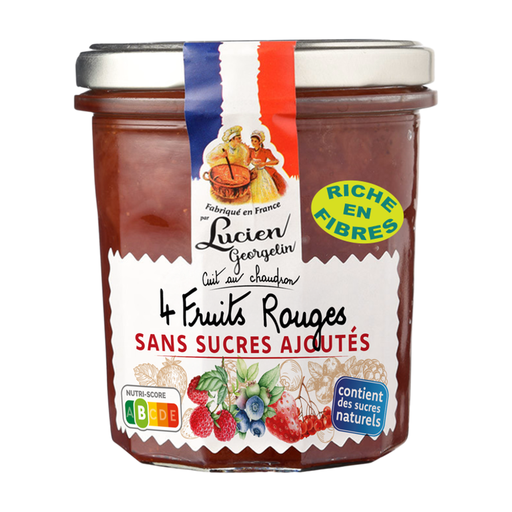 Image unavailable
Lucien Georgelin 4 Fruits Rouges preparation with no added sugars, 320 g
A spread for toast with no added sugars in the recipe. Lucien Georgelin states that this flavour contains 26 g of sugars per 100 g; compare this with the other jars you’re considering.
Check the full ingredients on the jar’s label.
View on Joybuy
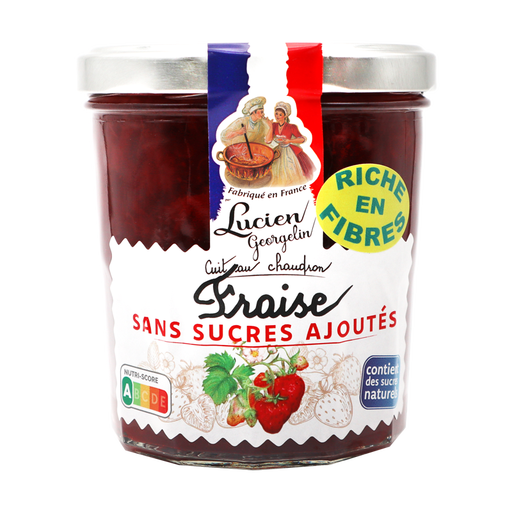 Image unavailable
Lucien Georgelin strawberry preparation with no added sugars, 320 g
This strawberry preparation is a good choice if you’re looking for a spread with no added sugars for your toast.
Compare the ‘of which sugars’ value and check the ingredients on the jar before choosing this flavour.
View on Joybuy
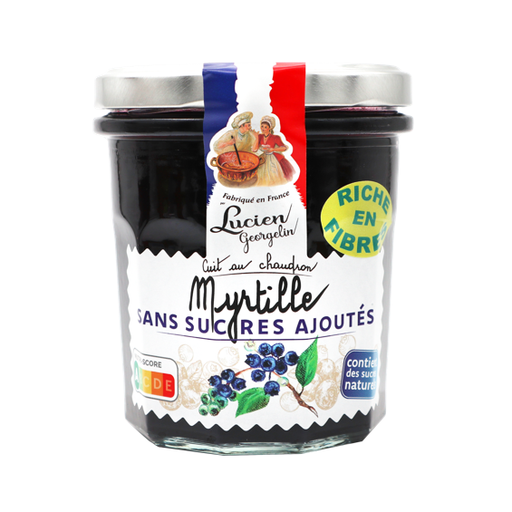 Image unavailable
Lucien Georgelin blueberry preparation with no added sugars, 320 g
This flavour is a good choice if you’re looking for a fruit preparation with no added sugars for your toast.
The claim doesn’t tell you how much naturally occurring sugar the product contains, so check the nutrition information and ingredients on the jar.
View on Joybuy
Frequently asked questions
Does ‘no added sugars’ mean sugar-free?
No. Anses points out that ingredients, including fruit, may contain naturally occurring sugars. To compare fruit preparations, check the ‘of which sugars’ value per 100 g.
How can I tell if a preparation contains sweeteners?
Read the ingredients for the specific flavour. Gerblé lists maltitol and sucralose, among other ingredients, in its strawberry spread; its nutrition table also declares polyols.
Does a ‘less sugary’ preparation always have no added sugars?
No. The Vergers des Alpilles preparation featured by Carrefour contains sugar among its ingredients. Don’t confuse a comparison with another recipe with the claim ‘no added sugars’.
How long can you keep an opened jar?
Follow the instructions for the product you’ve bought. For its 3 Agrumes preparation, Lucien Georgelin says to refrigerate after opening and consume within 10 days; don’t automatically apply this time limit to other jars.


