
Livraison le jour même ou le lendemain

Qualité garantie

Débloquez vos offres de bienvenue: Livraison GRATUITE | Jusqu'à -80 % | 30 jours d'essai gratuits à JoyPlus
Téléchargez l'application
Choosing a LEGO set isn’t just about picking the most colourful box or going for your favourite theme. Between a LEGO building set for a 4-year-old, a LEGO vehicle packed with mechanisms, and a collector’s model for adults, the differences in difficulty, size and purpose can be considerable.
Three mistakes crop up time and again when buying:
The age shown on the box helps gauge the level of difficulty and safety, but it also gives an idea of the patience and independence required. LEGO sets from age 4, particularly in the LEGO City or LEGO Classic ranges, generally focus on easy-to-handle elements and accessible builds.
Warnings about small pieces and choking hazards should be taken seriously. Children under 3 must not use these products. With younger children, having an adult on hand can make sorting the pieces and following the instructions much easier.
The number of pieces gives an idea of the build time, but it isn’t enough on its own to estimate it. A 176-piece model can be assembled in a short time, whereas a box of over 1,500 pieces will require more organisation and several sessions.
Also remember to check the dimensions of the finished model. A LEGO vehicle that’s 30 cm long or a large articulated dragon needs a clear building surface, as well as a spot to store it once built. In a child’s bedroom or a small flat, a compact model will be much easier to keep.
On some models, the LEGO Builder app complements the paper instructions with 3D visualisation, progress tracking, and zoom and rotate functions.
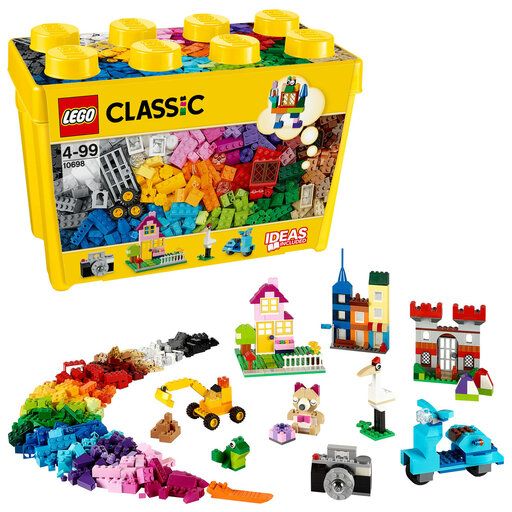
Why this choice suits this profile: From age 4, this box is ideal for children who love to invent without following a set model, thanks to bricks suited to countless creations.
With its 790 pieces and building ideas, it can be used gradually, even when the child prefers to create freely rather than replicate a specific model.
33 colours, two green baseplates, windows, doors, wheels and a storage box included.
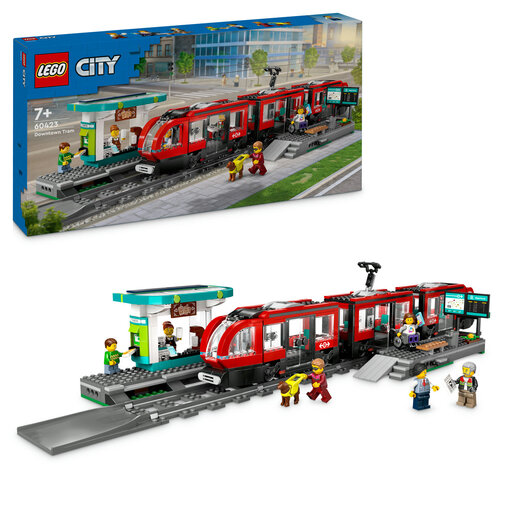
Why this choice suits this profile: From age 7, children passionate about urban transport can stage a streetcar, a station and several characters to extend their stories.
The contents are clearly defined: 811 pieces, six minifigures, a station with a café and a carriage with double doors.
Access ramps, a wheelchair, a guide dog and accessories allow for varied storytelling, all without batteries.
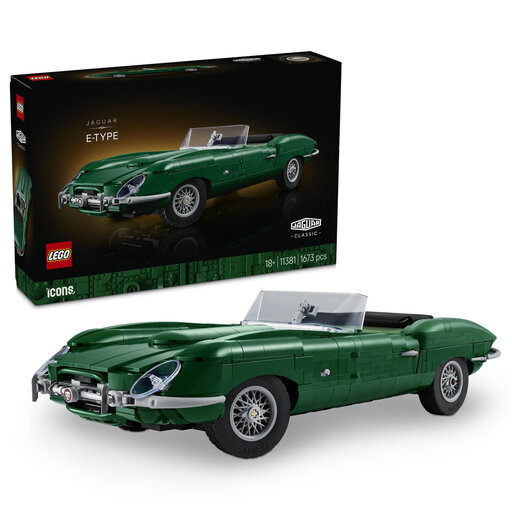
Why this choice suits this profile: This LEGO set for adults is aimed at classic car enthusiasts looking for a detailed build and a beautiful object to display.
Its recommended age of 18+ and its 1,673 pieces clearly signal a long-term activity, rather than a toy to assemble in a few minutes.
Six-cylinder engine, functional steering wheel, opening bonnet and doors, for a model 37 cm long.
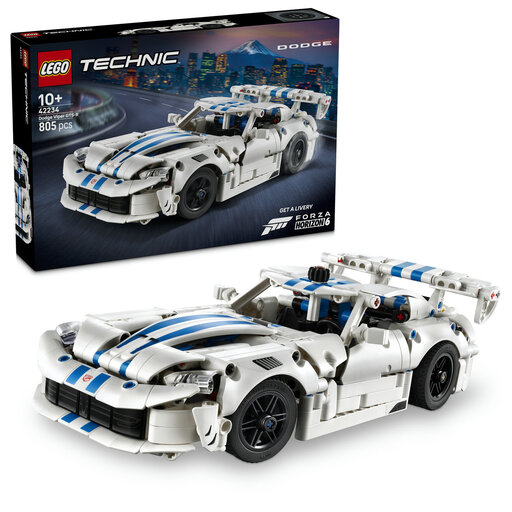
Why this choice suits this profile: From age 10, this model is aimed at racing fans who want to discover mechanisms while keeping a genuinely playable vehicle.
The advertised features are very concrete: V10 engine with moving pistons, differential, opening bonnet and doors.
805 pieces, a model 30 cm long and a build focused on mechanical movements.
We’ve put together a comprehensive, regularly updated selection of products that meet these exacting criteria, as well as European safety standards.
For a LEGO gift, it’s best to start from the recipient’s passion rather than their gender or the colour of the box. A child fascinated by dinosaurs will appreciate the LEGO Jurassic World 76972 Raptor Off-Road Escape set, while a superhero fan will be more drawn to LEGO Marvel or a LEGO Technic Batmobile model.
For a first purchase, LEGO Classic or a small LEGO City set reduces the risk of starting a build that’s too long. For teenagers, LEGO NINJAGO, LEGO Star Wars and models with mechanisms offer more possibilities, both for playing and for displaying. Adults can favour LEGO Icons or LEGO Architecture, while keeping an eye on the final dimensions and the space available.
It all depends on the age of the builder, the number of pieces and the complexity of the instructions. A box of fewer than 200 pieces can usually be finished in one session, whereas a set of over 1,000 pieces is more enjoyable to build in several stages.
Yes. Certain references are designed for children from age 4, particularly in the LEGO Classic and LEGO City ranges. However, you must respect the age shown on each box, supervise small pieces and adapt the help you give to the child’s level of independence.
Many LEGO sets work without batteries. Motorised models or those that can be controlled via an app may, however, require a rechargeable battery, a cable or additional equipment. Check the product page before buying to find out which accessories are needed.