
Livraison le jour même ou le lendemain

Qualité garantie

Débloquez vos offres de bienvenue: Livraison GRATUITE | Jusqu'à -80 % | 30 jours d'essai gratuits à JoyPlus
Téléchargez l'application
Choosing LEGO DUPLO for children isn't simply about picking the most colourful box. Between construction sets, licensed characters and interactive kits, the recommended age, contents and type of play can make a huge difference.
A set that's too complicated risks ending up at the back of a cupboard. On the other hand, one that's too limited can become boring within days. Here are the criteria to consider when finding LEGO bricks for toddlers that suit their age, the space available at home and their interests.
A well-stocked box doesn't necessarily guarantee extra hours of play. At 18 months, a few easy-to-grasp and simple-to-assemble pieces will often be more engaging than a very comprehensive set. Also look out for the presence of characters, vehicles, animals or accessories: these are what bring early stories to life.
Age recommendations aren't just there to decorate the packaging. Some sets are designed from 18 months, while others are aimed at children aged 2 or 3 and up. Warnings about small parts must be taken seriously, especially when children of different ages are playing together.
Adult supervision is still recommended with the youngest children. Also remember to inspect the pieces regularly and remove any damaged ones.
A LEGO DUPLO train with lights and sounds might immediately catch a child's eye. However, it requires batteries and can take up more space than a classic model. Before ordering, check the type of batteries needed, whether they're included in the box, and whether the sounds can be turned off if the toy is to be used in a bedroom or flat.
For an educational toy from 18 months, go for large bricks that are easy to grip, assemble and pull apart. Simple sets allow children to discover stacking, colours and early building without having to replicate a specific model.
From 2 years old, children generally enjoy everyday scenes, LEGO DUPLO animals, LEGO DUPLO vehicles and sorting activities. From 3 years, sets offering multiple configurations, moving features or more detailed scenarios can support more independent play.
Before comparing prices, ask yourself what the child really enjoys:
An open-ended LEGO DUPLO set combines easily with other boxes. A classic brick box can serve as a foundation, while a themed set brings characters and an instantly recognisable setting.
The products featured are described as being mainly made from ABS plastic. Compliance information refers, among other things, to the European requirements applicable to toys, including EN 71 for the relevant references. These indications do not replace checking the labelling, instructions and warnings on the packaging.
Clean the bricks with a slightly damp cloth, do not submerge electronic elements in water, and store small pieces away after each play session. For a battery-operated set, remove the batteries during long-term storage and have an adult replace them.
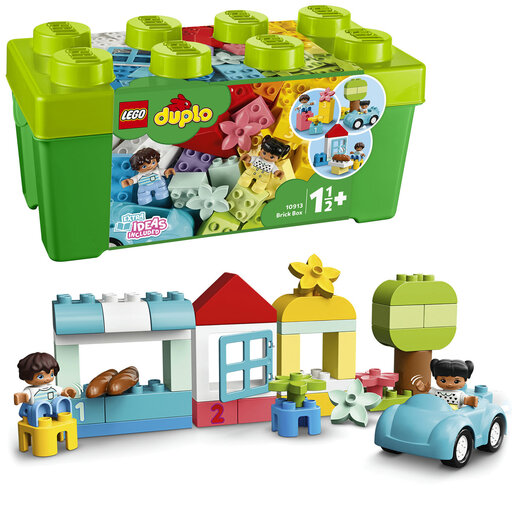
Why this choice suits them: With its 65 pieces, this box provides a versatile foundation for getting started. It contains colourful bricks, a car, a house, flowers and numbered elements.
Its open-ended content stops you being stuck in one theme and lets you reuse the bricks to imagine new creations.
A storage box, bricks numbered 1 to 3 and elements suitable for a first discovery from 18 months, according to the information provided.

Why this choice suits them: Families looking for a particularly comprehensive set get 166 pieces, four figures and three house models to rebuild.
The three configurations prevent boredom from a single setting and fuel role-play scenarios.
Kitchen and bathroom accessories, four characters including a baby, and a large build reportedly over 36 cm tall.
Why this choice suits them: This set is aimed at children who are drawn to trains, journeys and circuits they can rebuild again and again.
The tracks and three destinations allow you to vary the route, rather than just rolling a simple vehicle back and forth.
57 elements, 14 tracks, four figures and five action bricks. The train runs on four AAA batteries, not included.
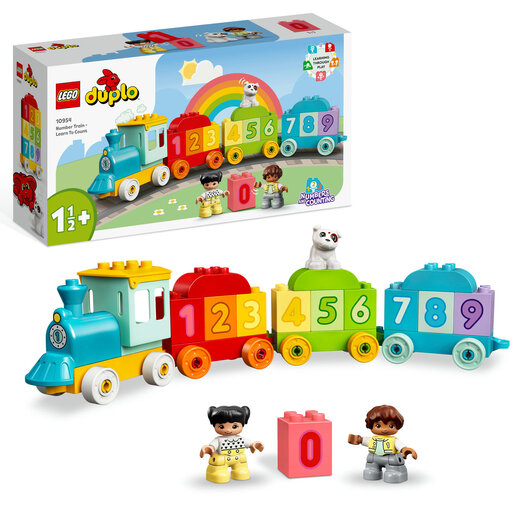
Why this choice suits them: This push-along train works well as a gift for a 2-year-old, with sorting and stacking activities and an early introduction to numbers.
With no electronics, the model can be used straight away and offers simple activities the child can repeat independently.
23 elements, ten numbered bricks, three figures and a train with moving wheels, recommended from 18 months.
We've put together a comprehensive, real-time updated selection of products that meet these demanding criteria, as well as European safety standards.
It all depends on the variety of scenarios and the ability to rebuild the models. LEGO DUPLO 3-in-1 sets, open brick boxes and combinable kits can support several stages of a child's development. Rotating toys, by only leaving some of the pieces available, can also rekindle interest over the weeks.
A simple brick box, an animal set or a small vehicle can work if the manufacturer recommends it from 18 months. Always check the warnings and go for pieces that are large enough and easy to grip.
Many sets are recommended from 2 years, particularly trains, houses, animals and vehicles. However, an adult should consider the child's maturity, the possible presence of small parts and the need for supervision.
Not necessarily. Push-along trains work without power, while some interactive models use four AAA batteries, usually not included. This information is on the product page and is worth checking before you buy.