
Livraison le jour même ou le lendemain

Qualité garantie

Débloquez vos offres de bienvenue: Livraison GRATUITE | Jusqu'à -80 % | 30 jours d'essai gratuits à JoyPlus
Téléchargez l'application
Watching a left-handed child struggle to form their first letters is a frustration parents and teachers know all too well. The hand covering the writing, smudged ink, and quick-setting fatigue... These daily little hassles aren't inevitable. In fact, choosing the right writing tool is the first step toward turning learning into a positive experience.
The problem is, store shelves are overflowing with products making tempting but often ill-suited marketing promises. Before you decide, learn how to sidestep the most common pitfalls to avoid a purchase that will just gather dust.
triangular kids' pencil is a good start, but it's far from enough. Without dedicated grip zones or a non-slip coating, the pencil can prove just as uncomfortable as a standard model.To choose the right pencil for learning to write, a few technical details make all the difference.
The first thing to look at is the pencil's overall shape. The triangular format is often recommended because it encourages natural finger placement (the famous "tripod grip" using the thumb, index, and middle fingers).
But the real game-changer is the pre-moulded grooves. These notches guide a child's fingers to find the right position without even thinking about it. For a left-hander, these grooves must be asymmetrically offset to match their writing angle and the way they "push" the pencil. A full-length non-slip coating is also a major plus to keep fingers from slipping after a few lines.
For school use, an HB lead is the gold standard. It's the ideal compromise: dark enough to mark the page without having to press down hard, yet strong enough not to break under sudden, heavy pressure.
When starting out, durability is king. Be sure to check the lead's diameter: a thick format, around 3.15?mm, will stand up much better to drops and the sometimes... enthusiastic pressure from budding writers. A school HB pencil with a sturdy lead is a safe bet to put an end to the frustration of a lead breaking mid-sentence.
Because every child (and parent!) is unique, here are a few options that cater to different needs, all with a focus on comfort and practicality.
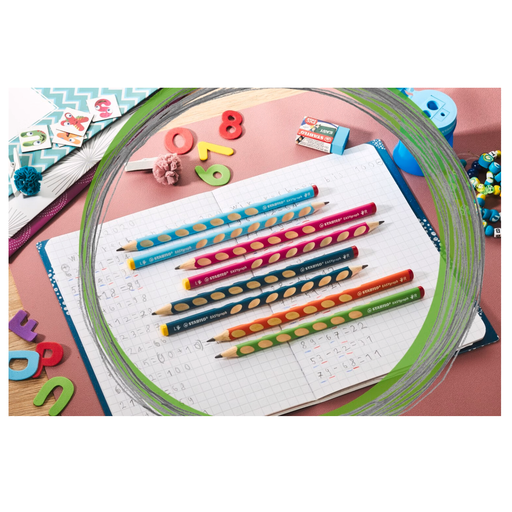
Why we recommend it: This is THE pencil designed from the ground up for left-handed children who are just starting out. It checks all the boxes: triangular shape, guide grooves, and a sturdy HB lead. The perfect tool to get started on the right foot.
No misleading "universal" claims here. The left-handed version is clearly identified (often by a small notch or a yellow-coloured tip), preventing you from buying the wrong model.
The non-slip grooves intuitively guide finger placement. Its 3.15 mm HB lead is designed to withstand pressure from beginners without snapping.
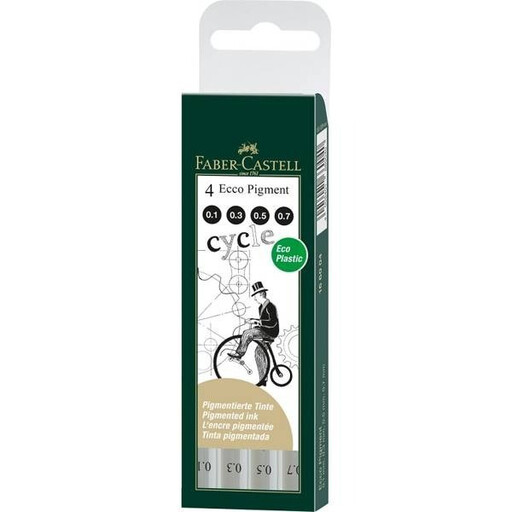
Why we recommend it: For the left-handed teen or young adult who has mastered writing and now focuses on drawing or detailed note-taking. Its ergonomic barrel ensures excellent comfort, even over long periods.
This set is a reminder that the need for comfort doesn't disappear with age. It provides an ergonomic solution for more advanced use, helping to reduce hand fatigue during long drawing sessions.
The set offers 4 tip sizes (from 0.1 to 0.7 mm) for maximum versatility. The pigmented ink is water- and light-resistant, perfect for creations meant to stand the test of time.
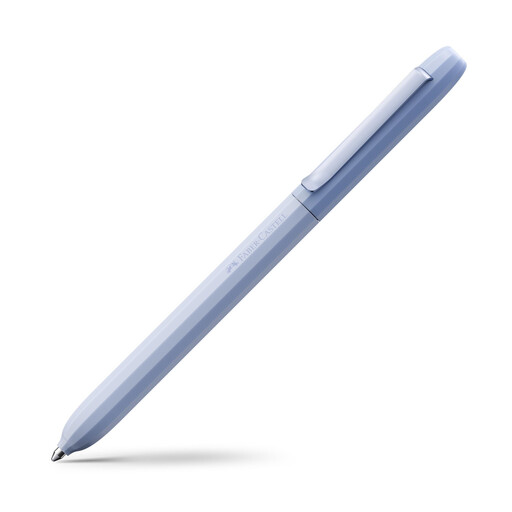
Why we recommend it: Because adults deserve comfort too! A pen for the parent or teacher who appreciates beautiful, well-designed objects. Its faceted barrel ensures a good grip and, as a bonus, prevents it from rolling off the desk.
This pen proves that ergonomics isn't just for children. It focuses on adult hand comfort and durability, with a smart design and more sustainable materials.
Its ergonomic faceted barrel reduces fatigue. It's made from 92% recycled plastic, combining comfort with a gesture for the planet.
We've curated a complete selection of supplies for you that meet our standards for quality and comfort.
It's best to introduce one right from the start of their writing journey, often around age 5 or 6 (in kindergarten or first grade). Starting off on the right foot with the proper tool helps them adopt a correct grip and good posture, which reduces fatigue and keeps them motivated.
Yes, and the difference is often striking. The secret isn't in the lead, but in how the pencil guides the hand. A well-designed ergonomic pencil for left-handers promotes a relaxed grip and a wrist angle that keeps their line of sight clear of what they're writing, reducing smudges in the process. The added comfort transforms a chore into a more enjoyable activity.
Don't worry, most modern pencil sharpeners (especially school models) have multiple holes to fit all sizes. For a wide triangular pencil like the left-handed STABILO EASYgraph, opt for a sharpener with a large-diameter opening. The easiest solution is often to choose the sharpener from the same brand, which is specially designed for the product line.