
Livraison le jour même ou le lendemain

Qualité garantie

Débloquez vos offres de bienvenue: Livraison GRATUITE | Jusqu'à -80 % | 30 jours d'essai gratuits à JoyPlus
Téléchargez l'application
The LED strip has become a go-to choice for anyone looking to personalise their interior with a touch of light. Whether you want to create soft ambient lighting in a bedroom, accentuate the lines of a TV stand, or build an immersive gaming setup, its versatility is undeniably appealing. The problem: the market is flooded with options, and it's easy to fall into traps that turn a fun decor project into a real headache.
Before you dive in, let's review the most common purchasing mistakes. Knowing these pitfalls is the first step to making an informed choice and investing in a product that will deliver on its promises long-term.
To avoid these disappointments, a quick overview of the technical specifications is essential. Don't worry, it's nothing too complicated, but these few points make all the difference between a smart purchase and a quickly regretted gadget.
Density, expressed as the number of LEDs per metre (LEDs/m), determines the final look and uniformity of the light halo.
The chip type also matters. The larger and more powerful SMD 5050 chips are the standard for quality LED RGB strips, as they offer better brightness and a richer colour spectrum.
The choice of control method will depend entirely on your habits and preferences.
The IP rating tells you how well the strip is sealed against solids (dust) and liquids (water). This is a critical criterion for safety.
To put all this into practice, here are a few models that tick the right boxes, each suited for a specific use case.
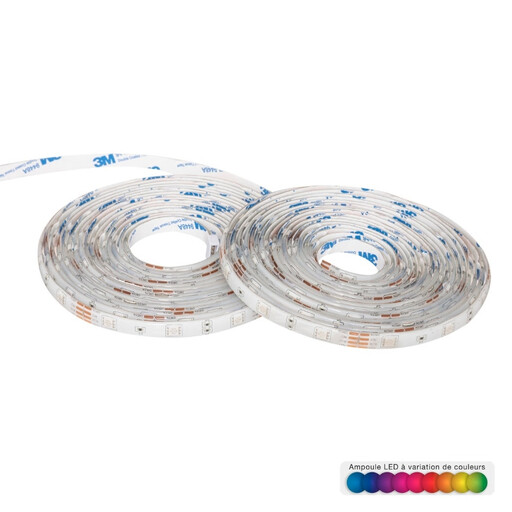
Why we chose it: Ideal for getting started without breaking the bank. This complete 10-metre kit allows you to outfit a large room or a walk-in closet at a low cost, without the hassle of a mobile app.
It bypasses sometimes finicky apps in favour of a simple and reliable infrared remote to control colours and effects.
Its generous 10m length (2x5m) can cover large areas. Installation is child's play: just plug it in and it works ("plug-and-play").
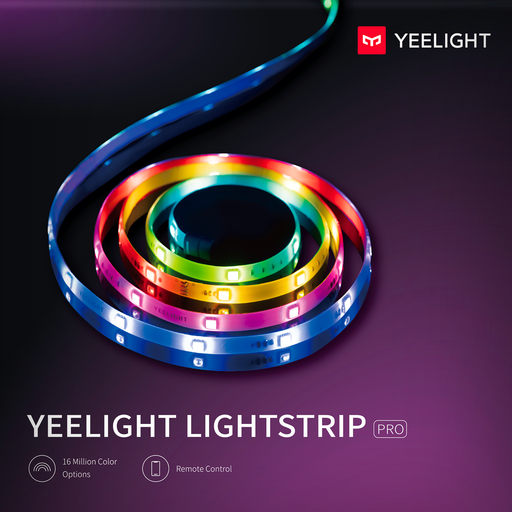
Why we chose it: The top choice for integrating your lighting into a smart home ecosystem. Compatible with industry heavyweights (Google Home, Alexa, Apple HomeKit), it's controlled via a mobile app renowned for its stability.
Thanks to its high LED density, it produces a uniform halo of light, without the "Christmas light" effect (visible dots) typical of low-end models.
Addressable LEDs for smooth, rainbow-like gradients. Native integration with Razer Chroma and Overwolf gaming platforms for total immersion.
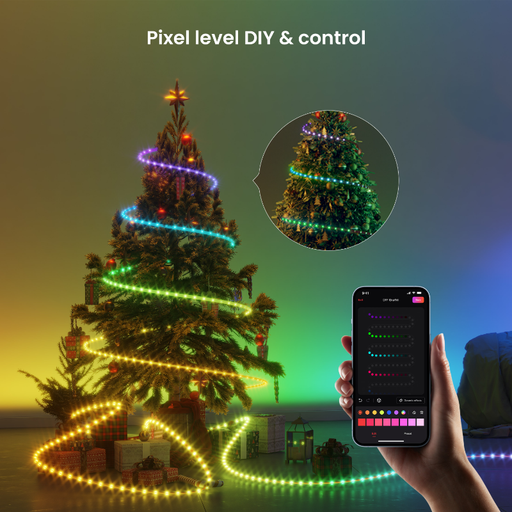
Why we chose it: The ultimate choice for gaming setups. It features RGBIC (Independent Chip) technology: each segment of the strip can display a different colour, creating dynamic wave effects and gradients impossible with a standard RGB strip.
Forget basic remotes! Here, everything is managed through a comprehensive app that syncs the lights with sound (music, games) for an atmosphere that reacts in real time.
RGBIC technology for spectacular multicolour animations. Audio and game sync for maximum immersion.
Discover our full selection of products that meet our quality criteria and European safety standards.
Yes, absolutely. Most models can be cut to size. Look for the cut marks (usually a scissor icon) present every 5 or 10 cm. Be careful, you must cut only at these specific points to avoid damaging the circuit. Special connectors are available to link multiple pieces together if needed.
An LED has a very long theoretical lifespan, often between 25,000 and 50,000 hours, which translates to years of use. In practice, the longevity will mostly depend on the overall quality of the product: good heat dissipation is crucial. Logically, a strip constantly used at full power will wear out faster.
No, and that's one of their biggest advantages. LED technology is extremely energy-efficient. For example, a 5-metre strip consumes on average between 15 and 35 watts, a fraction of what an old incandescent bulb consumes. The impact on your electricity bill will therefore be negligible, even with heavy use.