
Livraison le jour même ou le lendemain

Qualité garantie

Débloquez vos offres de bienvenue: Livraison GRATUITE | Jusqu'à -80 % | 30 jours d'essai gratuits à JoyPlus
Téléchargez l'application
The LED strip has become the go-to accessory for personalising your home's interior. Ideal for creating ambient lighting in a bedroom, energising a gaming setup, or even customising a car's interior, its versatility is compelling. The problem?is that the market is saturated with options, and it's easy to get ripped off, turning a promising purchase into a real disappointment.
Before you dive in, it's crucial to know how to decode the features that truly make a difference. This guide details the essential points to check and presents a selection of products tailored to specific needs, ensuring a successful, regret-free purchase.
Navigating the jungle of LED strips can quickly become a headache. Product pages promise the world, but the reality is often less impressive. Here are the three most common disappointments?:
To avoid these traps, a few technical criteria are all you need to separate the wheat from the chaff and ensure the product will match your project.
This is THE deciding factor for achieving the lighting effects you have in mind.
The strip's length and its power supply must be perfectly suited to your installation.
The control method directly affects your daily user experience.
Rather than a long, drawn-out list, we've selected a few products that meet specific use cases, applying the quality criteria we've just discussed.
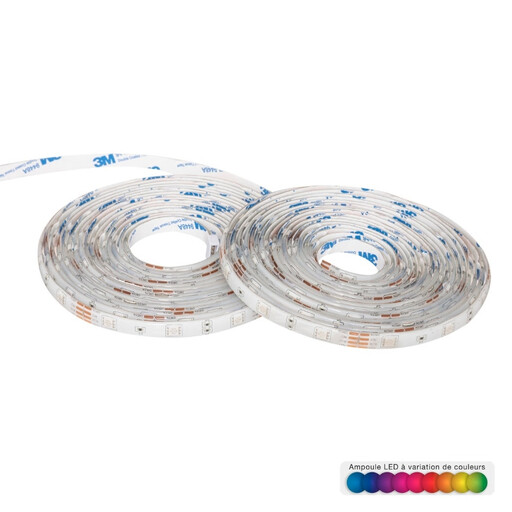
Why we recommend it : Perfect for those who want a turnkey solution for lighting a large area. Ideal for a cornice, under a cabinet, or a stairwell, without the hassle of a mobile app.
Its 10-metre length and mains power supply ensure uniform brightness, whereas shorter USB models often struggle. The included remote provides simple and immediate control.
Its long 10m (2x5m) length covers large areas. "Plug-and-play" installation with its remote control.
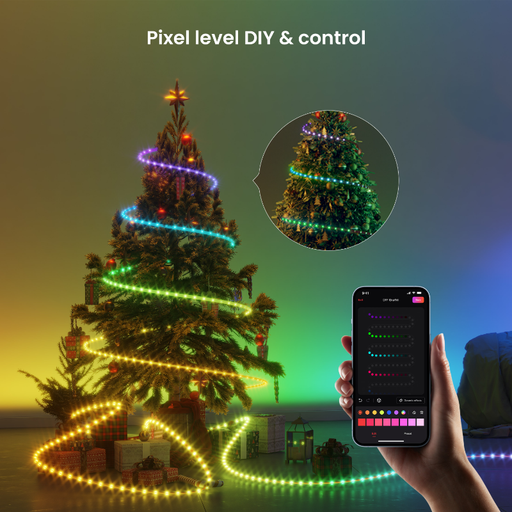
Why we recommend it : Built for gamers, this strip offers dynamic lighting effects and syncs with compatible games (via Razer Chroma and Overwolf) for maximum immersion.
It features RGBIC technology, which is essential for creating the fluid, multi-colour effects that are impossible with a standard RGB strip. Its connected ecosystem is a guarantee of reliability and software support.
RGBIC technology for rich animations and syncing with games and music. Full control via app and voice assistants.
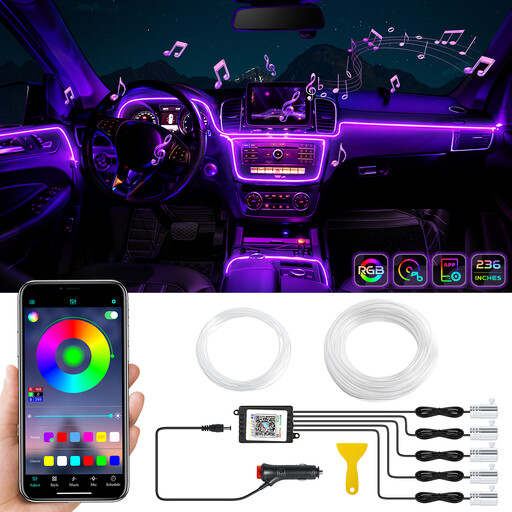
Why we recommend it : An all-in-one kit designed for car interiors. It runs on a 12V socket and includes everything needed (strips for the dashboard, doors, and footwells) for a clean and safe installation.
This is a native 12V kit, which avoids the risky installations associated with completely unsuitable 230V or USB strips. Control via a Bluetooth app offers much finer customisation than a simple remote.
A complete kit for an integrated look. Safe 12V power supply for cars. App control with music mode.
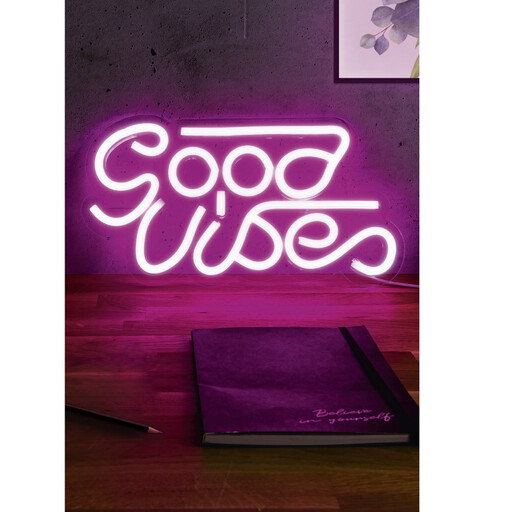
Why we recommend it : For those who want a ready-to-use decorative piece without the installation step. This wall-mounted neon sign instantly adds a trendy, pop-art touch to a bedroom or office.
It completely bypasses the installation complexity of a traditional strip. Its "neon" format creates an immediate visual focal point, where a simple LED strip might look a bit makeshift.
The neon look, ready to be placed or hung. Its USB power supply makes it incredibly easy to place anywhere.
Discover our full selection of products that meet our quality criteria and European safety standards.
An LED strip's lifespan is typically between 25,000 and 50,000 hours, which represents several years of normal use. In practice, longevity mainly depends on the quality of the components and heat dissipation. A pro tip: a strip attached to an aluminium profile will last longer because heat is dissipated much more effectively.
No, LED technology is renowned for its excellent energy efficiency. A 5-metre LED strip consumes, on average, between 15 and 30 watts at full power, which is far less than an incandescent bulb. The actual consumption will, of course, depend on the brightness and colours selected, but it remains a very economical lighting solution.
Yes, almost all LED strips are cuttable. They have cutting marks (often a scissor icon) every 5 or 10 cm. It is crucial to cut only at these specific points to avoid damaging the circuit. Connectors are available to join the offcuts, but the process requires a bit of precision.