
Livraison le jour même ou le lendemain

Qualité garantie

Débloquez vos offres de bienvenue: Livraison GRATUITE | Jusqu'à -80 % | 30 jours d'essai gratuits à JoyPlus
Téléchargez l'application
Getting up at night without switching on a dazzling light, walking through a hallway or finding something at the back of a cupboard: a motion-sensor LED night light can be useful in many everyday situations. However, choosing the right model is essential. A sensor that is too sensitive, an impractical battery or unsuitable lighting can quickly turn a promising purchase into an accessory forgotten in a drawer.
Here are the key criteria to consider before choosing an automatic night light, along with a selection of products suited to different uses in France.
A night light with a motion sensor switches on when it detects movement. A model fitted with a dusk sensor, on the other hand, responds when ambient light levels fall. Some devices combine both functions, but this is not always the case.
In a hallway, motion detection is useful for occasional passage. In a child’s bedroom, a night light that stays on from nightfall may be more suitable. So check the operating mode carefully: activation only in darkness, continuous lighting or activation when movement is detected.
A very powerful light is not necessarily suitable for indoor night-time lighting. In a bedroom or beside a bed, a moderate output helps avoid harsh light. Conversely, a deep cupboard or kitchen may require a longer, brighter LED light bar.
The number of lumens makes it possible to compare light output, but it must be considered alongside the size of the room, the installation height and the length of time the light stays on. A small 20 to 30 lm night light may be enough to help you find your way at night, while a 190 lm light bar will be more suitable under a unit or in a large storage area.
A USB-rechargeable night light means you do not have to rely on a socket, but it must be recharged regularly. A mains-powered model works without a battery, but its position depends on the available socket. Battery-powered devices are easy to move, although running costs are linked to regularly replacing the batteries.
Another detail that is often overlooked: dust can interfere with detection. The sensor should remain unobstructed, and the surface should be cleaned with a soft, dry cloth. Models with IP20 protection are designed for dry indoor use; they must not be installed in areas exposed to splashes of water.
For a hallway or staircase, check the stated detection range. Some models detect movement up to 3 metres away, while others cover distances of up to 6 metres. The product’s position also matters: a sensor facing the route may not respond in the same way as one installed perpendicular to the direction of travel.
An automatic switch-off delay of around 30 seconds prevents the light from being left on unnecessarily. This duration is generally sufficient for simply walking past. In a dressing room or kitchen, however, a continuous-lighting mode may be more convenient.
A dimmable night light allows you to adjust the brightness to suit the room. Warm temperatures of around 2,800 to 3,200 K produce a soft light that is well suited to a bedroom. Cooler tones of around 5,000 to 6,000 K make it easier to find items in a kitchen, garage or dry bathroom.
Devices offering several colour temperatures and five brightness levels provide greater flexibility, but they also involve more settings. For a straightforward bedroom installation, a model with automatic activation and fixed brightness may be perfectly adequate.
A magnetic or adhesive fixing makes it possible to install a wireless motion-sensor light without drilling or carrying out any work. Clean the surface before fitting and check that the adhesive can support the product’s weight. With a magnetic light bar, adhesion depends on whether a suitable metal surface is available.
For a mains-powered model, check the stated voltage, plug type and safety instructions provided in the manual. Products intended for children should be kept out of reach, with USB cables positioned away from the bed and accessible areas. An LED night light for babies is intended only as supplementary lighting and does not replace the usual safety measures required in a bedroom.
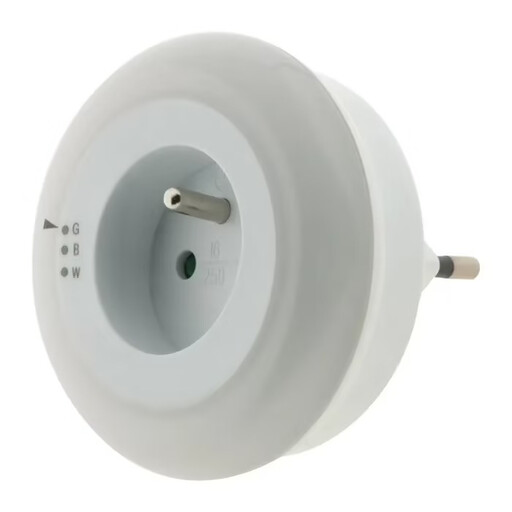
Why this choice suits this profile : This model plugs directly into a 230 V socket and switches on at nightfall. It is a simple first purchase for a hallway, child’s bedroom or any other dark space.
The dusk sensor prevents the light from activating with the slightest movement. Its stated power consumption is 0.5 W, and the socket remains usable thanks to its pass-through design.
Three colours to choose from, integrated day/night sensor, IP20 protection and direct mains connection.

Why this choice suits this profile : Their wireless design allows you to light several areas of the home, such as a staircase and hallway. The lighting settings allow you to adapt the illumination to each location.
The 500 mAh rechargeable battery means you do not need to keep buying batteries. In sensor mode, the light switches on in the dark and does not remain lit continuously.
Three colour temperatures, five brightness levels, a stated range of 3 to 5 metres and USB 5 V–1 A charging.
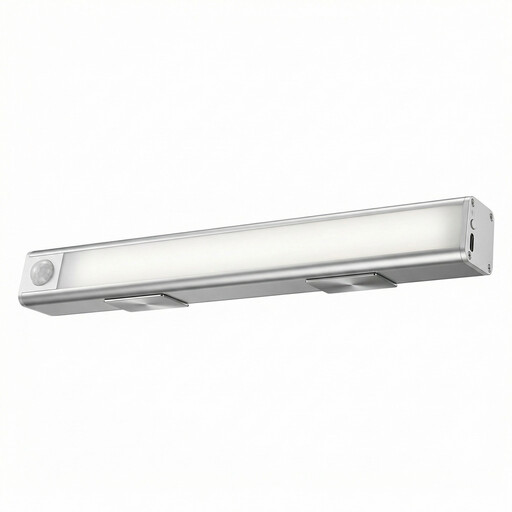
Why this choice suits this profile : This light bar is suitable for a kitchen, long cupboard, indoor workshop or converted vehicle. Its length spreads light across a much wider area than a small night light.
The magnetic fixing requires no drilling. The stated sensor range is up to 3 metres, and the light switches off after around 30 seconds without movement.
Stated light output of 190 lm, 114 LEDs, three colour temperatures and USB Type-C charging in under 1.5 hours according to the manufacturer’s data.
We have put together a complete, real-time updated list of products that fully meet these strict selection criteria and European safety regulations.
Choose a model with automatic switch-off or one that combines motion detection with darkness detection. A 0.5 W night light uses little electricity when left plugged in, but actual costs depend on how long it is used and the electricity tariff set out in your contract. For a rechargeable light, the energy used during charging is generally limited. However, the stated battery life may vary depending on the brightness level and how often the light is triggered.
Lifespan depends on the quality of the components, the battery and the conditions of use. To preserve a rechargeable model, use a compatible charger, avoid moisture and do not dismantle the device. A gradual reduction in battery life generally indicates that the battery needs to be recharged more often. Consult the manual for the product-specific instructions and warranty terms.
Install it at passage height, ensuring that there are no obstacles in front of the sensor. To light a hallway or staircase, direct the light towards the floor to make moving around at night easier. In a cupboard, an LED light bar fixed beneath a shelf or to a metal wall can illuminate its contents directly. In a child’s bedroom, keep the night light away from the bed, textiles and any heat source, then regularly check that it remains securely fixed.