
Livraison le jour même ou le lendemain

Qualité garantie

Débloquez vos offres de bienvenue: Livraison GRATUITE | Jusqu'à -80 % | 30 jours d'essai gratuits à JoyPlus
Téléchargez l'application
Switching to LED lighting promises lower electricity bills and bulbs that last. Yet, when it comes time to choose, the experience can quickly turn into a headache. Between the technical jargon, marketing promises, and overcrowded shelves, it's easy to end up with a bulb that's too dim, an atmosphere worthy of a hospital, or completely washed-out colors. To avoid these pitfalls, here are the mistakes you should never make.
Here are the three most common purchasing errors, and our advice to ensure you never get duped again:
To see things more clearly, you just need to master a few key indicators. They will help you find the perfect lighting for every room, whether it's a simple LED bulb or a more ambitious lighting design solution.
Expressed in Kelvins (K), color temperature defines the shade of white light emitted by the bulb. It's what will dictate the ambient lighting of your room.
The CRI (Color Rendering Index) rates a bulb's ability to render colors faithfully on a scale of 100, just as sunlight would.
It's the most basic mistake, but it happens easily: before buying, check the base of your light fixture (the part that screws or clips in). In Europe, three formats dominate the market:
There's a solution for every need. Here is our selection of smart products that check all the right boxes.
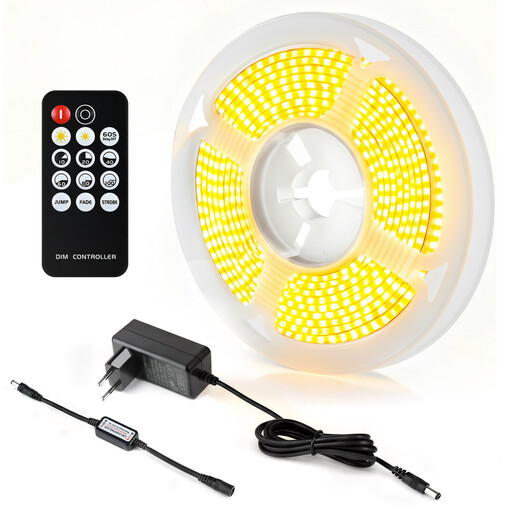
Ideal for: those who love refined, indirect lighting. This LED strip adapts to your every need: highlighting a shelf, lining a countertop, creating a headboard... It offers total flexibility for custom ambient lighting.
Its COB technology ensures a perfectly uniform line of light—goodbye to the "Christmas light" effect of low-end strips. With its warm white light (3000 K) and an excellent CRI of 92, the atmosphere is cozy and the colors are true-to-life.
Its intensity is fully adjustable (from 10% to 100%) via the included remote control. Perfect for modulating the ambiance from morning to night.
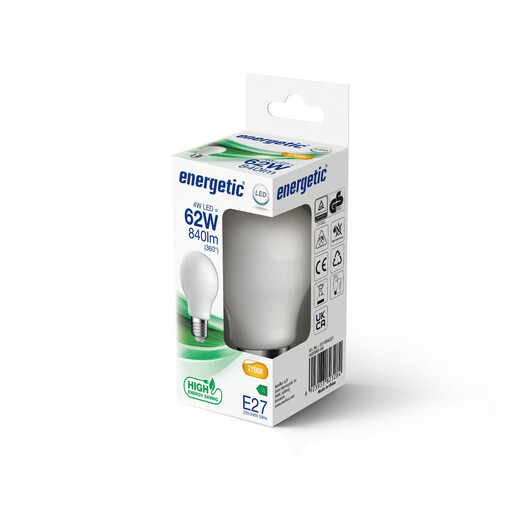
Ideal for: anyone who wants to replace their old, energy-guzzling bulbs without the hassle. They're looking for a reliable, durable, and wallet-friendly solution. Efficiency above all.
Mission low energy consumption accomplished with its Class A energy rating. Its 2700 K temperature provides a classic, comfortable warm white, far from the sterile feel of an open-plan office.
Its advertised lifespan of 50,000 hours is colossal. This gives you peace of mind for years and reduces replacement frequency (and waste). A true long-term investment.
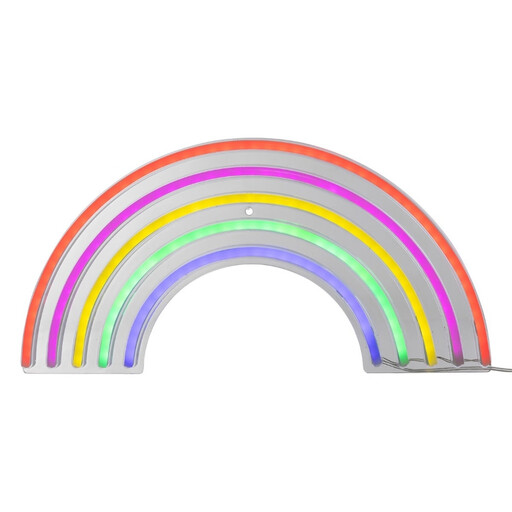
Ideal for: those who see light as a decorative object in its own right. This wall neon is the perfect piece to inject a dose of fun and color into a bedroom, living room, or game room.
Here, there's no fuss about lumens or CRI. The goal isn't to illuminate, but to decorate. This piece of lighting decor embraces its role: to create a pop, trendy focal point.
Powered by a USB-rechargeable battery, it can be installed anywhere in seconds. No more fussing with outlets and messy wires.
Discover our complete selection of expert-approved products, all compliant with safety standards and our quality criteria.
Packaging often displays impressive figures, from 15,000 to 50,000 hours. Be aware that these are laboratory estimates. In the real world, the longevity of an LED bulb depends on the quality of its components, its ventilation (a bulb confined in a closed fixture will overheat and last for a shorter time), and your usage. Regardless, it will last infinitely longer than any halogen or incandescent bulb.
You need to forget the "wattage" reflex. The only value that matters is the lumen (lm). To help you out, here's a quick conversion guide for your old bulbs:
Rely only on the lumens indicated on the box: it's the only reliable indicator of light output.
Yes, but on one condition: the bulb must be labeled as "dimmable" (or "dimmer compatible"). Using a standard LED on a dimmer is a bad idea: expect buzzing, annoying flickering, and premature wear on both the bulb and the dimmer. This is an essential check to make before you head to the checkout.