
Livraison le jour même ou le lendemain

Qualité garantie

Débloquez vos offres de bienvenue: Livraison GRATUITE | Jusqu'à -80 % | 30 jours d'essai gratuits à JoyPlus
Téléchargez l'application
Modernising your vehicle’s lighting can improve visibility, refresh its appearance and simplify maintenance. But choosing LED lighting for cars and motorbikes isn’t simply about comparing lumen figures. Compatibility, beam quality, heat dissipation and compliance are all points to check before placing your order.
A 25,000 lumen LED car bulb might look particularly impressive on paper. In practice, the usable brightness also depends on the optics, the orientation of the LED chips and the geometry of the original reflector. A high light output that’s poorly directed can create dark spots or dazzle other road users.
Power and lifespan figures should therefore be treated as manufacturer-stated data. They don’t replace the need to check the beam or have the headlights adjusted after installation.
An H1, H4, H7, H8, H9 or H11 LED bulb doesn’t automatically suit every vehicle. The base, the space available behind the headlight, the possible presence of a fan and the connector must all match your vehicle.
Some modern models monitor electrical consumption. A CANbus LED bulb can reduce the risk of error messages or flickering, but stated compatibility isn’t a universal guarantee. Consult your vehicle’s manual and check the exact reference of the bulb you’ve removed.
The term plug and play LED bulb usually means installation doesn’t require major wiring modifications. It doesn’t guarantee that the replacement is permitted on all vehicles or for all uses on public roads.
In the UK, check compatibility with your vehicle, applicable markings, current regulations and MOT requirements. After fitting, headlight adjustment remains essential. A perfectly installed bulb placed in an incompatible optic can produce a beam that’s distracting for other drivers.
Start by noting the reference on your original bulb or in your manual. For a round motorcycle headlight, also measure the housing diameter and the available depth. A 5.75-inch LED motorcycle headlight may suit many bikes with a circular housing, but you need to check the length of the projector’s rear section, the mounting tabs and the connector.
The BraveWAY product shown below states it’s compatible with many 5.75-inch housings, while noting that its rear section is longer than some conventional headlights. This check is particularly important on a faired motorcycle or one with limited space behind the optic.
Choose a solution that clearly describes the beam shape, the separation between dipped and main beam, and how glare is managed. An LED headlight with an anti-glare beam should still be checked once installed, because the result also depends on the optic and its adjustment.
A colour temperature of 6000 K produces a cool white light. A 6000K LED fog light bulb can give a whiter appearance, but fog, rain and wet roads all change how light is perceived. For fog lights, also check their position, height and the conditions in which their use is permitted.
LEDs generate heat at their components. An integrated fan, an aluminium housing or water protection can contribute to stable operation, without guaranteeing the same lifespan in every vehicle.
During installation, switch off the power and let the old bulb cool down. Some models can reach high temperatures during use. After fitting, check for vibrations, condensation and contact with the rear cover.
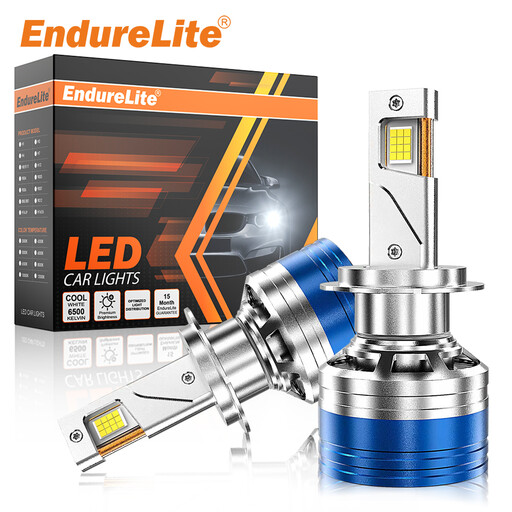
Why this choice suits this profile: Its format, described as close to that of an original bulb, and its plug-and-play installation suit motorists who want to avoid major modifications.
The H1, H4, H7, H11, 9005, 9006 and 9012 references are listed on the product page, but the reference matching your vehicle must still be confirmed before purchase.
Stated colour temperature of 6000 K, integrated fan, aluminium housing and stated CANbus compatibility with many systems.
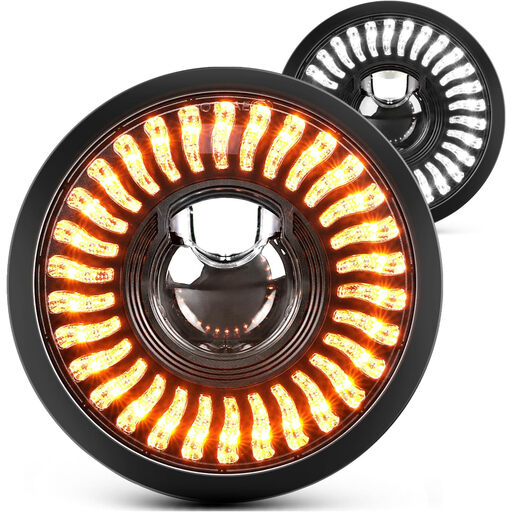
Why this choice suits this profile: This solution is aimed at riders looking for a round headlight offering dipped beam, main beam, daytime running lights and a welcome effect.
The product page describes a cut-off line for dipped beam and a central projector-style optic. Adjustment on the bike remains essential to verify the result.
Dipped and main beam, white and yellow daytime running lights, start-up halo and installation stated without the need for an additional decoder.
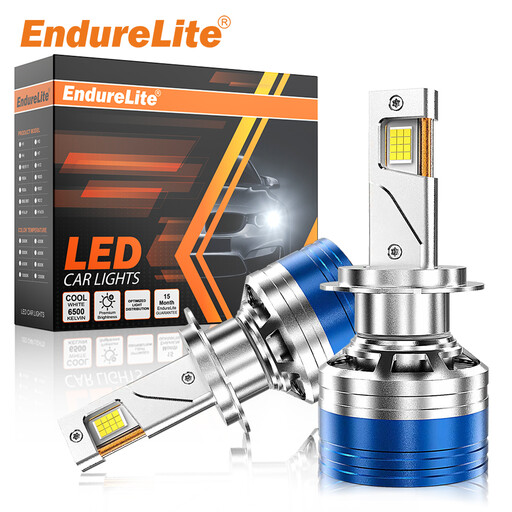
Why this choice suits this profile: This model is aimed at drivers replacing H8, H9 or H11 fog light bulbs who want to keep installation simple.
The product page mentions a 1:1 design, IP68 protection and a fan. You must still check the available space and the fog light unit’s compatibility.
Cool white light stated at 6000 K, plug-and-play installation and active cooling as indicated on the product page.
Before any work, switch off the lights and let the components cool down. Wear gloves if the instructions recommend it and avoid touching the optical surfaces. Once the bulb is installed:
On vehicles with a diagnostic system, a CANbus module may be necessary despite stated compatibility. Results vary depending on the make, model and year of first registration of the vehicle.
To complete a basket focused on mobility and the home, the MC STAR SF60 is a foldable, incline-adjustable treadmill with a stated automatic incline of up to 15%, a maximum speed of 12 km/h and a stated capacity of 400 lb. Check the folded dimensions, running surface and delivery conditions before ordering: see the MC STAR SF60 treadmill.
For everyday cleaning, the roborock H60 Hub Pro cordless stick vacuum with auto-empty station states a suction power of 170 AW, up to 80 minutes of runtime and an automatic emptying station. Actual runtime depends on the mode used and the accessories fitted: discover the roborock H60 Hub Pro.
We’ve put together a comprehensive, real-time updated list of products that meet these demanding selection criteria as well as European safety requirements.
No. The bulb base reference, the space available behind the optic, the electrical system and the headlight design must all match. Check your vehicle’s manual and the information provided by the manufacturer before buying.
Yes. Even a bulb described as plug and play can change the apparent position of the beam. Check the cut-off and height, then have the headlights adjusted if necessary.
Consumption depends on the model and its cooling system. Check the electrical power stated on the product page rather than relying solely on the stated light output. The integrated fan can also affect consumption and noise levels.