
Livraison le jour même ou le lendemain

Qualité garantie

Débloquez vos offres de bienvenue: Livraison GRATUITE | Jusqu'à -80 % | 30 jours d'essai gratuits à JoyPlus
Téléchargez l'application
LED lighting has become a part of our daily lives, from our homes and gardens to our daily commutes. With promises of energy savings and record-breaking lifespans, there's no shortage of options. But be warned: behind the marketing hype lie pitfalls that can quickly turn a great deal into a costly disappointment. As the Senior Equipment Editor at Joybuy, I'm here to help you navigate the options and avoid the bad deals.
Before you start shopping, watch out for these three common pitfalls:
To avoid these unpleasant surprises, rely on objective technical criteria. They are your best guarantee for a quality product that will stand the test of time.
The IP rating is an international standard that assesses a device's resistance to solid objects (like dust) and liquids (like water). For outdoor lighting, this is a non-negotiable criterion.
Forget about Watts, which only measure electricity consumption. The true performance of LED lighting is judged by lumens and kelvins.
The type of power supply determines both installation and maintenance.
Here are a few products that tick all the boxes, selected according to the criteria we've just covered.
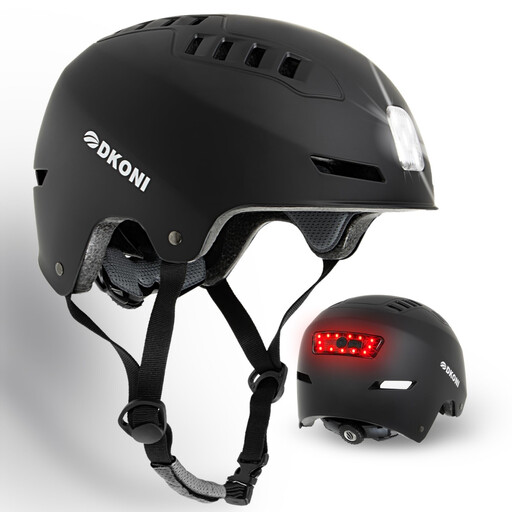
Why we recommend it: It integrates both front and rear lights. It's the perfect all-in-one solution for cyclists and scooter riders who want maximum visibility without the clutter of multiple accessories.
As a USB-rechargeable bike helmet with a light, it saves you the hassle and cost of batteries. Most importantly, its safety certifications (CE, CPSC, ASTM) guarantee that the onboard electronics do not compromise its primary function: protecting you.
It combines protection and visibility. Its 4 rear lighting modes allow you to adapt your signal to traffic conditions, a real safety bonus in the city.
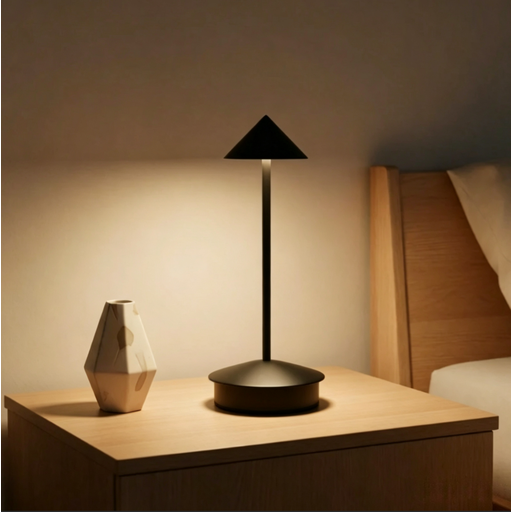
Why we recommend it: Perfect for anyone looking for an accent light that is both elegant and portable. This cordless lamp moves from the living room to a covered patio in an instant, with no need to worry about outlets.
It avoids the trap of unrealistic battery life claims with an advertised runtime of 12 hours, which is perfectly reasonable for accent use. Its contact charging base is much more robust and convenient than an often-fragile micro-USB port.
Its touch control allows you to vary the intensity (dimmable function) and the colour temperature (from 3000 to 6000 K). This is a rare versatility that lets you adapt to any time of day.
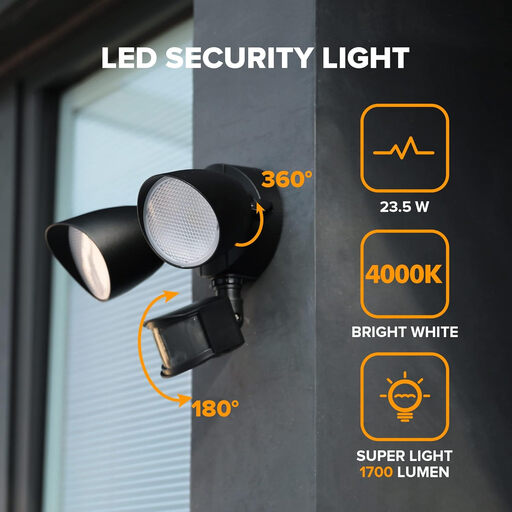
Why we recommend it: Designed for homeowners who make no compromises on security. It's perfect for illuminating an entryway, garage, or dark area of the garden to deter any intruders.
Its die-cast aluminium and tempered glass construction provides a level of robustness and weather resistance far superior to plastic. As a wired model, it eliminates any battery life issues, a critical point for a security light.
The combination of high brightness (1250 lm) and a reliable PIR motion sensor makes it a formidable deterrent. Bonus: the two heads are adjustable for custom coverage.
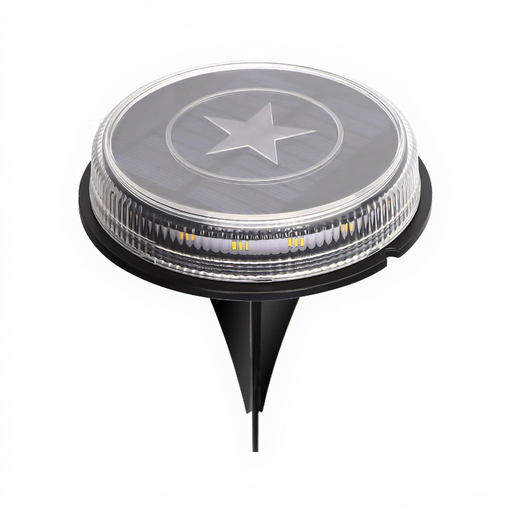
Why we recommend it: The perfect solution for marking a pathway, patio, or flowerbed without running a single cable and without adding to your electricity bill. Installation? Just place it, and you're done.
It sidesteps the waterproofing trap with an IP66 rating, which allows it to withstand heavy downpours without failing. Its robust design can even withstand being driven over by a car, a true sign of durability for an in-ground light.
Absolute simplicity: zero wires, zero electricity bills, zero-hassle installation. Its warm light (3200K) creates soft, welcoming pathway lighting that is never glaring.
We have curated a complete selection of products that meet our strict selection criteria and current safety standards.
A quality LED chip can last between 25,000 and 50,000 hours. Based on 5 hours of use per day, that's 13 to 27 years! However, be aware that the actual lifespan of the product also depends on the durability of other components (power supply, cooling system).
Rely on lumens (lm), not watts. For pathway marking, 100 to 300 lm per light is sufficient. To properly light a front door, aim for 400 to 600 lm. For a security floodlight that needs to flood a garden or yard with light, a brightness of 1200 lm or more is recommended.
It all depends on the amount of sunlight. In winter, with shorter days and frequent cloud cover, the charging time will naturally decrease. A good model with a high-performance panel and a well-sized battery will continue to work, but its runtime will likely be shorter than in summer. The key is to install it in the sunniest area of your garden, even in winter.