
Livraison le jour même ou le lendemain

Qualité garantie

Débloquez vos offres de bienvenue: Livraison GRATUITE | Jusqu'à -80 % | 30 jours d'essai gratuits à JoyPlus
Téléchargez l'application
A set of LED fairy lights can transform a balcony, bedroom, patio or function room in minutes. But choosing the right set is essential. A cable that’s too short, an unsuitable power supply, overestimating its water resistance or a light colour that clashes with your décor can all lead to disappointment.
Before choosing fairy lights for Christmas, a wedding, a birthday or garden lighting, it’s worth checking a few practical details. Here’s what to look for when comparing different options and avoiding a disappointing purchase.
A set of fairy lights advertised as 30 metres long may include several metres of cable before the first LED. If you’re decorating a façade or pergola, start by measuring the area you want to cover. Then check the illuminated length, the spacing between the LEDs and whether there’s a lead-in cable.
Different styles suit different needs:
IP44 waterproof fairy lights can withstand water splashes from different directions. This doesn’t mean they can be submerged, placed in a puddle or left unprotected in heavy rain.
The controller, plug and connectors may need extra protection. For outdoor LED fairy lights, keep connections under shelter and follow the manufacturer’s recommendations. IP20 models, such as some decorative battery-powered lights designed for indoor use, should be kept away from moisture.
Warm white gives off a soft glow, making it particularly well suited to a living room, wedding table or traditional Christmas décor. Cool white looks crisper and brighter. RGB fairy lights let you change the colour, but they won’t necessarily suit a calm or cosy setting.
It’s also worth checking the lighting modes. Eight light effects can be great for a party, while a steady mode or simple brightness adjustment is often more pleasant for everyday use.
For an outdoor installation, look for an IP44 rating or higher, where stated. Check the voltage too: some models plug directly into the mains at 220–240 V, while others run on low voltage, such as 31 V.
Mains-powered lights are suitable for extended use without needing to replace batteries. Battery-powered models are easier to install away from a socket, but battery life depends on the battery capacity and the light mode selected. On a patio or in a garden, always keep plugs and controllers away from areas where water could collect.
The number of LEDs alone won’t tell you what the finished display will look like. Compare:
A 250-LED net light can cover an area evenly. A set with spaced bulbs creates a line of individual points of light, making it ideal for a pergola or function.
Choose a system that suits the surface you’ll be attaching it to. Copper wire is easy to shape around a railing or branch, while a net light is easier to secure to a wall with non-metallic fasteners. Before cleaning fairy lights, unplug them and wipe them with a dry cloth, unless the manufacturer advises otherwise.
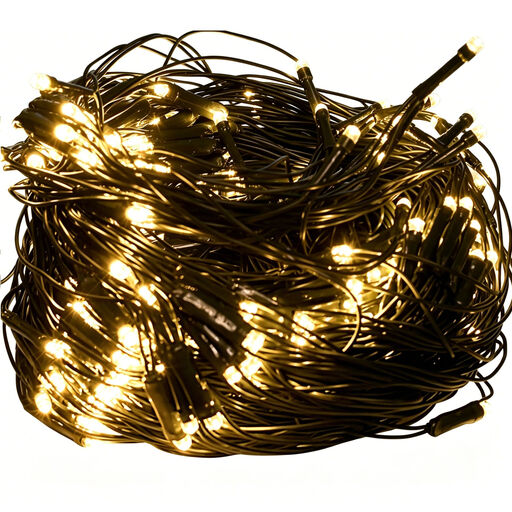
Why this is a good fit: Its 3 × 2 m size is ideal for a window, small wall, balcony or occasional decorative display. The 250 LEDs offer eight lighting modes.
The dimensions and IP44 rating are clearly stated. If you use it outdoors, however, the controller must be kept sheltered from water.
A compact size, warm white light, 220 V mains power and eight selectable modes.
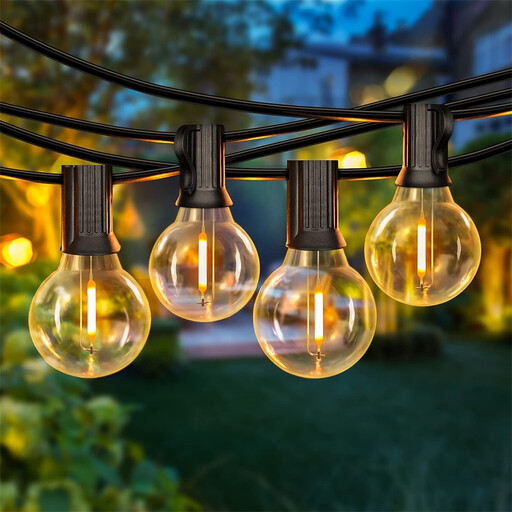
Why this is a good fit: Its replaceable G40 bulbs, 30 m length and dimming function make it a great choice for larger patio or function room displays.
Each bulb can be replaced individually, so one faulty bulb doesn’t mean you have to replace the whole set.
30 m length, replaceable bulbs, dimming function, timer and the option to connect up to 500 bulbs, according to the product listing.
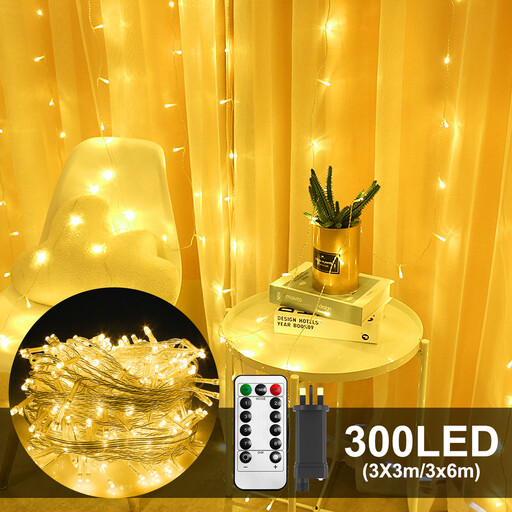
Why this is a good fit: With 600 LEDs across a 3 × 3 m curtain, this model provides dense coverage for a function room, wall, covered patio or wedding display.
The product listing specifies the IP44 rating, 31 V output and the need to protect the plug and controller from moisture.
600 LEDs, eight modes, memory function, 5 m power cable and an extension connector.
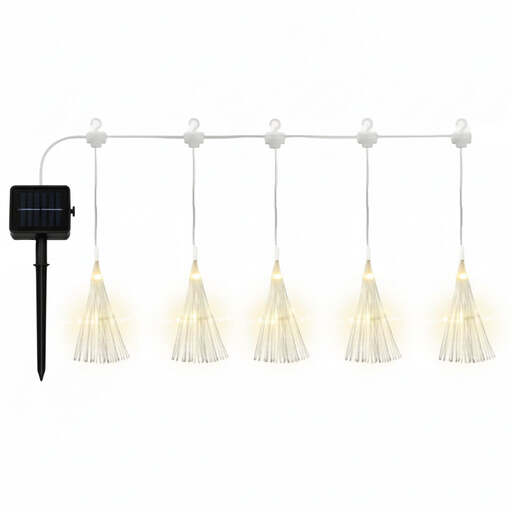
Why this is a good fit: Its solar power supply makes it suitable for a garden, pergola or patio where access to an electrical socket is limited.
How long it runs depends on the amount of solar energy available. Place the panel somewhere with plenty of sunlight and bear the weather conditions in mind.
450 LEDs, five firework-effect balls, IP44 rating, 13 brightness settings and a claimed run time of 6 to 8 hours after a full charge.
We’ve compiled a comprehensive list, updated in real time, of products that best meet these selection criteria and European safety requirements.
Lights with an IP44 rating can withstand water splashes, but they must not be submerged. Protect the controller, plugs and connectors, and avoid installations directly exposed to severe weather if there’s no shelter.
Energy use depends on the number of LEDs, the power rating and how long the lights are on. A set of LED lights using just a few watts will generally use very little electricity, but mains-powered lights continue to draw power while plugged in. A timer or solar-powered model can reduce daily running time.
Unplug them before handling, use non-metallic fasteners and never pull on the wires. Check that the voltage is compatible, avoid sharply bending the cables and keep the plugs away from water. If you’re putting the lights away after the season, remove the batteries from battery-powered models before storing them for an extended period.