
Livraison le jour même ou le lendemain

Qualité garantie

Débloquez vos offres de bienvenue: Livraison GRATUITE | Jusqu'à -80 % | 30 jours d'essai gratuits à JoyPlus
Téléchargez l'application
Upgrading to LED car lighting holds great promise: better night-time visibility, an extended lifespan, and a modernised look. However, the market is a jungle of options and technical jargon where it's easy to get lost. As the Head of Product Recommendations at Joybuy, my mission is to help you see things more clearly. Let's break down the pitfalls to avoid and the criteria that truly matter to make the right choice.
Before you get dazzled by marketing numbers, keep an eye out for these three classic mistakes that lead straight to disappointment.
Many manufacturers bombard their packaging with astronomical lumen (lm) values. While a powerful light output is a plus, it in no way guarantees the quality of the final illumination. A poorly designed LED headlight bulb, even an ultra-powerful one, will produce a scattered beam, create dark spots, and, worst of all, blind oncoming drivers. The precision of the beam and its clean cutoff are far more important hallmarks of safety than a raw lumen figure. Besides, a poor beam pattern is grounds for failing a vehicle inspection. You've been warned.
The "ready to use" argument is appealing, but the reality is often more complex. Two problems can quickly ruin the installation experience:
Heat is the arch-nemesis of LED chips. A powerful automotive LED light generates significant heat that must be perfectly dissipated to ensure performance and longevity. A low-end cooling system, whether it's a cheap fan or an undersized passive heat sink, will inevitably lead to overheating, a drop in brightness, and, ultimately, the premature death of the bulb.
To successfully replace your halogens with LEDs, forget the marketing hype and focus on these three essential points.
This is the absolute basics. Every vehicle uses specific base types for its low beams, high beams, or fog lights. The most common are the H7 LED bulb (single filament) and the H4 LED bulb (dual filament to manage both low and high beams). To find out your car's bulb type, the easiest way is to consult your owner's manual or look directly at the bulb you're replacing. The information is always engraved on it.
There are two main technologies:
To avoid electronic quirks on modern cars, opt for a CANbus LED kit. These kits integrate a resistor or an electronic module (the "driver") that mimics the power consumption of a halogen bulb, thus tricking the onboard computer. Most quality kits claim to be "98% compatible," but for some particularly finicky European models, an external CANbus decoder may still be necessary.
Rather than a long list, here is our selection of products for specific needs, validated against the criteria we've just discussed.
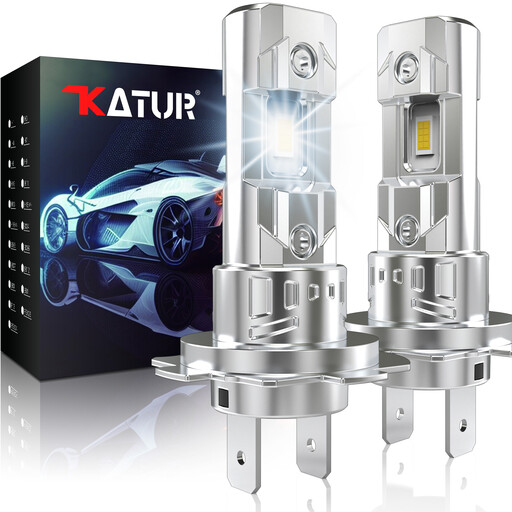
Our take : Ideal for a simple and effective first upgrade. Its ultra-compact size and fanless design make installation a breeze, even for a novice, while eliminating a potential point of failure. The perfect hassle-free solution for better visibility.
Its 1:1 mini design without an external fan bypasses the clearance pitfall and ensures a true "Plug and Play" experience. The passive cooling with aviation-grade aluminium is a reliable solution that eliminates the risk of mechanical failure.
- Extremely simple installation (mini size)
- Reliability and absolute silence (fanless)
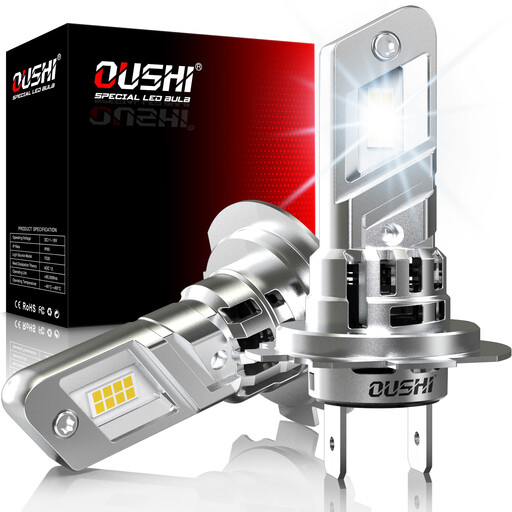
Our take : For those who want maximum performance gains. This model combines impressive light output with high-performance active cooling, ensuring brightness that remains stable and intense over time. Its broad CANbus compatibility makes it an excellent candidate for modern European vehicles.
It counters the cooling pitfall with a high-speed turbo fan and an aluminium body, ensuring optimal heat dissipation. Its latest-generation CANbus system is designed to neutralize electronic errors, even on the most sensitive vehicles.
- Very high light output (30,000 lm)
- Effective active cooling
- Advanced CANbus compatibility
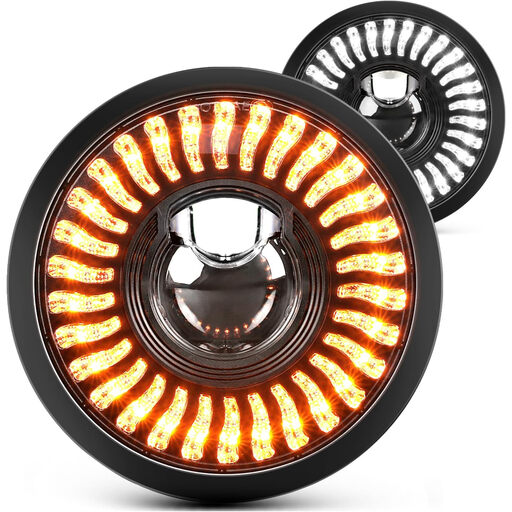
Our take : Note that this isn't just a bulb, but a complete headlight assembly for motorcycles. It's the ultimate solution for riders who want a total lighting overhaul, with added features like Daytime Running Lights (DRL) and an ultra-precise projector lens beam. A guarantee of both safety and style for two-wheelers.
By replacing the entire optical unit, it bypasses the risk of incompatibility between the bulb and the original reflector. The projector lens is custom-designed for the LED source, which guarantees a perfectly sharp beam with a clean cutoff line, ensuring you won't blind others.
- Complete optical assembly for motorcycle LED headlights
- Anti-glare projector beam
- Integrated DRL and Halo functions
Discover our full selection of LED bulbs and kits that meet our quality standards.
Regulations are strict: in theory, only the approved "headlight + bulb" assembly is permitted. However, most aftermarket kits do not have this ECE certification for every vehicle model on the market. In practice, a vehicle inspector focuses on the result: the colour of the light (white or yellow) and the quality of the beam (no glare, clean cutoff). A quality kit that perfectly mimics the original beam pattern will therefore most often pass without issue.
A colour temperature of 6000K (or 6500K) produces a cool white light, very close to daylight. This is ideal for night driving on dry roads, as it improves contrast and road legibility. In heavy rain or fog, a slightly warmer light (around 4500K-5000K) may offer better visibility. Nevertheless, 6000K remains the best compromise for all-purpose use.
It all depends on the sensitivity of its electronics. German vehicles (Audi, BMW, Volkswagen...) and other recent European brands are known for being more particular. Many LED kits include a "CANbus Ready" system that is sufficient in most cases. If, despite this, an error appears on your dashboard or your headlights flicker, adding an external CANbus decoder (sometimes called an error canceller) will solve the problem.