
Livraison le jour même ou le lendemain

Qualité garantie

Débloquez vos offres de bienvenue: Livraison GRATUITE | Jusqu'à -80 % | 30 jours d'essai gratuits à JoyPlus
Téléchargez l'application
Upgrading to an LED bulb kit is the perfect way to improve night-time visibility and give your car a modern look. The problem? The market is flooded with products that make tempting but often disappointing promises. Our mission is to guide you through this jungle of options, helping you make the right choice and avoid the most common pitfalls.
Don't be blinded by sky-high lumen figures. Behind the marketing, you'll often find flaws that can turn your purchase into a real headache.
To make an informed choice, focus on these three non-negotiable technical features.
This is the first and most basic step. Every car uses a specific base type for its different headlights (low beam, high beam, fog lights). The most common are the H7 LED bulb (typically for low beams) and the H4 LED bulb (which handles both low and high beams).
The performance and lifespan of a high-power LED bulb depend entirely on its ability to dissipate heat. There are two main approaches:
Expressed in Kelvins (K), color temperature determines the hue of the light. An original halogen bulb emits a yellowish-orange light (around 3200K). For a halogen to LED replacement, the market standard has settled on 6000K, a pure white.
Here are a few options that cater to different user profiles, taking into account performance and reliability criteria.
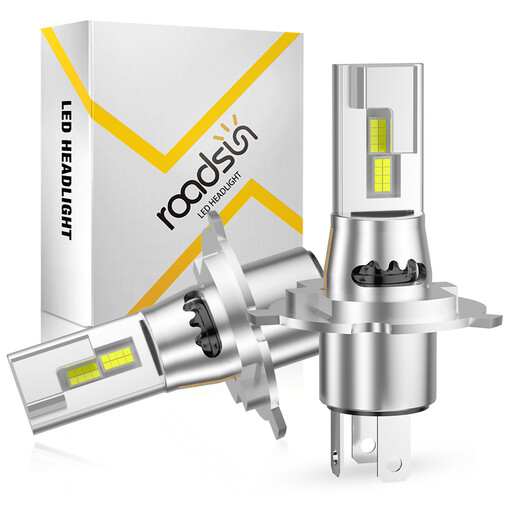
Why we chose it: Perfect for a simple and effective first upgrade. Its all-in-one H4 format (high/low beam) and plug-and-play design allow for installation in minutes, even for a beginner. No-fuss, no headache.
Its 1:1 compact design (identical to a halogen bulb) ensures easy installation and a sharp beam pattern that doesn't cause glare. Its wide compatibility with 99% of vehicles greatly reduces the risk of an on-board computer error.
Ultra-fast plug-and-play installation (in just 3 minutes). Its high-performance fan running at 16,000 RPM ensures optimal cooling for maximum lifespan.
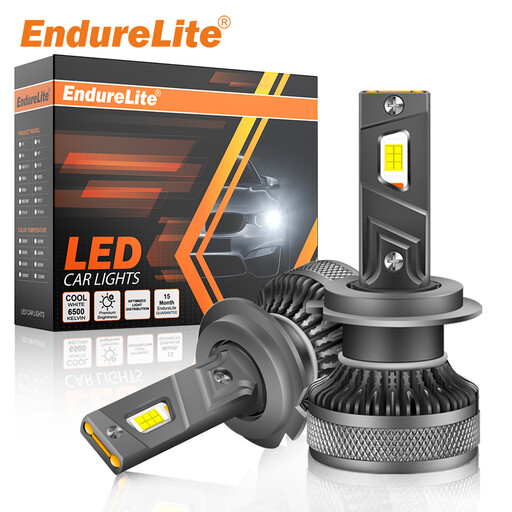
Why we chose it: The choice for raw performance. Aimed at drivers who want maximum light output for absolute safety, especially on poorly lit country roads. With 20,000 lumens, it turns night into day.
Despite its power, the beam remains precise to avoid dazzling others. Its cooling system is engineered to go the distance and guarantee stable performance, true to the promise of 50,000 hours.
Impressive light output of 20,000 LM per pair. The intelligent driver and CANbus Ready design ensure compatibility with 99% of vehicles, with no dashboard errors.
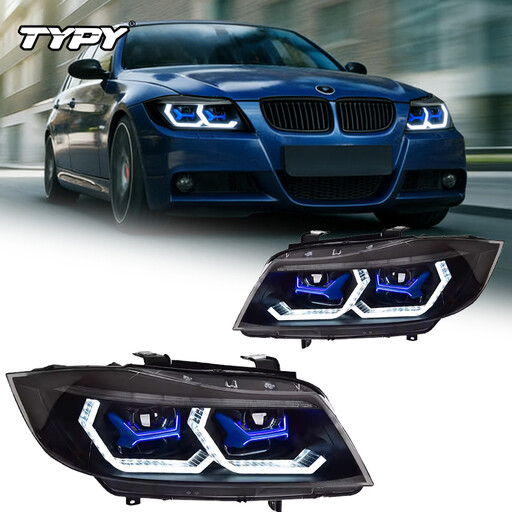
Why we chose it: More than just a bulb, this is a complete headlight assembly. The ultimate solution for owners of specific models (in this case, a BMW E90) who want a full aesthetic and technical overhaul (Angel Eyes, dynamic turn signals, etc.) without the compatibility headaches of a simple LED kit.
By replacing the entire assembly, this LED headlight ensures flawless integration. The beam is optimized by the built-in projector, eliminating the risks of imprecise lighting and shoddy installations.
Modern look and light signature (Angel Eyes) in an all-in-one solution. The integration is plug-and-play with the original connectors, although coding may be required on some BMW trims to activate all features.
Discover our full catalogue of LED bulbs and kits, rigorously selected for their performance, reliability, and compliance.
1. Are LED replacement bulbs street legal? The regulations are very clear: to be approved for on-road use, an LED headlight must be a complete unit bearing the European E-mark (an "E" in a circle). Therefore, replacing a halogen bulb with an LED in an original headlight housing is, in theory, not permitted. In practice, many high-quality kits replicate the halogen beam so faithfully that they pass vehicle inspections without issue. Our advice: always keep your original bulbs just in case.
2. Can an H4 LED bulb really replace an H4 halogen without modification? Yes, absolutely. High-quality H4 LED bulbs are designed with a "1:1" size and a "plug-and-play" connector. They fit directly into the original housing without any adjustments. They manage both functions (low and high beams) and switch between them exactly like a conventional bulb.
3. Why is there an error light on my dashboard after installation? This is the notorious CANbus trap. As explained earlier, your car detects the low power consumption of the LEDs and assumes a bulb has failed. The solution is simple: opt for an error-free LED kit (often called "CANbus Ready") that includes a module to "trick" the on-board computer. If your kit doesn't have one, external error decoders can be added.