
Livraison le jour même ou le lendemain

Qualité garantie

Débloquez vos offres de bienvenue: Livraison GRATUITE | Jusqu'à -80 % | 30 jours d'essai gratuits à JoyPlus
Téléchargez l'application
Upgrading your headlights to LEDs is arguably one of the best decisions you can make for your car. The promise is tempting: better night-time visibility, a tenfold increase in lifespan, and a modernised look for your vehicle. However, the market is a minefield, and it's easy to fall into common traps that turn a smart investment into a costly disappointment.
Before you take the plunge, here are the three critical mistakes to avoid:
This guide is designed to help you avoid these pitfalls and choose the right LED bulb kit that truly meets your needs.
To make the right choice, a few technical criteria are essential. Ignoring them means risking an incompatible or underperforming product.
This is the number one, non-negotiable criterion. The socket is the metal base of the bulb that connects to your headlight. If the socket type is wrong, installation is simply impossible. The most common types are:
How to find the right socket for your car? The most reliable method is to consult your vehicle's owner's manual or directly examine the inscription on the original bulb.
Thermal management is crucial: it determines the lifespan and performance stability of your LED conversion kit. There are two main technologies:
On modern vehicles (generally post-2005), an electronic system called the CAN bus (or Canbus) monitors the proper functioning of electrical components. Since LED bulbs consume far less power than halogens, the system can interpret this low consumption as a burnt-out bulb and display an error message.
To solve this, opt for a Canbus error-free LED bulb. These models integrate a resistor or decoder to simulate standard power consumption and prevent false warnings.
Every driver has different expectations. Here are a few recommended options, selected to meet specific needs while avoiding the aforementioned pitfalls.
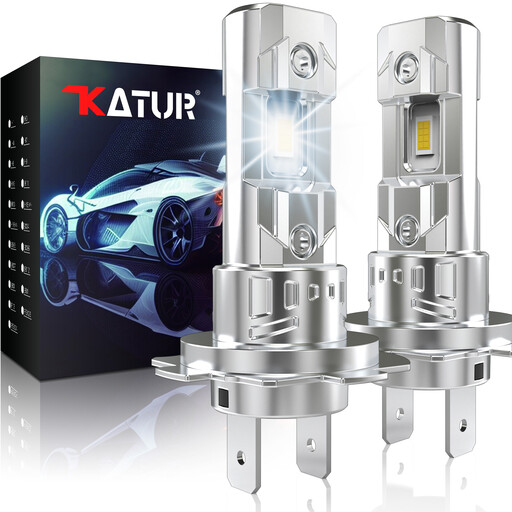
Why we chose it: Perfect for the driver seeking a noticeable upgrade without the hassle. This model is designed for DIY enthusiasts who want a reliable and quick-to-install solution.
Its compact 1:1 design, identical to a halogen bulb, ensures a physical fit even in tight headlight housings. The passive, fanless cooling eliminates the risk of mechanical failure and noise.
An "all-in-one" design with no external driver delivers a true plug-and-play LED headlight experience. Instant-on capability and a clean beam pattern enhance safety.
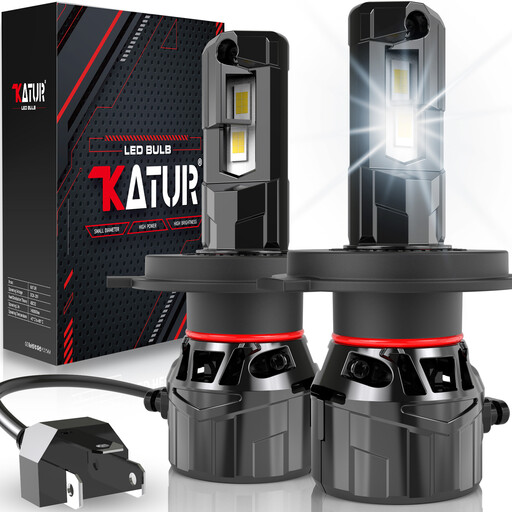
Why we chose it: For those who frequently drive at night on poorly lit roads and for whom lighting power is the top priority. This kit is focused on raw performance and active safety.
Its high power is managed by an ultra-efficient cooling system, featuring a 16,000 RPM turbo fan and an aviation-grade aluminium body. This prevents overheating and the resulting performance loss.
A very high light output (30,000 lumens per pair) allows for maximum anticipation of obstacles. The 6000K xenon white colour temperature provides excellent contrast. Advertised lifespan of up to 60,000 hours.
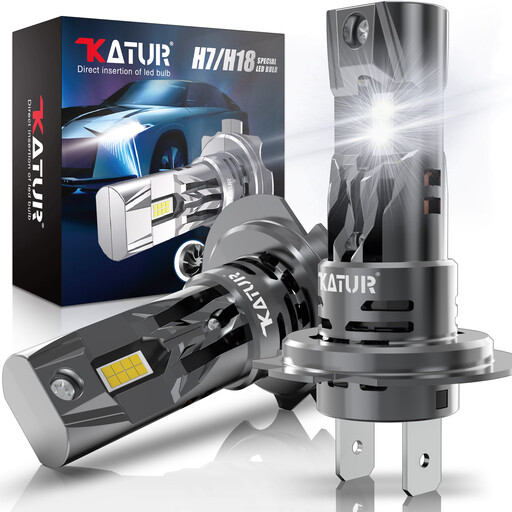
Why we chose it: The solution for owners of modern cars, which often have finicky Canbus systems. This kit minimises the risk of radio interference and dashboard error messages.
Its intelligent external driver and decoding system are designed to ensure 98% "Canbus ready" compatibility. This architecture separates sensitive electronic components from the heat source, improving reliability.
High compatibility with modern electronic systems. The beam is precise thanks to the ultra-thin chip spacing, which limits the risk of glare. Advertised as a quick 5-minute installation.
To get the most out of your new bulbs, remember to clean your headlight lenses, both inside and out. Accumulated dust and dirt can scatter light and reduce lighting efficiency. A soft-bristled car cleaning brush is perfect for gently preparing the area around the headlights before handling them.
Discover our full selection of products that meet our quality standards and current regulations.
1. Are LED conversion kits legal? Replacing halogen bulbs with LEDs is a modification regulated by law. To be compliant, bulbs may need to have specific certifications, such as ECE approval in Europe. It is imperative that the installation is correct and the beam pattern does not cause glare for other road users—a critical point checked during vehicle inspections. Therefore, it is essential to check your local regulations before purchasing.
2. How do I know which bulb type (H7, H4, etc.) to choose for my car? The most reliable method is to consult your vehicle's owner's manual in the section on maintenance or bulb replacement. You can also remove the current bulb and read the reference number inscribed on its base.
3. Is a "Canbus error-free" bulb an absolute guarantee against error messages? In the vast majority of cases, yes. Manufacturers often claim 98% to 99% compatibility. However, some vehicles, particularly high-end German models, have extremely sensitive electronic systems that may still trigger a warning and require an additional Canbus decoder.