
Livraison le jour même ou le lendemain

Qualité garantie

Débloquez vos offres de bienvenue: Livraison GRATUITE | Jusqu'à -80 % | 30 jours d'essai gratuits à JoyPlus
Téléchargez l'application
Upgrading to LED car lighting is a smart move for many drivers. The promise of better night-time visibility, enhanced safety, and a modern look is certainly appealing. The problem: the market is saturated with options and confusing marketing claims. Before you set out to replace your old halogen bulbs, it's crucial to know the pitfalls that could turn a simple upgrade into a real headache.
As a product expert for the Joybuy editorial team, my mission is to guide you through the jungle of options. Here are the three most common mistakes to avoid and the essential criteria for choosing the perfect LED headlight bulb for your car.
The desire for a quick and easy upgrade often leads drivers to overlook a few crucial technical details. Focusing solely on price or on dazzling performance figures is the fastest path to disappointment.
To make the right choice, focus on objective characteristics. These are what guarantee the performance, compatibility, and durability of your installation.
Rather than an endless list, we've chosen to match specific models to typical user profiles. This will help you find the product that not only fits your car but, more importantly, meets your expectations.
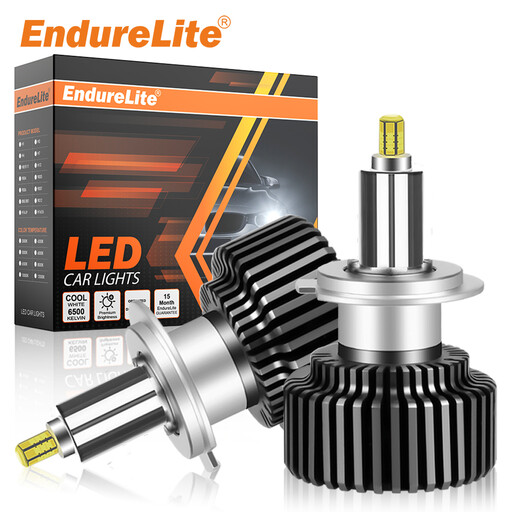
Who is it for? For the driver seeking a simple, reliable solution to replace their H7 bulbs. The goal: a real boost in visibility, without the hassle of installation or electronic bugs.
Its compact "Mini Design" and "Plug-N-Play" installation eliminate the risk of physical incompatibility. The integrated CANbus driver takes care of neutralising dashboard errors.
Specifically designed for the H7 base, this kit guarantees a direct fit and broad electronic compatibility. It's the peace-of-mind choice for a first-time upgrade.
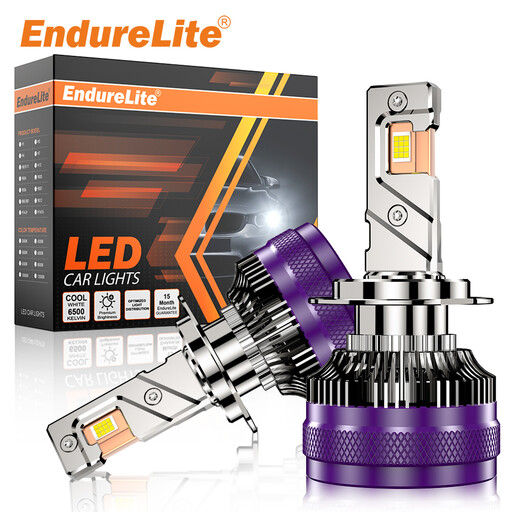
Who is it for? For the enthusiast who wants the best in LED technology. They're looking for maximum light output, a bold cool-white look, and performance that stands out, without ever sacrificing safety.
Despite its raw power, this kit focuses on a "perfect beam pattern" and a 1:1 design to avoid the glare trap. Its active fan tackles the risk of overheating and performance degradation head-on.
It combines very high light intensity (25,000 LM) with a precise beam geometry, offering maximum visibility without endangering other road users.
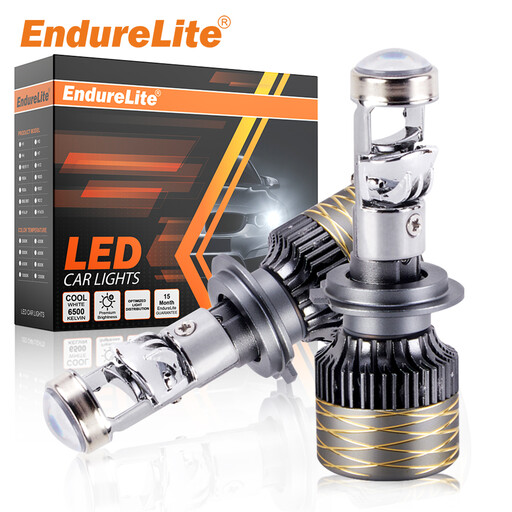
Who is it for? For the DIYer who juggles multiple vehicles (main car, second car, motorcycle...) or who is looking for a universal solution. This kit is compatible with the most common bases (H4, H7, H11...).
Its unique design with an integrated projector lens ensures perfect beam focus, regardless of the headlight type. The advertised 99% CANbus compatibility minimises the risk of electronic errors.
Versatility. A single product for a multitude of bases, which simplifies managing a fleet of vehicles or future installation projects.
Improving your car is about more than just lighting. For optimal driving comfort in any season, good ventilation is just as crucial, whether for defogging the windscreen in the blink of an eye or simply maintaining a pleasant temperature in the cabin.
Discover our selection of equipment designed to improve your comfort and simplify maintenance, all tested and approved by our experts.
Are aftermarket LED bulbs legal in France? French regulations are very strict. To be 100% legal on public roads, aftermarket LED bulbs must have a specific ECE approval, which remains rare. Most kits are therefore sold for "off-road" or "track" use. In practice, the decisive criterion for safety (and for passing technical inspections) remains the quality of the beam pattern. A well-designed bulb that doesn't cause glare and respects the original cut-off line will be much better tolerated. In any case, have your headlights professionally aligned after installation.
Does an "error-free" LED bulb work on all cars? "CANbus Ready" systems are effective on the vast majority of vehicles (over 98% in general). However, some models known for their sensitive electronics (especially from German or Italian brands) may still display an error message. For these rare cases, an external CANbus decoder, sold separately, will permanently solve the problem.
What is the real-world lifespan of an LED headlight bulb? The "50,000 hours" is a theoretical value obtained in a laboratory. In the heat of an engine bay, the actual lifespan is 100% dependent on the quality of the cooling system. A well-designed bulb, with an aluminium body and a high-performance fan, can last for several years without failing, shattering the lifespan of a halogen bulb (which barely exceeds 1,000 hours). The key to success? Choose a model that makes no compromises on thermal dissipation.