
Livraison le jour même ou le lendemain

Qualité garantie

Débloquez vos offres de bienvenue: Livraison GRATUITE | Jusqu'à -80 % | 30 jours d'essai gratuits à JoyPlus
Téléchargez l'application
Do your original halogen headlights feel lacklustre, making you feel like you're driving by candlelight?? Rest assured, you're not alone. Upgrading to a car LED kit is the go-to solution for finally seeing clearly at night and modernising your vehicle's look in the process. The only problem?: the market is flooded with promises that aren't always kept. To avoid disappointment and a wasted purchase, here are the pitfalls to watch out for.
To make the right choice, forget the marketing hype and focus on three non-negotiable technical points.
This is the essential starting point. Every vehicle uses specific bulb types for its lights (low beam, high beam, LED fog light). The most common are the H7 LED bulb and H4 LED bulb bases, but many others exist (H1, H11, HB3, etc.).
To find the base type you need?:
With the wrong base, you can't install the bulb. Period.
An LED chip generates heat. If this heat isn't dissipated properly, the brightness drops and the bulb's lifespan plummets. There are two main technologies?:
Good cooling is the key to stable light intensity, especially for LED low beams which are used constantly.
The CANbus (Controller Area Network) system is like your car's electronic brain. It monitors everything, including the proper functioning of the bulbs. Since an LED bulb consumes far less power than a halogen one, the on-board computer might think a bulb is burnt out and display an error on the dashboard.
An error-free CANbus LED kit integrates a resistor or a dedicated circuit to "trick" the on-board computer by simulating the power consumption of a standard bulb. Most recent kits are advertised as "CANbus Ready" and compatible with 99% of vehicles on the road. However, be cautious with certain notoriously finicky models, particularly from German brands (Volkswagen, BMW, Mercedes), where an external CANbus decoder may be essential.
To help you see more clearly, here are a few models that tick all the boxes for specific needs.
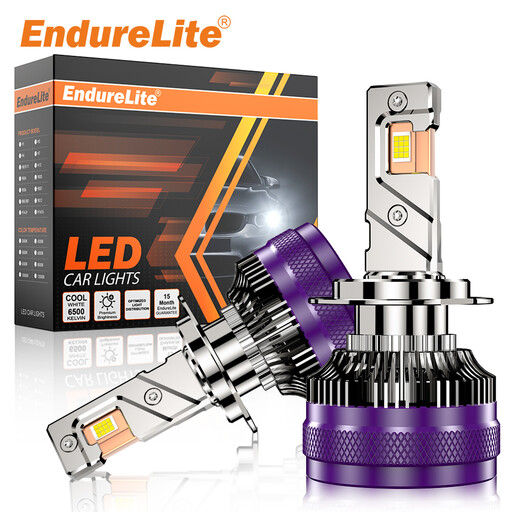
Why this choice : Ideal for a first-time upgrade to LED. This H7 kit, one of the most common standards, offers a significant improvement in visibility and a simplified installation without a hefty price tag. A balanced, hassle-free solution for daily driving.
Its 1:1 design, identical to a halogen bulb, aims to replicate a clean beam pattern to avoid dazzling others. The integrated CANbus system is designed to prevent errors on most vehicles.
Its compact "Plug and Play" format and built-in fan allow for direct installation into the original headlight housing without any modifications.
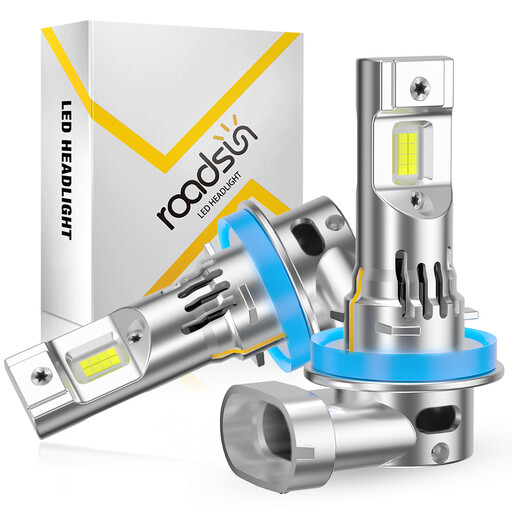
Why this choice : For those who demand maximum light output and cutting-edge technology. The use of CSP (Chip Scale Package) chips and a high-speed fan (16,000 RPM) promises rock-solid performance and reliability, even under heavy use.
Its powerful active cooling prevents overheating, the main cause of premature LED failure. Its non-polarity design simplifies installation and eliminates a common source of errors.
The 6500K colour temperature produces a pure white light, close to daylight. The result : contrasts and road details stand out better, a real plus for night driving.
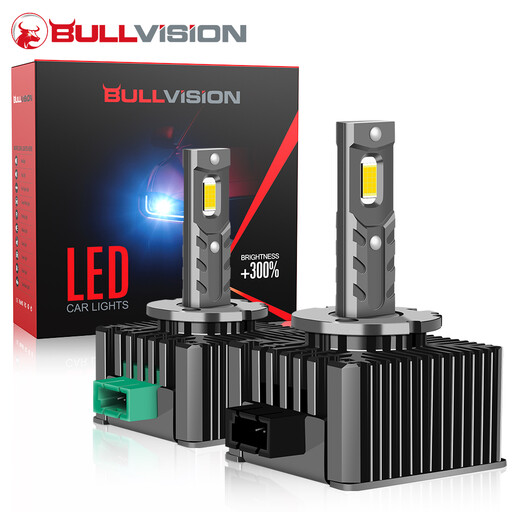
Why this choice : Specifically designed to replace factory Xenon bulbs (D2S or D2R types). This kit allows for a direct upgrade to LED technology, with its instant-on capability and modern white colour, a far cry from the bluish tint of end-of-life Xenon bulbs.
By being dedicated to D2S/R bases, it guarantees perfect mechanical compatibility with the original ballast and headlight housing. This is a crucial point for safety and beam pattern compliance on this type of headlight.
It allows for a "Plug & Play" upgrade from a Xenon system to LED without touching the vehicle's complex wiring. The 6000K LED bulb colour ensures a seamless aesthetic with more recent LED daytime running lights.
We have put together a complete selection of products that meet our quality criteria and safety standards.
Regulations can be strict: to be 100% compliant, an aftermarket bulb must have an ECE approval for the specific headlight housing it's installed in. However, to date, most LED kits are officially sold for "off-road use only". In practice, during a technical inspection, the inspector will mainly check the beam quality (no glare), its height, and the light colour (which must be white). A well-made, properly designed, and correctly adjusted kit will therefore most often pass without any issues.
No, a temperature of 6000K (Kelvin) corresponds to a pure white, very close to daylight. It's the most sought-after shade for a modern look and excellent contrast perception. Bluish tints only start to appear above 7000K. Below that, around 4300K-5000K, you get a more neutral white, similar to factory Xenon lighting.
In the vast majority of cases, a modern "CANbus Ready" kit is sufficient to prevent dashboard errors. However, certain vehicles, particularly from German brands or the Stellantis group, are known for their especially sensitive electronics. If an error persists despite a compatible kit, adding an external module is the simplest and most effective solution. A good rule of thumb is to check forums and reviews from other owners of the same car model before purchasing.