
Livraison le jour même ou le lendemain

Qualité garantie

Débloquez vos offres de bienvenue: Livraison GRATUITE | Jusqu'à -80 % | 30 jours d'essai gratuits à JoyPlus
Téléchargez l'application
Thinking of replacing your old halogen bulbs with a state-of-the-art LED kit? On paper, the idea is appealing. In practice, it often ends in disappointment: lacklustre brightness, dashboard errors, and an installation that turns into a nightmare. As a product expert, my mission is to guide you through the maze of options to make a truly informed choice, focusing on what really matters: your safety and driving comfort.
Before taking the plunge, let's identify the classic mistakes that turn a good investment into a regret.
To avoid these pitfalls, here are the three technical points you must check.
It all starts with your original bulb's base (e.g., H7 LED bulb, 9005/HB3, H4). Once identified, compare the LED bulb's dimensions (length, base diameter) with the actual space available in your headlight housing. For multiplexed vehicles (most post-2005 models), a CANbus LED bulb isn't an option—it's a requirement. This integrated system "communicates" with the car's onboard computer, simulating the power consumption of a halogen bulb to prevent error messages.
A good car LED kit must perfectly replicate the beam pattern of the halogen it replaces. Look for models where the LED chips are positioned exactly like the original filament. This is the key to achieving a sharp cut-off line on LED low beams: the road is illuminated, not the eyes of oncoming drivers. In terms of colour, a 6000K LED bulb is often the best choice. Its cool white light, close to daylight, enhances contrast and reduces eye strain.
The promised longevity (often over 50,000 hours) depends entirely on the efficiency of the cooling system. There are two main technologies:
Here are a few models that tick all the boxes, selected for different user profiles based on their performance and reliability.
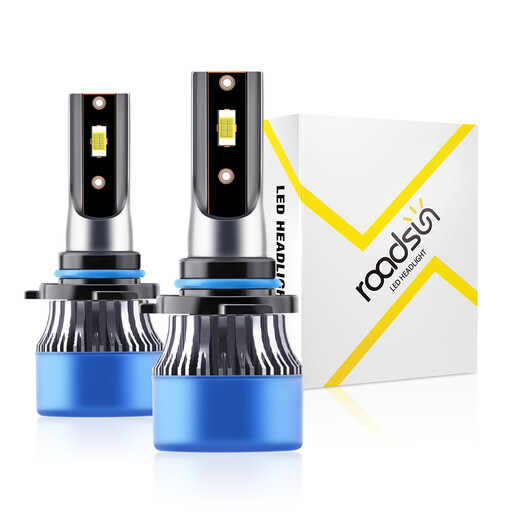
Why we recommend it: Perfect for a first, hassle-free switch to LEDs. This model is designed for a direct "Plug and Play" installation with no modifications required.
Its 1:1 design, identical to a 9005/HB3 halogen bulb, ensures a surprise-free installation. No more stress about being unable to close the headlight's dust cover—a common issue with bulky LEDs.
Direct installation, with no adapters or wiring modifications. Its IP68 rating ensures excellent resistance to water and dust.
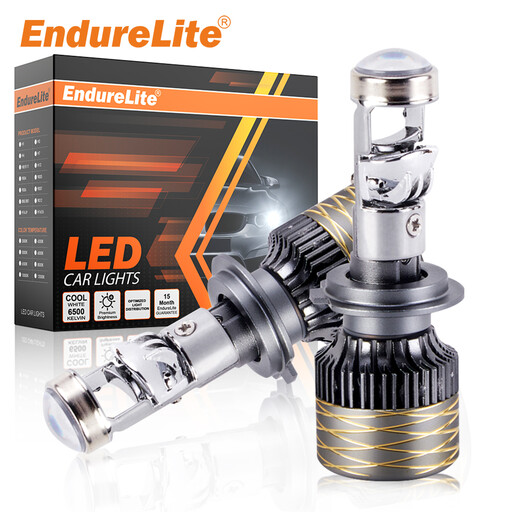
Why we recommend it: For those who make no compromises on performance and visibility. This kit is aimed at high-mileage drivers and those who often face night-time or difficult weather conditions, demanding lighting that is as powerful as it is reliable.
This kit avoids the overheating trap with a highly effective active cooling system (fan). Brightness remains constant and the lifespan of the LED chips is preserved, with no performance degradation over time.
Very high light intensity (20,000 LM per pair) and CSP chips for a perfectly sharp beam. Its integrated CANbus system is compatible with 99% of vehicles, minimising the risk of errors.
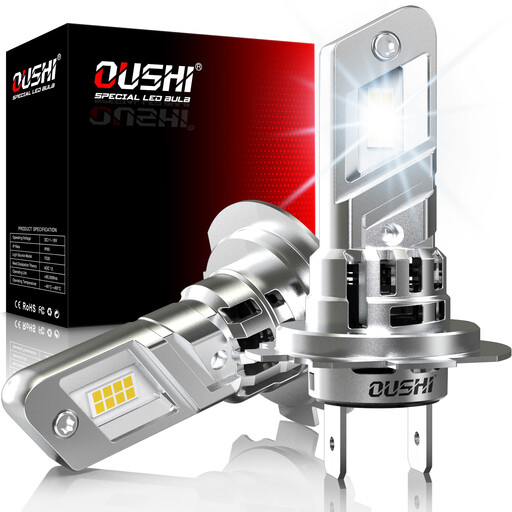
Why we recommend it: This is the Swiss Army knife of LED lighting. An excellent compromise for daily use, both as low beams and as LED fog lights. Its 1:1 design and advanced CANbus ensure maximum compatibility, even with demanding European vehicles.
This model directly tackles the problem of glare. By replicating the 1:1 design of a halogen bulb, it guarantees perfect beam focus. The result: improved range without ever blinding other drivers.
Latest-generation CANbus system for broad compatibility. Its quiet turbo fan promises a lifespan of up to 60,000 hours.
Explore our complete selection of LED kits, all chosen based on our criteria for performance and reliability.
European regulations (UN R48) are very clear: to be compliant, the entire optical unit (the headlight and the bulb) must be type-approved as a whole. Therefore, replacing a halogen bulb with an LED in a headlight not designed for it is, in theory, not approved for road use. This is why these kits are often sold with a "for off-road or private circuit use only" disclaimer. It is your responsibility to check that your installation complies with local laws.
Since 2018, technical inspections have become very strict about glare. If your LED kit's beam is poorly adjusted, scattered, or non-compliant, you are guaranteed to fail. It is therefore crucial to choose a kit that perfectly mimics the original beam pattern and, most importantly, to have your headlights professionally aligned after installation.
Most recent LED kits are "CANbus Ready," meaning they have a built-in error-cancelling system. However, some vehicles, particularly German models, are especially finicky. If a dashboard error appears or the headlights flicker after installation, you will need to add an external CANbus decoder (also called an anti-error resistor) between the bulb and the original connector.