
Livraison le jour même ou le lendemain

Qualité garantie

Débloquez vos offres de bienvenue: Livraison GRATUITE | Jusqu'à -80 % | 30 jours d'essai gratuits à JoyPlus
Téléchargez l'application
Upgrading your car with LED bulbs is a choice for both safety and comfort. Better night-time visibility not only helps you anticipate hazards sooner but also significantly reduces eye strain. The problem? The LED headlight bulb market is a jungle of technical promises and confusing figures. To help you see more clearly, we've broken down the pitfalls to avoid and the criteria that really matter before you buy.
The appeal of a powerful LED headlight can sometimes lead to unpleasant surprises. Here are the most common mistakes.
Manufacturers compete by plastering thousands of lumens (lm) on their packaging. While this figure does measure the total light output, it says nothing about its real-world effectiveness on the road. A poorly designed car LED kit, even one rated at 30,000 lm, can produce a scattered beam that dazzles other drivers while creating dangerous dark spots. It's the quality of the beam pattern—directly linked to the design and positioning of the LED chips—that matters more than the raw number.
The promise of a "5-minute flat" installation is tempting. In reality, it's often a different story. Some overly bulky bulbs require you to modify the headlight housing or use specific adapters... which are, of course, not included. Even worse on modern vehicles: installing an H7 LED or H4 LED bulb can trigger a dashboard warning light or an annoying flicker. This is the classic symptom of an incompatibility with the car's electronic system (the infamous Canbus).
Contrary to popular belief, an LED bulb gets hot—very hot. Its lifespan, often promised at over 50,000 hours, depends entirely on the efficiency of its cooling system. An undersized heat sink or a low-quality fan is a recipe for disaster: the brightness will drop quickly and the bulb will burn out long before its time, leaving you far, far from the promises on the box.
For a successful halogen to LED bulb replacement, three parameters must be closely inspected.
This is the absolute basic, the non-negotiable starting point. Every car uses a specific base type for its LED low beams and high beams. The most common are:
To avoid mistakes, the easiest way is to check your vehicle's manual or remove the original bulb to identify it. The wrong base type means the installation is a non-starter.
Heat management is the crucial factor. Two technologies compete:
The Canbus (Controller Area Network) is like your car's electronic brain. It monitors everything, including the lighting. An LED bulb consumes much less power than a halogen one. The onboard computer, not seeing the usual power draw, assumes the bulb is burnt out and triggers a warning. A Canbus LED kit integrates a resistor or module to "trick" the system into operating flawlessly. The "Canbus Ready" or "ODB Error-Free" label is therefore your best friend, especially if your car was made after 2005 (and it's almost mandatory for European brands).
Here are a few options that cater to different user profiles, taking into account the selection criteria we've discussed.
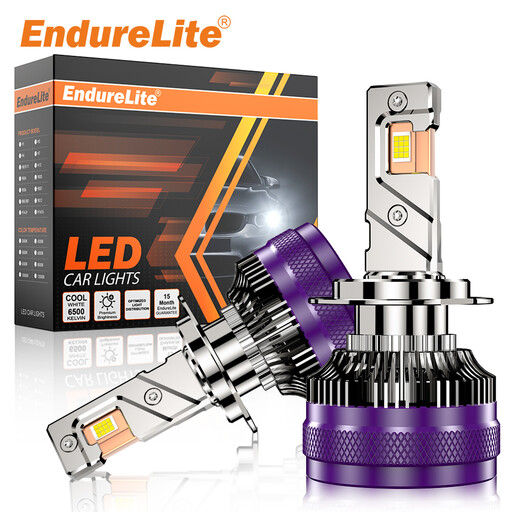
Why we chose it: For those who want better lighting without the installation hassle. This kit represents the perfect balance of efficiency, ease of installation, and everyday reliability.
Thanks to its 1:1 design (same size as halogen) and built-in Canbus, it minimises the risk of a tricky installation or dashboard errors. The false "Plug & Play" trap is successfully avoided.
Truly Plug & Play installation thanks to its ultra-compact size. Its active fan ensures stable performance over the long term.
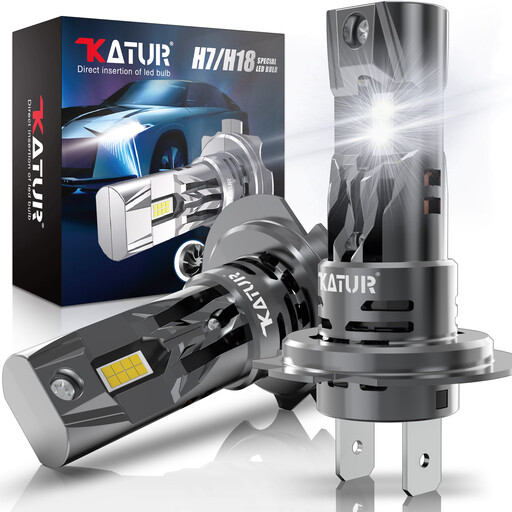
Why we chose it: For drivers who demand maximum visibility and a modern, striking look. With its raw power and cool white colour, this kit is clearly aimed at performance lovers.
Its active cooling system, featuring a high-speed fan (16,000 RPM), is calibrated to dissipate the intense heat generated by its high power output. This effectively combats the risk of overheating and long-term brightness loss.
Very high light output (30,000 lumens per pair) and a sharp beam, optimised by precise LED chip alignment.
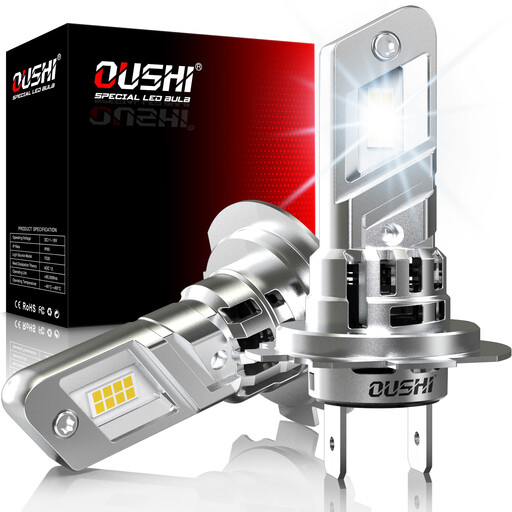
Why we chose it: Specifically designed for newer cars, especially European models with finicky electronic systems. Here, the absolute priority is seamless integration without a single error message.
The manufacturer advertises a latest-generation Canbus system, compatible with 98% of vehicles. It directly tackles the problem of ODB errors and radio interference, which are common on recent models.
Advanced Canbus compatibility for total peace of mind. All this with high power and a compact 1:1 design.
Browse our full selection of LED kits that meet our quality criteria, available for many other base types.
Regulations are particularly strict, especially in Europe. To be road-legal, an LED conversion kit must have a specific ECE approval for each vehicle model. As of today, very few kits on the market have this certification. The vast majority are therefore, in theory, reserved for off-road or private track use. Always check the current legislation and product compliance in your region before hitting the road.
The danger comes not from the light, but from the heat. LED chips generate high temperatures, and if the bulb's cooling system is undersized, heat can build up inside the headlight unit. Over time, this can cause the headlight's plastic to turn yellow or damage its reflective coating. That's why a model with a quality cooling system (active or passive) isn't an option: it's a necessity to protect your headlights.
It's almost certain if it was made after 2005, and it's a definite for most European brands (Audi, BMW, Mercedes, Peugeot, Renault, Volkswagen, etc.). These cars use the Canbus system to constantly check that all bulbs are working. Without a compatible kit, the onboard computer will think there's a fault and display an error. Choosing a "Canbus Ready" or "ODB Error-Free" model is the easiest way to avoid this headache.