
Livraison le jour même ou le lendemain

Qualité garantie

Débloquez vos offres de bienvenue: Livraison GRATUITE | Jusqu'à -80 % | 30 jours d'essai gratuits à JoyPlus
Téléchargez l'application
Driving at night or in bad weather can be a nightmare when your car's lighting leaves much to be desired. With their yellowish glow and limited range, factory-installed halogen bulbs are sorely lacking in performance, reducing your field of vision and reaction time. Whether you want to improve safety, modernise your car's look, or prep your 4x4 for night-time adventures, upgrading to an LED headlight bulb is the clearest solution available today.
This guide will help you choose the right halogen replacement kit by breaking down the three key criteria: compatibility, performance, and ease of installation.
With so many options on the market, it's easy to get lost in the technical specifications. To make the right choice, here are the three essential points to check before you buy.
This is the essential starting point. The first thing to do is identify the base type of your original bulbs. The most common are H7 and H11 bases (which correspond to an H7 LED bulb or H11 LED), but many others exist (H1, H4, 9005, etc.). This reference is usually engraved on the bulb itself or listed in your vehicle's owner's manual.
Next is the CANBUS issue, a detail that makes all the difference in modern vehicles (most European models post-2005). This electronic system constantly monitors the car's components. Since LEDs consume far less power than halogens, the onboard computer might mistake this for a fault and trigger a dashboard warning light or even cause the headlights to flicker annoyingly. To avoid these problems, opt for an LED car kit certified as "CANBUS Ready" or "error-free".
The performance of a high-power LED headlight is measured on two fronts: lumens (lm) for brightness and kelvins (K) for the colour of the light.
The main advantage of modern LED kits? Their incredibly simple installation. Look for plug-and-play models with a 1:1 design, meaning they have the exact same dimensions as the original halogen bulb. This allows them to clip directly into the headlight housing without needing adapters, wiring modifications, or special tools.
As for lifespan, it directly depends on heat management. A quality LED bulb always includes a high-performance cooling system (a fan, an aerospace-grade aluminium body) to dissipate heat and ensure stable performance for tens of thousands of hours.
To help you make your choice, here is a selection of products that tick all the boxes, whether for daily use, a recreational vehicle, or a simple upgrade.
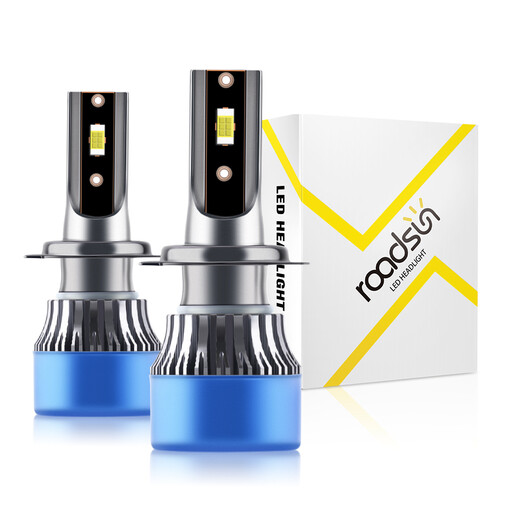
Why this model stands out: Engineered for extreme conditions, this bulb is a top-tier choice for UTV and ATV lighting and other off-road vehicles. The manufacturer, Roadsun, claims up to 800% more brightness than a halogen bulb, enough to effectively cut through fog and dust. Its rugged design is built to withstand vibrations and impacts without fail.
Pros:
Who is it for? Motorsport enthusiasts and off-road adventurers who demand an ultra-reliable and powerful LED fog light or main headlight for their night-time excursions.
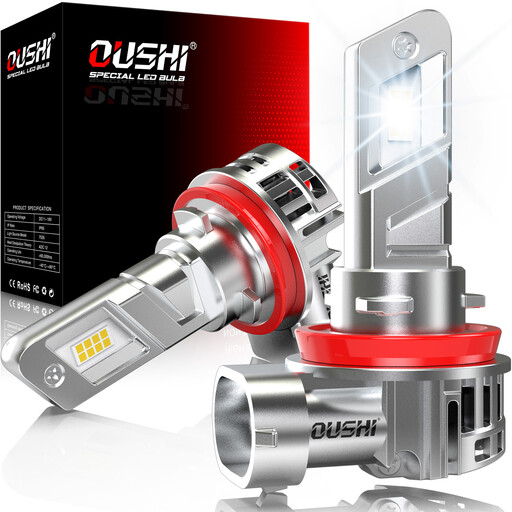
Why this model stands out: The key feature of the OUSHI H11 bulb is its "1:1 mini size" design, which perfectly replicates the size of a halogen bulb. This guarantees a truly plug-and-play installation, with no need to struggle with adapters or modifications. Its error-free CANBUS system is advertised as compatible with 98% of vehicles, including the most sensitive European models.
Pros:
Who is it for? The everyday driver who wants a simple, fast, and effective halogen replacement solution for their daily car, without worrying about compatibility issues.
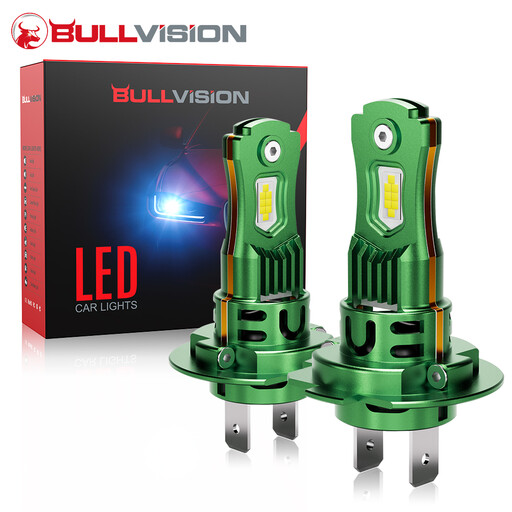
Why this model stands out: With this model, Bullvision focuses entirely on the quality of the light beam. Thanks to technology that mimics the original bulb's filament, this model provides a perfectly focused light, with no dark spots or risk of dazzling oncoming drivers. It's a guarantee of safety for everyone on the road.
Pros:
Who is it for? Discerning drivers focused on safety and visual comfort, who are looking to radically improve their lighting without inconveniencing others.
If your bulb's base type isn't in this selection or if you simply want to explore other models, take a look at our full category. You'll find a wide range of lighting solutions for all types of vehicles.
? Discover our complete collection of Headlight Bulbs
Yes, replacing halogen bulbs with LEDs is generally permitted, provided that the chosen bulbs are approved for road use in your region (e.g., ECE marking in Europe). To pass vehicle inspections without any issues, ensure the product complies with current regulations.
If your car was made after 2005, especially if it's a European brand (Audi, BMW, Volkswagen, Peugeot, Renault, etc.), it most likely uses a CANBUS system. The tell-tale signs are a "defective bulb" error message on the dashboard or headlights that start to flicker after installation.
Not at all. A colour temperature of 6000K to 6500K produces a pure white light, often called "cool white" or "xenon white." It has no blue tint. In fact, it's a highly sought-after colour because its similarity to daylight makes road signs and markings stand out perfectly at night.