
Livraison le jour même ou le lendemain

Qualité garantie

Débloquez vos offres de bienvenue: Livraison GRATUITE | Jusqu'à -80 % | 30 jours d'essai gratuits à JoyPlus
Téléchargez l'application
Upgrading to a car LED kit is an excellent way to improve night-time visibility and give your vehicle a modern look. However, the market is a jungle of options and often misleading marketing claims. As the Head of Product Recommendations at Joybuy, I'm here to help you see things more clearly. Let's break down the pitfalls to avoid and the criteria that truly matter for a successful halogen replacement.
Before you get tempted by flashy numbers, you need to know the hidden flaws that can turn a good deal into a real headache.
To make the right choice, focus on these three essential points. They are your guarantee of performance and compatibility for your future LED car lighting.
This is the non-negotiable starting point. Every vehicle uses a specific bulb type for its low beams, high beams, or fog lights. The most common are the H7 LED bulb and the H4 LED bulb (which combines low and high beams).
A good LED headlight must be a perfect clone of the halogen bulb it replaces, especially regarding the position of the LED chips. This is known as a "1:1" design. This design ensures that the light is projected correctly by your headlight's optics, creating a sharp beam pattern that illuminates the road without causing glare.
As for colour, everything is measured in Kelvin (K).
Thermal management is crucial for durability. There are two main technologies:
Finally, to avoid dashboard errors, choose a CANbus LED bulb certified as "built-in" or "error-free". These models include a resistor that tricks the onboard computer by simulating the power consumption of a conventional bulb.
Every driver has different needs. Here are our recommendations, chosen for their ability to meet specific use cases while avoiding common pitfalls.
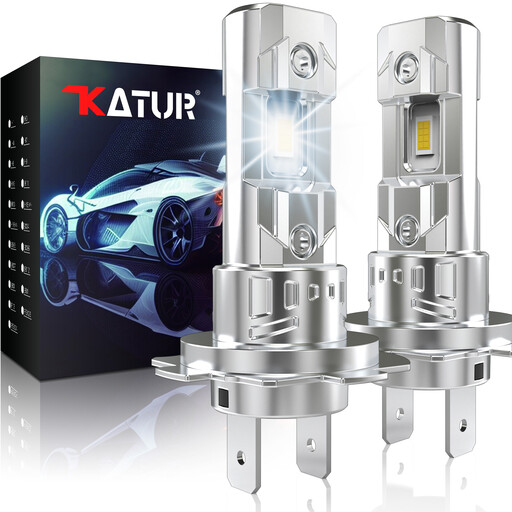
The smart choice for: A simple, effective, and hassle-free first upgrade. The compact size and fanless design make installation easy in tight headlight housings, a common issue in city cars and compacts.
The "fanless" design eliminates any risk of mechanical failure or noise, countering the overheating pitfall with reliable passive dissipation.
Compact 1:1 design: Ensures true "plug and play" installation without modifying the dust cover. Silent operation: Zero fan noise.
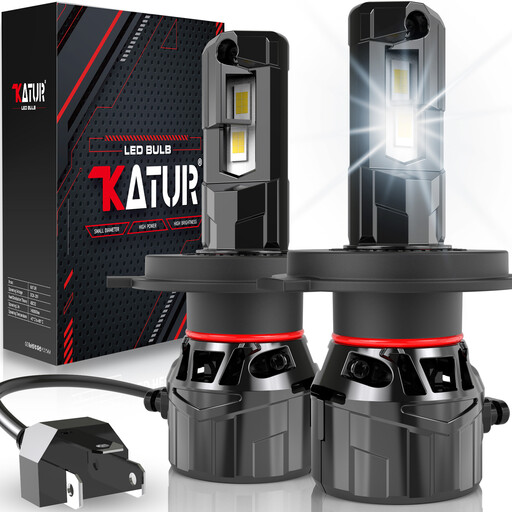
The smart choice for: Those who want maximum light output without sacrificing reliability. Ideal for high-mileage drivers and frequent trips on poorly lit country roads.
It avoids the "inflated" lumens trap by combining high real-world power (120W) with high-performance active cooling (16,000 RPM fan) and a 1:1 design, ensuring controlled and durable brightness.
High power output: Provides exceptional long-distance visibility. Efficient cooling: The turbo fan ensures stable performance and extends the bulb's lifespan.
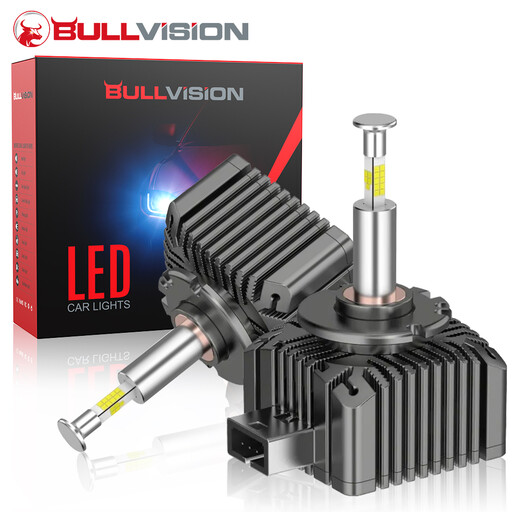
The smart choice for: Upgrading original Xenon (HID) lighting. This solution provides instant-on illumination and a pure white light, saying goodbye to the warm-up time of Xenon bulbs.
It tackles the compatibility headache by plugging directly into the original Xenon ballast. Say goodbye to OBC errors and risky electrical modifications.
Xenon compatibility: Directly replaces D1S/R, D2S/R, D3S/R, and D4S/R bulbs. Instant on: Full light output with zero delay.
We have selected a full range of products for you that meet our quality criteria and safety standards.
Regulations are strict: to be road-legal, a light must not dazzle anyone. Although many aftermarket LED kits do not have European ECE approval for retrofitting, those that adhere to a 1:1 design and faithfully replicate the original halogen beam pattern are highly likely to pass a vehicle inspection without issue. Ultimately, the inspector will have the final say on whether there is any glare.
It's almost a certainty for European cars made after 2005. To avoid any unpleasant surprises, opt for bulbs labelled "CANbus Built-in," "CANbus Ready," or "OBC Error Free." When in doubt, provide the make, model, and year of your vehicle to the seller before purchasing.
This value is a laboratory figure, achieved under perfect conditions. In the real world, it all depends on the efficiency of the cooling system. A well-designed bulb, with a quality aluminium body and a high-performance heat dissipation system, will come much closer to this promise than a low-end model that will eventually burn out prematurely due to overheating. Think of it as an investment in peace of mind.