
Livraison le jour même ou le lendemain

Qualité garantie

Débloquez vos offres de bienvenue: Livraison GRATUITE | Jusqu'à -80 % | 30 jours d'essai gratuits à JoyPlus
Téléchargez l'application
Replacing halogen bulbs with LED car bulbs is a great way to modernise your headlights or fog lights. But a particularly bright option isn’t necessarily right for your vehicle. An incompatible base, a poorly aimed beam, or a dashboard warning light – a hasty purchase can quickly turn into a wasted expense.
Here are the key points to check before choosing an LED headlight bulb, a fog light bulb, or a set of two LED car bulbs.
The references H1, H4, H7, H8, H9, H11, 9005, 9006 and 9012 correspond to different base sizes and configurations. An H1 LED bulb won’t automatically replace an H7, even if both can be used in a front headlight.
Check your vehicle’s manual, look at the reference printed on your old bulb, or use the parts catalogue for your model. For fog lights, also check whether your car accepts an H8 H9 H11 LED bulb or another size.
Product listings sometimes show very high figures, like 20,000 or 30,000 lm. These numbers alone aren’t enough to judge the quality of the light on the road. The beam pattern, the position of the LED chips, and their orientation within the headlight housing all play a crucial role.
A pure white LED bulb or a 6000K LED bulb produces a cool, white light, but it won’t rejuvenate an ageing, poorly adjusted, or misted-up headlight lens.
LEDs generally use less power than halogens, but their chips still generate heat. Depending on the model, this heat is managed by a fan, an aluminium heatsink, or a fanless design.
Check the space behind the headlight, whether the dust cover will fit, and the compatibility with your vehicle’s electrical system. A CANbus LED bulb can help reduce flickering or dashboard warnings, but it doesn’t guarantee compatibility with every car. Some particularly sensitive models may need an additional decoder.
Start by identifying the exact bulb reference:
Compatibility described as ‘universal’ usually refers to the bulb base, not to every car model. You also need to check the depth of the housing and the fixing system.
A 6000K or 6500K LED bulb produces a cool white light. The appearance may seem sharper than a yellowish halogen light, but colour temperature doesn’t tell you about the beam reach or the actual light output.
For a pure white LED bulb effect, focus on even light distribution and a beam pattern as close as possible to the original bulb. The terms ‘6000K’ and ‘6500K’ describe a shade, not an approval rating.
The IP65, IP67 and IP68 ratings indicate a level of protection against dust and water under the conditions defined by the standard. They don’t replace careful installation or a properly closed cover.
An IP68 model can suit use in rain or where water splashes are likely, while a built-in fan needs enough space to work properly. The product listings below also mention lifespans of up to 50,000 or 60,000 hours – these are figures provided by manufacturers and may vary depending on temperature, usage and the vehicle.
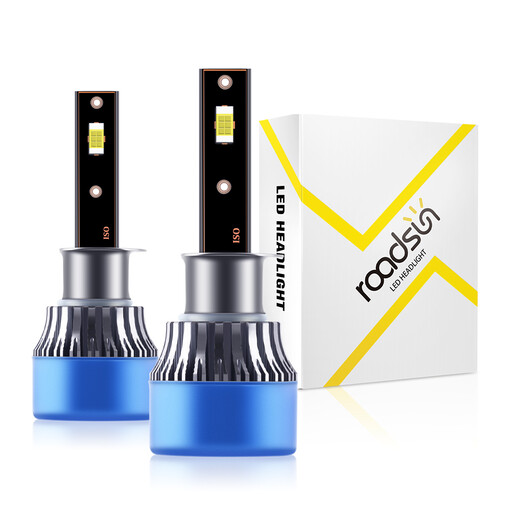
Why this choice suits this profile: With its H1 base and plug-and-play installation, this model is suitable for drivers who want to replace a fog light bulb without modifying the wiring, subject to compatibility with their vehicle.
The H1 format is clearly stated, reducing the risk of ordering an incompatible base. The stated IP68 rating also provides a concrete reference for water and dust protection.
Stated 6000K colour, direct installation and aluminium housing designed to aid heat dissipation.
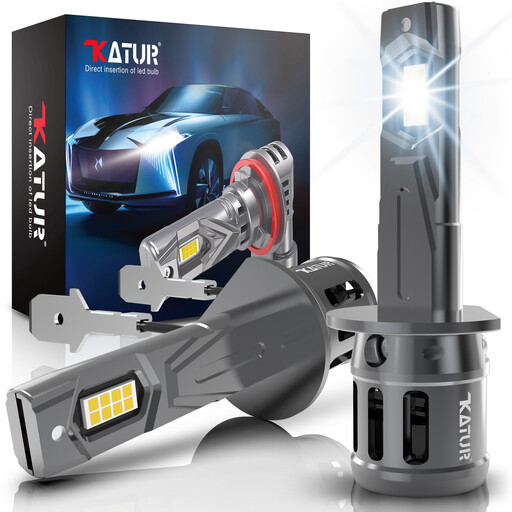
Why this choice suits this profile: This kit is aimed at drivers looking for a compact H1 LED bulb, equipped with LED chips described as automotive-grade, active cooling and an external CANbus-compatible driver.
The listing mentions a 1:1 design and advises checking the available space for the fan and cover. This check helps avoid forcing the installation.
Pack of 2, stated colour temperature of 6000K and a fan rated at 16,000 rpm.
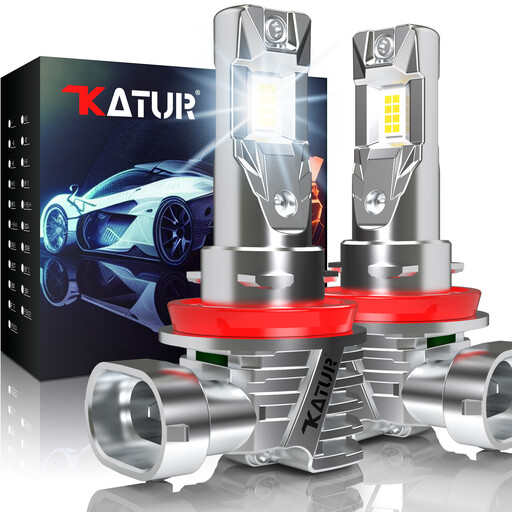
Why this choice suits this profile: Its fanless design can suit cars, SUVs and pick-ups that have limited space behind the cover or that are regularly driven in wet conditions.
The lack of a fan removes one extra moving part. However, the listing notes that this version is not intended for high-power modifications or certain enclosed housings.
Mini 1:1 format, stated H8/H9/H11 compatibility and passive cooling via an aluminium housing.
Before you hit the road, check the beam alignment and make sure it doesn’t dazzle other road users. In the UK, replacing a light source must also comply with the rules applicable to your vehicle, the headlight unit and type approval. Consult your owner’s manual, the manufacturer’s instructions and, if needed, ask a professional.
We’ve put together a comprehensive, real-time list of products that meet these demanding selection criteria and European safety regulations.
No. Compatibility depends on the bulb base, the headlight optics, the circuit voltage, the available space and the vehicle’s onboard electronics. Models described as CANbus-compatible can reduce certain issues, but a vehicle-specific check is still essential.
These values indicate the colour temperature. A 6000K LED bulb generally produces a cool white, while a 6500K bulb may appear slightly bluer. On their own, they don’t allow you to compare the beam reach or light output.
Turn off the ignition, let the old bulb cool down and avoid touching the LED chips directly. Make sure the fan or heatsink has enough space, that the seal is correctly positioned and that the dust cover is properly closed. Finally, have the headlights adjusted if the beam isn’t correctly aimed.