
Livraison le jour même ou le lendemain

Qualité garantie

Débloquez vos offres de bienvenue: Livraison GRATUITE | Jusqu'à -80 % | 30 jours d'essai gratuits à JoyPlus
Téléchargez l'application
Replacing halogen bulbs with LED car bulbs 6000 K plug and play can modernise your lighting and simplify installation. But a particularly flattering product page doesn’t guarantee compatibility with your vehicle or a correctly aligned beam. To make the right choice, start by identifying the original bulb format, then look at cooling, the Canbus system and the rules that apply to car lighting in the UK.
The mention 6000 K cool white describes the shade of the light, not its actual power. A high lumen count on a product page isn’t enough to judge visibility on the road. The beam pattern, the position of the LED chips and the quality of the original optics all play a decisive role.
A poorly positioned bulb can create dark spots or dazzle oncoming drivers, even when it’s marketed as a very high-brightness LED bulb.
The formats H1, H4, H7, H11, 9005/HB3, 9006/HB4 and 9012/HIR2 are not interchangeable. Some references handle both dipped beam and main beam functions, like the H4, while others are dedicated to a specific use.
Check your vehicle’s manual, the reference printed on the existing bulb or the manufacturer’s parts catalogue. A ‘universal’ bulb still depends on the socket, the space available behind the headlight and the vehicle’s electrical system.
A Canbus-compatible LED bulb can reduce error messages, flickering or detection issues on some vehicles. However, monitoring systems vary by make, model and year of manufacture. The phrase ‘Canbus ready’ is therefore not an absolute guarantee.
If a warning light appears after installation, a separate anti-error module may be needed. You can browse our dedicated selection of LED anti-error solutions.
Start by identifying the exact bulb reference:
An LED fog light bulb isn’t chosen by colour alone. The housing and optics must match the original reference.
1:1 LED bulbs replicate the dimensions and position of the light source of a halogen bulb as closely as possible. This design can help maintain a similar light distribution, but it doesn’t remove the need to adjust the headlight correctly.
Also check the overall length, body diameter and the space available for the fan or heatsink. A rear cover that’s too tight can prevent the headlight unit from closing properly.
LEDs generate heat at their components. Models with fan cooling expel it through forced airflow, while others rely on a passive heatsink. A fan can improve heat dissipation, but it adds a moving part that may produce a slight noise.
IP65 or IP68 ratings on a product page tell you about resistance to water and dust under the conditions specified by the manufacturer. They don’t replace checking the condition of the seal and the headlight cover.
Finally, claimed lifespans such as 50,000 or 60,000 hours should be taken as manufacturer indications. They depend on temperature, voltage and usage conditions.
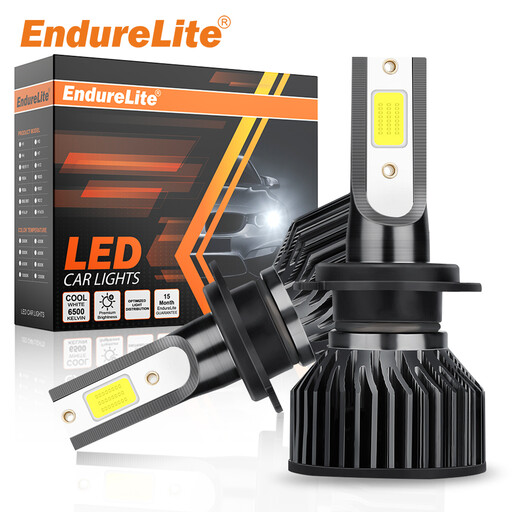
Why this choice suits this profile: This kit covers several common formats and aims for direct installation for drivers who want to replace their bulbs without major modifications.
The model is advertised as plug and play, with a near-original format and 1:1 design. However, you should still confirm the exact reference before buying.
Advertised 6000 K colour, integrated fan, stated IP68 rating and manufacturer-claimed Canbus compatibility.
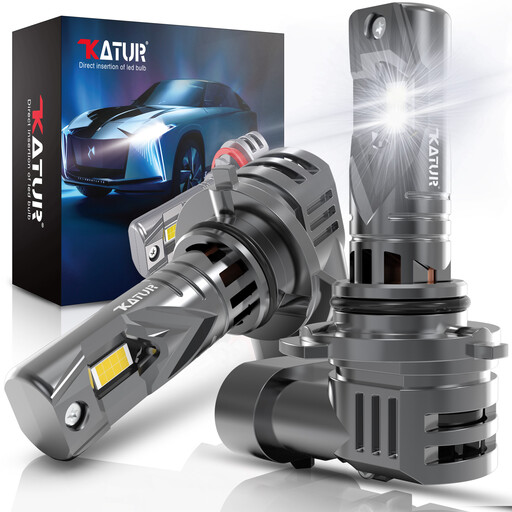
Why this choice suits this profile: This pair is aimed at drivers looking for a compact body, an external adaptor and enhanced heat dissipation for regular use.
Its advertised compact size limits clearance issues, but you still need to check the space behind the HB4 headlight.
Advertised 100 W per pair, fan rated at 16,000 rpm according to the product page, IP65 design and external Canbus module.
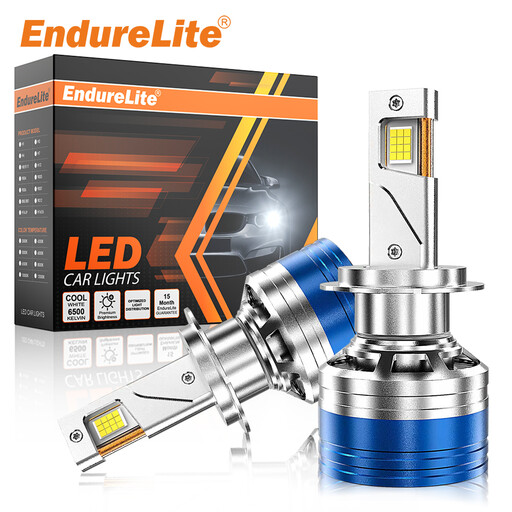
Why this choice suits this profile: This model suits vehicles fitted with HIR2 and drivers who frequently drive at night, subject to confirmed compatibility.
The 1:1 design and fan cooling address the poor positioning and overheating issues often encountered during a replacement.
9012/HIR2 reference, advertised 6000 K temperature, integrated fan, stated IP68 waterproofing and claimed 50,000-hour lifespan.
We’ve put together a comprehensive, real-time updated list of products that meet these strict selection criteria as well as European safety requirements.
Before installing an LED kit for your car, switch off the headlights and let the bulbs cool down. Wear gloves and avoid touching the LED chips directly. After installation:
Replacing a halogen bulb with an LED may be subject to type-approval and compliance requirements that vary by vehicle and lighting function. Check the manufacturer’s instructions, the applicable regulatory markings and the rules in force before driving on public roads. Compliance cannot be inferred from the mere mention of ‘plug and play’ or ‘Canbus’.
No. You need to check the exact reference — H1, H4, H7, H11, HB3, HB4 or HIR2 — but also the space inside the headlight and the type of electrical monitoring used. A product page claiming wide compatibility doesn’t replace checking on your specific model.
Not necessarily. The fan can help dissipate heat, but its lifespan depends on its design, the environment and usage. The lifespans claimed by manufacturers remain indications on the product page, not a guarantee that applies identically in every vehicle.
Consumption depends on the actual power of the installed model. Compare the watts per bulb, not just the advertised lumens. Lower consumption can also disrupt some detection systems, which is why a Canbus model or a compatible anti-error device may be useful.