
Livraison le jour même ou le lendemain

Qualité garantie

Débloquez vos offres de bienvenue: Livraison GRATUITE | Jusqu'à -80 % | 30 jours d'essai gratuits à JoyPlus
Téléchargez l'application
Changing a light bulb? Child's play, in theory. But the arrival of LEDs has made the choice far more complex. Faced with an aisle full of technical jargon, it's easy to walk away with the wrong lighting, ruin your home's atmosphere, or see your electricity bill drop by less than promised. As a Product Expert at Joybuy, my mission is to help you see things more clearly.
Before we dive into our top picks, let's review the 3 classic pitfalls that can turn a quick purchase into a lasting disappointment.
To avoid these unpleasant surprises, focus on a few non-negotiable technical specifications. This is your guarantee for successful, long-lasting lighting.
This is the starting point, step zero. Before you even think about brightness, identify the type of base your light fixture requires. The most common in Europe are:
Forget watts and make a habit of checking lumens (lm) for brightness and Kelvins (K) for atmosphere.
For truly high-quality interior lighting, don't overlook these last two points:
Rather than an impersonal list, we've matched lighting solutions to specific needs.
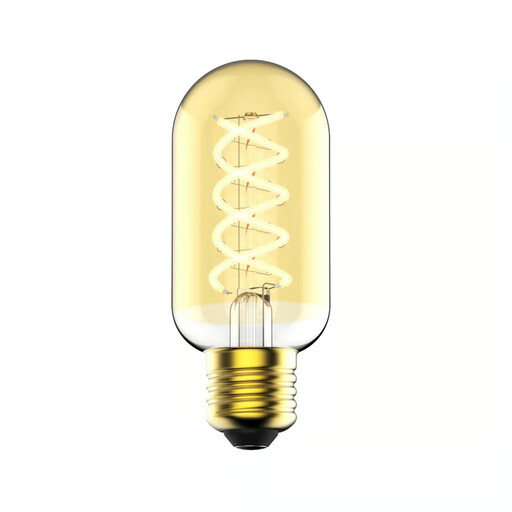
Why we chose it: For those who see the bulb as a decorative object in its own right. Its amber glass and spiral filament are designed to be seen, perfect for an open pendant or a lamp without a shade.
Its very warm temperature (2200 K) is a deliberate choice for a soft, muted atmosphere, eliminating any risk of cold, impersonal light. It is a decorative bulb by nature.
It's dimmable, allowing you to sculpt the light intensity for a custom atmosphere, from an intimate dinner to a reading-friendly ambience.
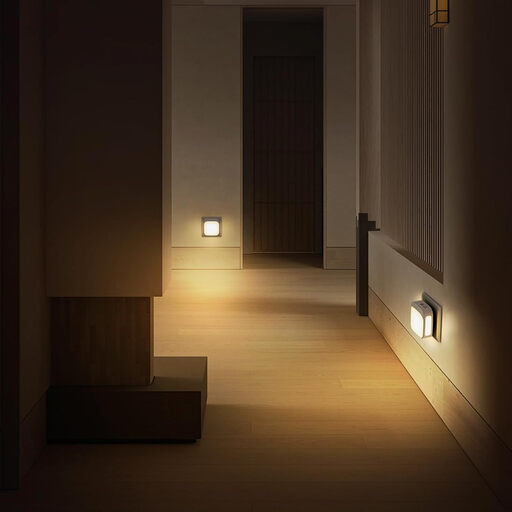
Why we chose it: A "set it and forget it" solution to make nighttime wandering safer for kids (and adults!). This child's night light plugs into an outlet and takes care of the rest.
There's no fussing with bases, lumens, or Kelvins here. Its sole mission is to cast a soft, warm light (2800-3000 K) only when needed.
Its dusk-to-dawn sensor turns it on and off automatically. At just 0.3 W, its energy consumption is negligible, even when plugged in 24/7.
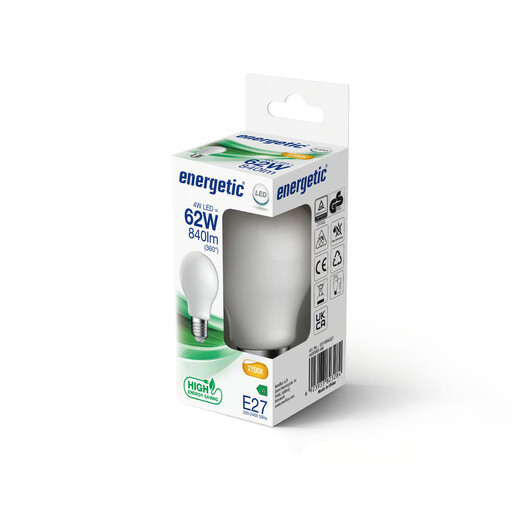
Why we chose it: For those looking to maximise energy savings without sacrificing lighting quality. Ideal for high-traffic areas or rooms that require constant, high-performance lighting.
It settles the "watt vs. lumen" debate with spectacular efficiency: 840 lumens for only 4.0 W of power consumption. Its Class A energy rating is the ultimate proof of its performance.
Its rated lifespan of 50,000 hours shatters the market average. A long-term investment that makes the chore of replacement a rare event.
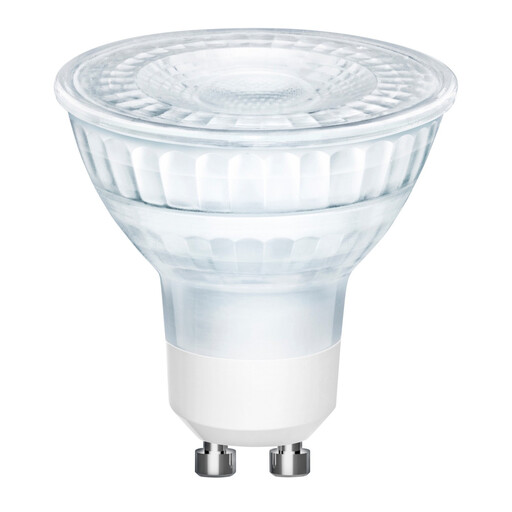
Why we chose it: Essential for retailers or homeowners who want to showcase a painting, a bookshelf, or a countertop. The GU10 bulb format is the specialist for this task.
Its narrow 36° beam angle concentrates light exactly where it's needed, without spill or unwanted halos. It's a precision tool, not a general-purpose bulb.
Its warm white light (2700 K) creates a welcoming atmosphere while highlighting objects with a crisp beam. Its CRI of 80 ensures faithful colour rendering.
Discover our full selection of products that meet our demanding selection criteria and current European safety standards.
The advertised lifespan (often between 15,000 and 50,000 hours) is a theoretical estimate measured in a laboratory. In real-world conditions, it depends on several factors: manufacturing quality, heat dissipation (a bulb in a closed, poorly ventilated fixture will not last as long), and how often it's switched on and off. That said, a good quality LED bulb used under normal conditions will easily last for many years.
The packaging or product description must explicitly state that it is "dimmable" or show the corresponding icon. If nothing is indicated, assume it is not. Attempting to use a non-dimmable bulb on a dimmer circuit can cause flickering, buzzing, and prematurely damage the bulb and/or the dimmer.
Yes, the E27 base is standardised. You can therefore replace an old incandescent or halogen bulb with an E27 LED. Just remember to check two things: the dimensions of the new bulb (especially if your fixture is narrow) and the lumen output. To replace an old 60 W incandescent bulb, aim for an LED of around 800 lumens.