
Livraison le jour même ou le lendemain

Qualité garantie

Débloquez vos offres de bienvenue: Livraison GRATUITE | Jusqu'à -80 % | 30 jours d'essai gratuits à JoyPlus
Téléchargez l'application
In the city, the rules of the game have changed. Bikes, electric scooters... new forms of micro-mobility are reshaping our streets. But this boom comes with a major challenge: visibility. At dawn, dusk, or in the dead of night, being seen by other road users is no longer an option—it's an absolute necessity.
This is where the LED bike helmet comes into play. It combines the essential protection of a classic helmet with active visibility that makes all the difference. But with an increasingly crowded and technical market, how do you make the right choice? Don't worry, we're here to guide you. Our goal is to give you the keys to finding the perfect model for your daily commute, without getting lost in marketing jargon.
Before diving into our selection, let's review the key points to check to ensure you make the right decision.
The number one mission of a bike helmet with an integrated light is simple: to make you visible. Positioned high up, its light rises above the chaos of traffic and more easily catches the eye of drivers.
On a bike or scooter, extending your arm to signal a turn is a reflex... but one that can easily lead to a loss of balance. The helmet with integrated turn signals is a game-changer for safety.
Controlled by a small wireless remote mounted on the handlebars, they allow you to signal your intentions without ever taking your hands off the grips. This is a decisive advantage in dense traffic, where every second counts.
A helmet, no matter how high-tech, is useless if it stays in the closet. To be worn on every ride, it needs to be so comfortable you forget you're wearing it.
Now for our top picks. We've selected a few models that stand out for their features and design, all tailored for the urban jungle.
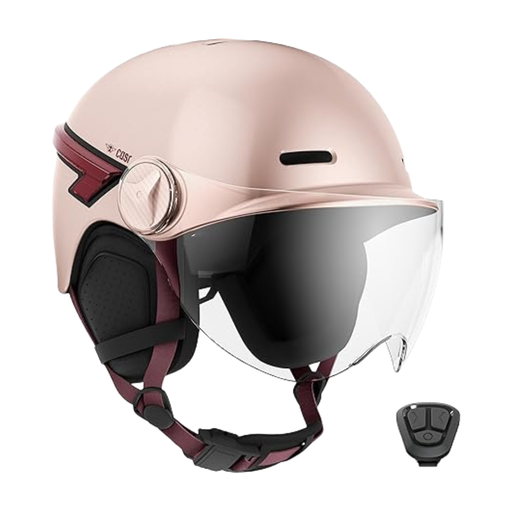
A model designed for demanding bike commuters who ride in all weather conditions. It checks all the boxes for safety and comfort.
Why it stands out: Its key strength is an ultra-comprehensive visibility system. It not only features a powerful 180° rear light but also handlebar-controlled turn signals. The icing on the cake: it comes with clever accessories to tackle any season, like a removable visor and ear covers.
Key Features:
Who it's for: The daily cyclist or scooter rider looking for the ultimate all-in-one solution, combining maximum visibility with four-season comfort.
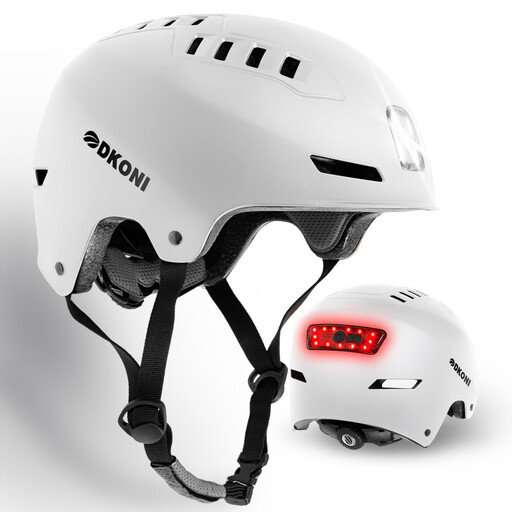
The DKONI HS-158 focuses on 360-degree visibility by integrating dual front and rear lighting.
Why it stands out: It's the dual lighting that sets it apart. At the front, 5 white LEDs make you more visible in poorly lit intersections. At the rear, 13 red LEDs with four flashing modes ensure flawless signaling.
Key Features:
Who it's for: For those who often ride in poorly lit areas and for whom front visibility is just as crucial as rear signaling.
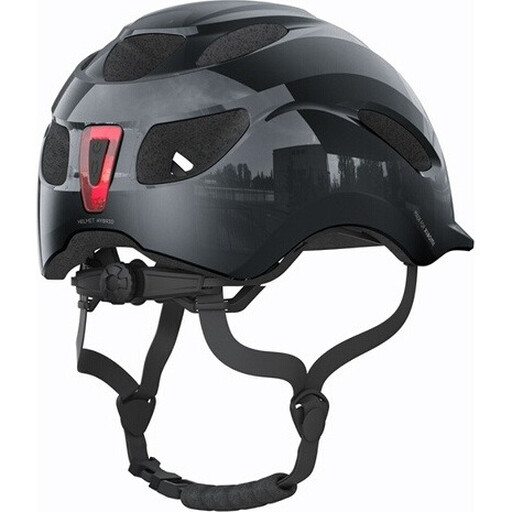
The MFX Hybrid prioritizes a lightweight and sleek design, without sacrificing the essential: an integrated safety light.
Why it stands out: Its secret? A hybrid construction and a feather-light weight of just 275g, making it a prime choice for long journeys. It combines a robust outer shell with an ultralight inner structure to reduce neck strain.
Key Features:
Who it's for: For the style-conscious urbanite who prioritizes comfort and lightness for their daily commutes, whether by bike or scooter.
Our selection focuses on urban mobility. If you ride on more rugged terrain or participate in more specific disciplines, other types of helmets will be better suited to your needs.
? Discover our range of ATV Helmets for other uses
Absolutely. A light-up helmet drastically increases your visibility, day and night. It's a key factor in reducing the risk of accidents, especially in low-light conditions. Note that it does not replace the mandatory lights on your bike but serves as an ideal supplement, placing a bright point of light high up, at the eye level of drivers.
It's very simple. Clean the shell with a soft cloth and soapy water (never use harsh chemicals!). If the inner pads are removable, wash them by hand and let them air dry. Make sure the charging port is clean and dry before plugging in the cable. And don't forget the golden rule: any helmet must be replaced after an impact, even if it doesn't look damaged.
Battery life depends on the model, the light intensity, and the mode selected (flashing mode is always more energy-efficient than steady mode). Generally, you can expect several hours of use, enough to cover a full week of bike commutes. A full recharge via USB then only takes a few hours.