
Livraison le jour même ou le lendemain

Qualité garantie

Débloquez vos offres de bienvenue: Livraison GRATUITE | Jusqu'à -80 % | 30 jours d'essai gratuits à JoyPlus
Téléchargez l'application
Choosing a laundry detergent is about more than its fragrance or the number of washes stated on the packaging. Liquid detergent, powder, capsules and professional formats are not designed for exactly the same needs when it comes to dosage, temperature, fabrics and colour protection.
For a large family, a larger format can reduce the number of trips to the shops. Conversely, someone living alone will often benefit from choosing more compact packaging that takes up less space in the cupboard. In hotels, restaurants or communal facilities, it is better to choose a concentrated formula with clear dosage instructions.
A bottle advertised for 70, 110 or 160 washes will not necessarily be the most economical. The number of doses depends on how dirty the laundry is, the hardness of the water and the weight of the load. A formula requiring 90 or 100 ml for very dirty laundry may run out much faster than a detergent dosed at 40 or 50 ml.
So compare the price per wash, rather than looking only at the price of the bottle. Also check what load size the advertised number of washes refers to.
A detergent for whites and colours may be suitable for everyday use, but some clothes require extra care. Wool, silk and delicate fabrics should be washed according to their care labels. Optical brighteners, enzymes and certain fragrances are not necessarily suitable for every fibre.
A colour detergent will be more suitable for clothes washed regularly, while a formula designed for whites will meet different needs. No detergent removes the need to sort your laundry.
A long-lasting fragrance can be appealing, but it says nothing about dosage or suitability for sensitive skin. Similarly, a claim such as “4-in-1” describes a combination of functions claimed by the brand, without guaranteeing universal effectiveness on every stain and fabric.
Take the time to read the label, ingredient list and hazard symbols. Some detergents may irritate the eyes or skin and must be kept out of the reach of children.
Liquid detergent dissolves easily and is suitable for many programmes. It can also be used to pre-treat certain stains, provided you follow the manufacturer’s instructions. Powder detergent remains a good choice for regular washes and large quantities of laundry, while capsules provide a pre-set dose.
For households, formats containing 25 to 70 doses are generally easy to store. Bottles advertised for 110 or 160 washes are more suited to households with high consumption, large families and professional users. In every case, adjust the dose according to the amount of laundry, how dirty it is and the hardness of the water.
An effective low-temperature detergent can be used with 20 or 30 °C programmes when the clothing care label and level of soiling allow it. However, products presented as effective from 20 or 30 °C should still be used with the recommended dose.
Cold cycles can reduce energy consumption compared with hot programmes, but they are not suitable for every situation. For very dirty laundry, a longer cycle, more careful sorting or pre-treatment may be necessary.
A hypoallergenic detergent or one designed for sensitive skin may be a good choice if you want to limit fragrances, colourants and certain ingredients known to have allergenic potential. However, the term “hypoallergenic” does not mean that it will cause no reaction in every user.
Formulas claiming a natural origin, an ecolabel or refillable packaging should be assessed based on the information shown on the product. For example, L’Arbre Vert states that it has EU Ecolabel certification and offers a refill containing less plastic than its bottle, according to information provided by the brand.
A disinfecting detergent is designed for very specific needs. For the product concerned, the information states that it has a biocidal action and complies with the EN 1276 standard. Follow the instructions, the specified temperatures and the restrictions relating to wool and silk.
In a launderette, restaurant or hotel, choose a professional detergent whose dosage, volume and conditions of use are clearly documented. Biocidal products must be used with care, in accordance with the instructions on their label.
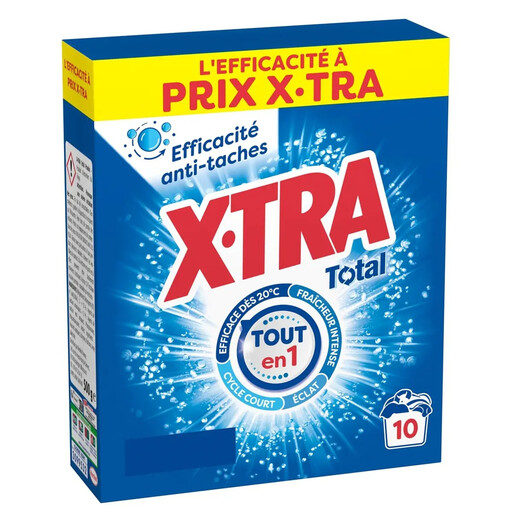
Why this choice suits this profile : This compact 0.5 kg format, advertised for 10 washes, is a convenient way to try powder detergent without a large outlay or taking up too much cupboard space.
The number of doses and the dosage are clearly linked to the pack size, making it easier to calculate the cost per wash.
Compact format, stated suitability for white and coloured laundry, and effectiveness even at low temperatures.
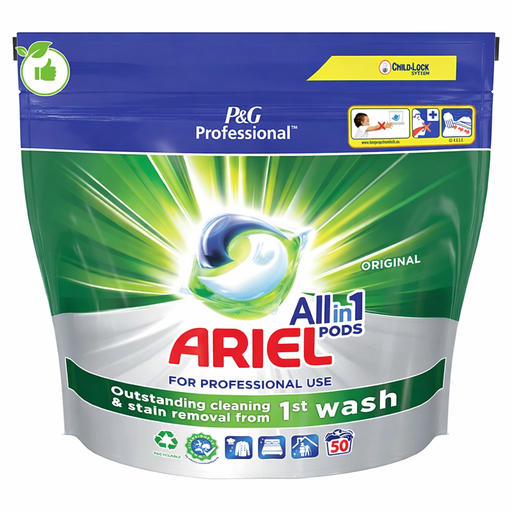
Why this choice suits this profile : Pre-dosed capsules are ideal for anyone looking for a quick routine and compact format, with 50 doses advertised.
The dose is set by the capsule, avoiding variations caused by overfilling a cap. However, you still need to adjust the number of capsules according to the amount of laundry.
Three compartments, as advertised, fast dissolution and direct use in the drum.
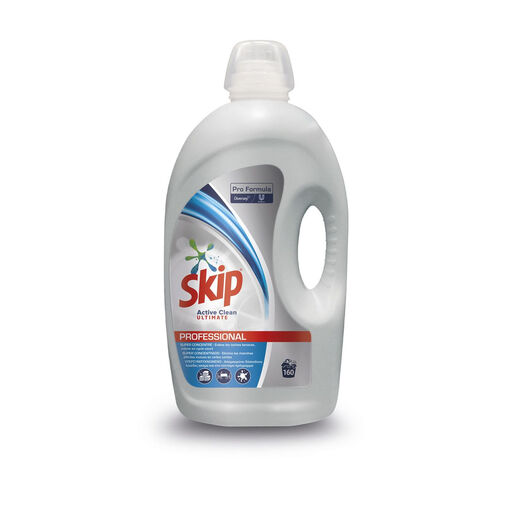
Why this choice suits this profile : Its 4.32 L bottle, advertised for 160 washes, is suitable for a large family or professional environment where washing machines are used frequently.
The number of doses and the volume are stated together. The “professional use” claim highlights the need to follow the dosage and check which fabrics are compatible.
Ultra-concentrated formula advertised for white and coloured laundry, with enzymes and optical brighteners.
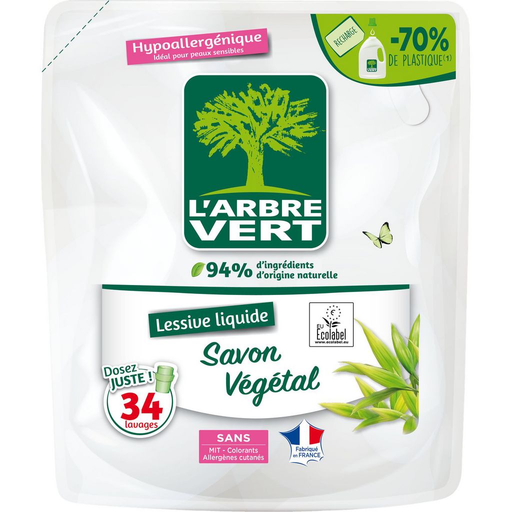
Why this choice suits this profile : This 1.53 L refill, advertised for 34 washes, is aimed at households looking for a hypoallergenic detergent in packaging other than a traditional bottle.
The product information states that it contains no colourants, MIT or phosphonates, and has EU Ecolabel certification. Always check the label of the product you receive.
94 % ingredients of natural origin, as advertised, and a reduction in plastic claimed by the brand for the refill.
A universal detergent may be suitable for a mixed load, provided you follow the care labels. To help preserve colours, a dedicated colour detergent will often be more suitable. Sorting is still recommended to minimise the risk of colour transfer.
Some liquid detergents are advertised as effective from 20 or 30 °C. Check this information on the packaging and select a programme suitable for your washing machine. A low temperature does not remove the need to use the dose suited to the amount of laundry and how dirty it is.
Capsules make dosing easier, but their cost per wash may be higher or lower than that of liquid or powder detergent, depending on the format and promotions. Always compare the price per dose, taking into account the number of capsules needed for a large load or very dirty laundry.