Renters without space for two appliances
A washer-dryer lets you use a single floor space. However, if your wash load exceeds the drying capacity, you’ll need to remove some items before starting the drying cycle, as UFC-Que Choisir points out.


Choose the option that addresses the main installation constraint: a washer-dryer combines both functions in one floor space; a slimline front-loader mainly reduces depth; a top-loading washing machine helps when width is limited; and stacking appliances makes use of vertical space, provided they can be safely stacked. With a washer-dryer, compare the wash and drying capacities separately, then check the duration and energy and water consumption of the complete cycle. Saving space alone won’t make laundry day easier to manage.
A washer-dryer lets you use a single floor space. However, if your wash load exceeds the drying capacity, you’ll need to remove some items before starting the drying cycle, as UFC-Que Choisir points out.
The right choice depends on what’s limiting your space: a slimline front-loader reduces depth, while a top-loader is better suited to limited width. In either case, allow room to open the appliance and make sure you have a separate way to dry your laundry.
Stacking two appliances may work if their dimensions, the stacking kit, the floor and the connections all allow for an installation that meets the instructions. The tumble dryer goes above the washing machine.
First, work out whether your main constraint is floor space, depth, width or usable height. Then consider how you’ll dry your laundry: a slimline or top-loading washing machine doesn’t, by itself, provide a drying solution.
| Consideration | What to check | Who it suits |
|---|---|---|
| Washing and drying in the same place | Compare wash and drying capacities, then check the duration and energy and water consumption of the complete wash-and-dry cycle. | When there’s only one floor space available, being able to dry your laundry without installing a second appliance becomes a priority; around 33% of consumers prioritise this need. |
| Limited depth | Measure the available depth, including the space needed for hoses and to open the door; check that the capacity suits your usual loads. | In a shallow alcove, fitting the machine while leaving enough room to open the door matters most; around 25% of consumers put this need first. |
| Limited width | Measure the usable width and the clearance needed to open a top-loader; make separate arrangements for drying. | If there isn’t enough width for a front-loader, accessing your laundry from above may guide your choice; around 17% of consumers prioritise this constraint. |
| Two stacked appliances | Check the appliance and kit compatibility, available height and floor stability in the instruction manuals. | When you can make use of the height, keeping a separate washing machine and tumble dryer may matter more than combining both functions; around 25% of consumers put this need first. |
The drying capacity may be lower than the wash capacity. So, if you fill the drum for a wash, you may need to split the load before drying it.
Compare both capacities in kg with the amount of laundry you want to wash and dry without interruption.
An appliance may fit into the space but leave too little room for hoses, the door or the lid to open. According to UFC-Que Choisir, slimline front-loaders reduce depth but are generally close to standard front-loaders in width.
Measure the width, height and depth, and allow enough clearance to use the appliance once it’s installed.
An unstable stack can lead to damage or a fall. UFC-Que Choisir recommends placing the washing machine at the bottom and the tumble dryer on top, using compatible appliances.
Check the instruction manuals, choose a suitable stacking kit and make sure the floor is level and solid.
You may need to buy a compatible stacking kit as well as the two appliances.
Saving space doesn’t mean the wash-and-dry cycle will be quick. UFC-Que Choisir also notes that many washer-dryers use water during drying.
Compare the duration and water and electricity consumption of the wash-and-dry cycle that matches how you’ll use the appliance, rather than looking at wash figures alone.
These examples cover different ranges and configurations. Check the capacity and installation options for the specific model you’re considering.
Worth a look if you’re after a front-loading washer-dryer with a heat pump.
Worth considering if you want to compare a slimline washer-dryer with other combined formats or an integrated vertical installation from the range.
Worth considering if you’re planning an installation with two appliances and have enough height to place a tumble dryer above a front-loading washing machine.
Worth considering if you’re comparing front-loading washer-dryers with different capacities.
These appliances combine washing and drying in a single floor space. Their drying capacities vary, so compare them with your usual laundry loads and check the dimensions required for your home before you choose.
 Image unavailable
Combines washing and drying in one floor space, provided you keep each drying load within the stated capacity.
Stated capacities: 11 kg for washing and 6 kg for drying. Check the space needed for installation and to open the door.
 Image unavailable
Wash and dry in one appliance if a 6 kg drying load suits your needs.
Stated capacities: 10 kg for washing and 6 kg for drying. Before buying, check the dimensions, door clearance and wash-and-dry cycle figures for the exact model.
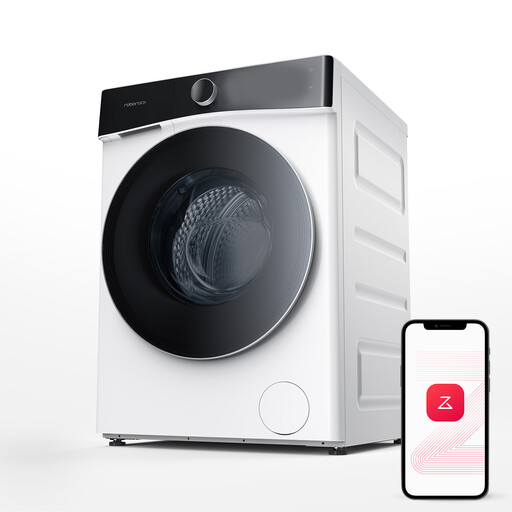 Image unavailable
Combines both functions in one floor space, with the amount of laundry for drying adjusted to suit its capacity.
Stated capacities: 10 kg for washing and 6 kg for drying. Measure the space and check the duration and consumption of the wash-and-dry cycle before choosing.
 Image unavailable
Only worth considering for very small wash and drying loads; these capacities may not be enough for a typical household’s laundry.
Stated capacities: 1 kg for washing and 0,5 kg for drying. Check its dimensions and the complete-cycle figures to see if it suits your needs.
Yes, but only if the wash load is within its drying capacity. This may be lower than its wash capacity, so check both figures for your chosen model before relying on a cycle that needs no intervention.
Yes, if you have enough space and the instructions allow you to stack two compatible front-loading appliances using a suitable kit on a level, solid floor. Put the washing machine at the bottom and the tumble dryer above it. Also check the connections and access to the controls.
It depends on the type of tumble dryer. According to UFC-Que Choisir, a vented model needs an outlet to the outside, unlike a condenser or heat pump model. Even without an external vent, check that the room and installation meet the requirements in the instruction manual.