
Livraison le jour même ou le lendemain

Qualité garantie

Débloquez vos offres de bienvenue: Livraison GRATUITE | Jusqu'à -80 % | 30 jours d'essai gratuits à JoyPlus
Téléchargez l'application
Between the washing machine, tumble dryer, detergent and sorting accessories, kitting out your laundry room can quickly become a headache. A large capacity doesn't necessarily mean reasonable consumption, and some features highlighted on the packaging often prove less useful in everyday life.
To avoid ill-suited purchases, it's best to weigh up the technical specifications, the layout of your home and your laundry routine.
A 10 kg washing machine makes sense for a family that regularly washes sheets, towels or bulky items. For a single person or a couple, an 8 kg model will often be easier to fill properly. Running an oversized drum half-empty reduces the benefit of a large capacity.
Be careful with a washer-dryer: its drying capacity is generally lower than its washing capacity. With a machine rated at 10 kg/7 kg, you'll need to remove some laundry before starting the drying cycle.
The energy rating is a good starting point, but it doesn't tell the whole story. Also check the energy consumption in kWh per 100 cycles, water consumption, the duration of the Eco 40-60 programme and the noise level during the spin cycle.
A long cycle can consume less than a quick programme. The most suitable choice therefore depends on your habits, the cost of your electricity and whether you can air-dry your laundry.
Capsules are convenient, but they offer less flexibility to adjust the dose precisely to the weight of the laundry and the hardness of your water. Powder detergent is often well suited to white laundry and higher temperatures, while liquid detergent is easier to dose for coloured items.
Stain removers and textile whitening products also require a bit of care. A product based on active oxygen should not be used like a chlorine-based product. Wool, silk and leather, among other delicate fabrics, should generally be kept away from them.
Measure the width, height and especially the depth available. Remember to leave enough room to open the door and connect the hoses. In a flat or small utility room, a shallow model can make installation much easier.
The steam function can freshen certain garments and make ironing easier. Manufacturers sometimes associate this function with general claims about hygiene or allergen reduction: check the precise conditions in the manual before drawing any conclusions.
An anti-allergy programme, a wool cycle, a dedicated pet hair programme or an extra rinse option are only worthwhile if they meet your needs. The presence of a programme does not guarantee the same results on all fabrics.
An inverter or BLDC motor operates without certain traditional mechanical parts. This can help reduce noise and vibration. That said, the noise level indicated in dB(A) remains the best point of comparison, especially if the appliance is located near a bedroom.
Maintenance is just as important: clean the seal regularly, empty the filter, carry out appropriate descaling and run the drum cleaning cycle. A well-maintained appliance retains its washing and drying performance for longer.
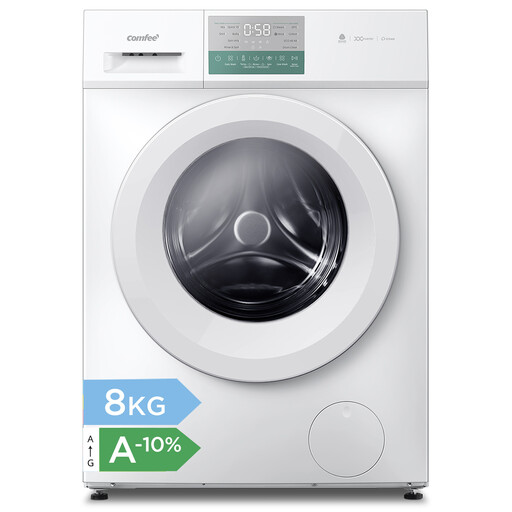
Why this choice suits this profile: Its 8 kg capacity is ideal for everyday laundry and its size fits into many homes. The manufacturer states an A-10% energy rating, a BLDC motor and a 15-minute quick cycle.
The capacity and consumption information is clearly stated. You can therefore compare it against your actual needs, rather than relying on a simple marketing claim.
8 kg capacity, wool programme, steam function as stated by the manufacturer and BLDC motor.
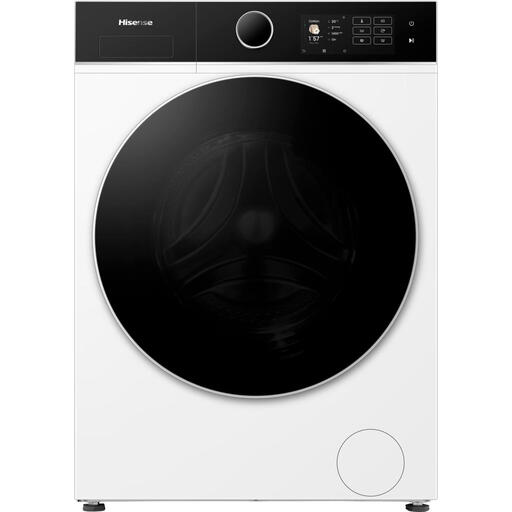
Why this choice suits this profile: This model combines a stated depth of 47 cm, Wi-Fi connectivity, an inverter motor and several specialised programmes.
The product page lists the dimensions, a stated consumption of 33 kWh per 100 cycles and a maximum noise level of 72 dB(A) – all data to check before installation.
Steam, anti-allergy and quick programmes, TFT display, consumption tracking and remote control.

Why this choice suits this profile: The wash-dry combination is ideal for households short on space or those doing laundry back-to-back. The stated load reaches 10 kg for washing and 7 kg for drying.
The difference between the two capacities is clearly displayed: you'll need to remove some laundry before drying, rather than assuming the drum can be filled to the maximum for both functions.
Washing and drying in a single appliance, stated steam function, wool programme and 15-minute quick cycle.
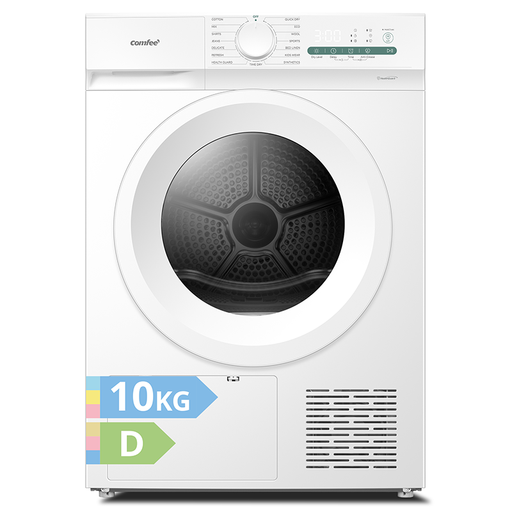
Why this choice suits this profile: Its stated 10 kg capacity is suitable for large volumes of laundry, towels and bed linen when the airer isn't enough.
The heat pump technology is paired with a D energy rating: this information allows you to compare models on a common regulatory basis.
10 kg capacity, three stated drying levels, double-layer lint filter and refresh programme.
We've put together a comprehensive, real-time updated selection of products that meet these strict criteria and European safety requirements.
For everyday washing, OMO laundry capsules offer a pre-measured dose. The manufacturer recommends one capsule for 3 to 5 kg of normally soiled laundry, and two capsules for a larger load or hard water. Handle them with dry hands and keep the packaging sealed, out of reach of children.
Skip Active Clean tablets and Vanish Oxi Action powders contain oxygen-based agents, according to their product information. They can complement your detergent, but should not be mixed with other products without checking the label first. For coloured fabrics, always test the product on an inconspicuous area.
Finally, a laundry basket with three compartments, such as the JOYFURNOS bamboo model, makes sorting by colour or fabric type much easier. Its stated maximum static load is 20 kg: avoid overfilling it and regularly remove the washable inner bag for cleaning.
An 8 kg capacity is suitable for many households. A 10 kg washing machine becomes worthwhile if you frequently wash bed linen, towels or large quantities of clothes. Just check that the depth of the appliance is compatible with the available space.
Yes. A washer-dryer combines both functions in a single appliance. However, its drying capacity is generally lower than its washing capacity and full cycles can be long. A separate washing machine and tumble dryer offers more flexibility if you're doing laundry back-to-back.
Spin your laundry thoroughly, respect the recommended load, clean the filter after every cycle and select the programme that matches the desired drying level. A heat pump tumble dryer operates at a lower temperature, but always compare its official consumption and take your usage habits into account.