If you regularly dry full loads and have space for a separate appliance, a heat-pump tumble dryer means you can do without an airer or an external vent. It generally uses less electricity than a conventional condenser model, although cycles are often slower, according to Que Choisir. If you only have room for one appliance, a washer-dryer lets you wash and dry in one machine. Bear in mind, though, that its drying capacity is lower than its washing capacity. You could still use an airer occasionally, provided you have a well-ventilated room or one with an extractor, as recommended by ADEME.
Which solution is right for you?
If you don’t have a balcony or an external vent, the space available and how often you do laundry are the first things to consider. A vented tumble dryer needs an outlet to the outside or a ventilation duct, explains Que Choisir.
Households that regularly dry full loads
If you often wash towels, bedding or other full loads, a separate condenser tumble dryer means you won’t need to keep a room set aside for an airer, provided you have space to install it. According to Que Choisir, a heat pump generally uses less electricity than conventional condenser technology, although cycles are often slower.
People with space for just one appliance
A washer-dryer combines washing and drying in one appliance, so there’s no need to transfer laundry between two machines. However, plan consecutive wash-and-dry loads around its drying capacity: Que Choisir points out that this is lower than its washing capacity.
People who use an indoor airer
If you only hang laundry out to dry occasionally, it’s worth paying attention to your washing machine’s spin performance, but this won’t remove the moisture released as laundry dries. ADEME recommends using a large, well-ventilated room or one with an extractor for drying laundry indoors.
How do the options compare?
First, work out whether you can fit in a second appliance. Then compare the actual drying capacity and how much space wet laundry would otherwise take up.
| What matters to you |
What to check |
Who is it for? |
| Frequent laundry and electricity use |
Drying capacity and the heat-pump model’s energy consumption; dimensions with the door open. |
If you regularly dry bedding and towels at home, freeing up living space matters just as much as limiting electricity use. Around 36% of consumers prioritise having an energy-efficient, separate appliance. |
| Room for just one appliance |
Separate washing and drying capacities; the duration, water use and energy consumption of a full cycle. |
If there’s room for only one machine at home, being able to wash and dry without moving the laundry becomes the main priority. This matters most to around 29% of consumers. |
| Faster drying |
How long the programme takes for your loads and the electricity consumption of a conventional condenser tumble dryer. |
If you need to dry loads quickly without an external vent, you may be willing to compare the electricity use of separate appliances more closely. Around 21% of consumers put speed first. |
| Air-drying and humidity |
Washing machine spin performance; the size and ventilation of the room where you’ll dry laundry. |
If you don’t want to add a drying appliance, you’ll need somewhere to hang laundry without letting moisture build up in a small, poorly ventilated room. Around 14% of consumers prioritise sticking with this option. |
These points don’t replace checking your installation. For a condenser tumble dryer, make sure you can access the water tank or look into connecting it to a drain. For any appliance, measure the space, allowing for the required clearance, and check the manual for electrical supply requirements. If you’re unsure about installation, ask a qualified professional for advice.
What to look out for
-
Going by washing capacity alone
A washer-dryer may not be able to dry the full load it has just washed. Que Choisir distinguishes between the two capacities. For example, Electrolux lists 9 kg for washing and 6 kg for drying for its EW7IW4966BG.
Start by comparing drying capacity in kilograms, then check the duration, water use and energy consumption of a full cycle for the loads you typically wash.
If a washed load exceeds the drying capacity, you may need to take some laundry out and run another cycle.
-
Forgetting about the water collected through condensation
Not needing an external vent doesn’t mean the water extracted from your laundry disappears. Depending on the model’s features, it’s collected in a tank or can be sent to a drain.
Check the manual to see whether there’s a tank, whether a drain connection is possible and which accessories you’ll need for your installation.
If you can’t connect the appliance to a drain, you’ll need to empty the tank as you use it.
-
Relying on the spin cycle alone in a poorly ventilated room
Even after a good spin, laundry releases moisture as it dries naturally. ADEME highlights how much moisture this can add to the air inside your home.
Hang laundry in a large, well-ventilated room or one with an extractor. If that isn’t possible and you do laundry frequently, compare condenser tumble dryers.
-
Choosing conventional condenser technology for speed alone
According to Que Choisir, a conventional condenser tumble dryer is generally faster than a heat-pump model, but uses more electricity. The right compromise also depends on how often you use it.
Compare programme durations and energy consumption figures for the specific models you’re considering.
Brands to consider
These examples of product ranges and models can help you identify features to compare; they don’t cover every appliance from each brand.
Bosch
Worth considering when comparing separate heat-pump tumble dryers and you have space for a dedicated appliance.
- Bosch lists a 9 kg capacity, dimensions of 842 × 598 × 613 mm and a water drain hose for the WQG2450SFR.
- These specifications apply to the WQG2450SFR only. Check the dimensions, noise level and condensate drainage for the model you choose.
Beko
The brand offers a separate conventional condenser tumble dryer to consider if speed is a priority.
- According to Beko, the DCB816W has an 8 kg capacity, a tank and the option of draining water directly.
- Its product information lists an energy rating of G. Compare the exact model’s energy consumption with the other appliances you’re considering; this figure doesn’t apply to the whole range.
Electrolux
Its washer-dryers let you weigh up the trade-off between having one appliance and the amount of laundry it can dry.
- Electrolux lists a 9 kg washing capacity and a 6 kg drying capacity for the EW7IW4966BG.
- With this model, a wash load over 6 kg needs to be reduced before you start a drying cycle. Also check its depth against the space available.
Whirlpool
Whirlpool presents a washer-dryer as an option when there isn’t room for two appliances.
- A single appliance means you don’t need to set aside a second space for a tumble dryer.
- The brand notes that drying capacity is often lower than that of separate appliances. Compare the capacities and full-cycle performance of the model you choose.
Appliances available on Joybuy
This selection includes separate condenser tumble dryers and a washer-dryer for homes without an external vent. If you’d rather keep your washing machine and use an airer, check the spin and ventilation considerations mentioned above.
 Image unavailable
Hotpoint CHD84MWBSEE, 8 kg heat-pump tumble dryer
For regular laundry if you have room for a separate tumble dryer without an external vent. The listed capacity is 8 kg. Measure the available space, including with the door open, and check the manual for condensate drainage before deciding where to put it.
View on Joybuy
 Image unavailable
Electrolux EDH1018CD GentleCare, 8 kg condenser tumble dryer
For drying loads in a separate appliance without an external vent. The title lists an 8 kg capacity and condenser drying. Before comparing its energy use or cycle time with a heat-pump model, confirm the exact technology it uses. Also check the space required and how the water tank is managed.
View on Joybuy
 Image unavailable
Comfee CD08EHP05W-HR, 8 kg heat-pump tumble dryer
A mechanical drying option for regular loads if you have space for a second appliance. The title lists an 8 kg capacity. Check the manual for dimensions, condensate collection and programme durations if these factors will influence your choice.
View on Joybuy
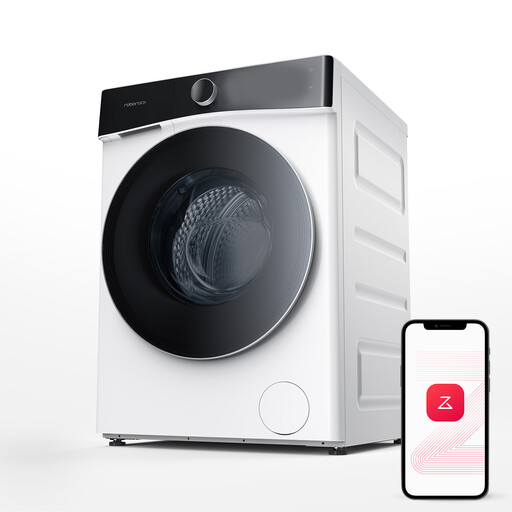 Image unavailable
Roborock Zeo Lite, 10 kg/6 kg washer-dryer
For washing and drying in one space. The listed capacities are 10 kg for washing and 6 kg for drying. To run both functions consecutively, limit the load to the drying capacity or remove some laundry after washing. Check the dimensions and the duration, water use and energy consumption of a full cycle.
View on Joybuy
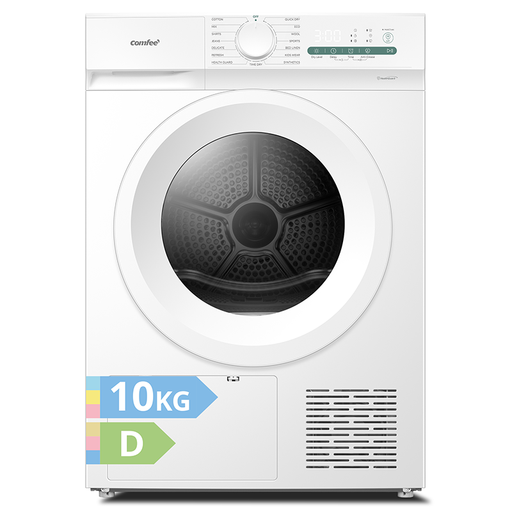 Image unavailable
Comfee CD10EHP05W-HR, heat-pump tumble dryer
For drying laundry in a separate appliance without an external vent. The capacity listed for this model varies between 8 and 10 kg. Confirm the capacity of the CD10EHP05W-HR before deciding whether it suits your loads. Also check its dimensions and how it collects water.
View on Joybuy
Frequently asked questions
Can you use a vented tumble dryer without an outlet to the outside?
No, not unless you have an external outlet or a suitable ventilation duct: Que Choisir says a vented tumble dryer needs one of these connections. Consider a condenser tumble dryer, with or without a heat pump, or a washer-dryer suited to your space instead.
Does a condenser tumble dryer need to be connected to a drain?
Not necessarily. The water can be collected in a tank or, depending on the model and its features, sent to a drain. Check the manual to see whether a drain connection is possible and which accessories you’ll need.
Why won’t a 9 kg washer-dryer necessarily dry 9 kg?
Because washing and drying capacities are different. For example, Electrolux lists 9 kg for washing but 6 kg for drying for the EW7IW4966BG. To run a full wash-and-dry cycle with this model, load no more than 6 kg or remove some laundry after washing.
Should you compare water consumption for washer-dryers?
Yes, if you’re considering a washer-dryer: Que Choisir notes that many models also use water during drying. Compare the figures for a full wash-and-dry cycle for the specific models you’re interested in, rather than looking at washing data alone.
Which room should you use for an indoor airer?
Choose a large, well-ventilated room or one with an extractor: ADEME points out that laundry drying naturally releases a lot of moisture into your home. A more effective spin cycle reduces the amount of water in the laundry to start with, but you’ll still need to make sure the room is ventilated.


