If you’re doing one load of laundry after another and want to free up the space taken by your clothes airer, compare heat pump condenser tumble dryers based on the space available, capacity and how they handle condensate. If your laundry needs to stay on an airer, a dehumidifier can collect some of the moisture in the air, but it doesn’t replace ventilation. According to Anses, laundry should be dried outside if possible, or in a well-ventilated room.
Who are these options for?
The right choice depends first on where your laundry dries, how often you do the washing and whether you can ventilate the room.
Households without a well-ventilated utility room
If your clothes airer takes up space in a bedroom or a poorly ventilated living area, the moisture released by your laundry is an important factor to consider. ADEME describes air-drying laundry as a significant source of indoor moisture; Anses recommends using a well-ventilated room when drying clothes outside isn’t possible.
Households that do one load after another
If your airer is still full when it’s time for the next load, a tumble dryer is worth considering. Choose a capacity close to that of your washing machine, as recommended by UFC-Que Choisir, then check the eco programme duration, noise level and how condensate is collected.
People who want to keep using a clothes airer
A dehumidifier can help when drying clothes on an airer by collecting water in a tank or through drainage. If you’re using it near a living area, also check the conditions used to measure extraction and the noise level of the mode you plan to use.
What should you check before choosing?
First, decide where the moisture removed from your laundry should go: into a tumble dryer’s tank, into the air around a clothes airer, or into the tank of a nearby dehumidifier.
Condenser tumble dryer
Consider one if: you want to dry loads in a drum without having an airer taking up space in a room for long periods.
Bear in mind: you’ll need space for the appliance, a suitable power supply and a way to empty the tank or connect a condensate drain. The European Commission states that condenser models don’t need an exhaust duct to the outside.
Dehumidifier and clothes airer
Consider this if: you want to keep using an airer and collect some of the moisture in the room’s air.
Bear in mind: you’ll need to empty the tank or set up drainage, and you’ll still need to ventilate the room to refresh the air.
Clothes airer and existing ventilation
Consider this if: you can dry your laundry outside or in a well-ventilated room, as recommended by Anses.
Bear in mind: you’ll need space and time for the airer. According to ADEME, air-drying laundry releases a lot of moisture indoors.
| Factor | What to check | Think about your needs |
|---|
| Moisture and ventilation |
Check where your laundry dries, whether you can ventilate the room and whether its ventilation system is working. A dehumidifier collects water, but doesn’t refresh the air. |
If my airer is in a poorly ventilated room, I need to consider the moisture it adds. Anses recommends drying laundry outside if possible, or in a well-ventilated room. |
| Tumble dryer energy consumption |
Compare the A to G label, stated energy consumption and eco programme duration for the models you’re considering. The European Commission says the tumble dryer energy label scale changed on 1 July 2025. |
I want to compare appliances using the same scale, rather than judging their day-to-day use on the energy rating alone. |
| Loads and noise |
Choose a tumble dryer capacity close to that of your washing machine and the loads you actually dry, as recommended by UFC-Que Choisir. Check the stated noise level for the programme or mode you’re interested in. |
I do several loads of laundry in a row, but the appliance would be near a living area, so both its capacity and noise level matter to me. |
| Extraction and water collection |
For a dehumidifier, check the temperature and humidity used to measure litres per day, then look at the tank and drainage options. Les Numériques also lists noise and energy consumption among the factors to consider. |
I want to keep using my airer without having to keep an eye on a tank, so I’ll check how the water is collected where I plan to put the appliance. |
What mistakes should you avoid?
-
Relying on a dehumidifier instead of ventilating the room
The appliance collects water, but doesn’t refresh the air. ADEME recommends ventilating regularly and having a system that extracts air from the home.
Before placing it near a clothes airer, check that air inlets aren’t blocked and that the room’s ventilation is working.
-
Choosing a dehumidifier based on litres per day alone
The stated extraction rate depends on the test conditions. For example, De’Longhi’s French product page states 14 l/24 h for the DEXD214RF at 30 °C and 80 % relative humidity. This figure alone doesn’t tell you how it will perform in a different room.
Compare the test conditions, then check the noise level, energy consumption, tank capacity and drainage options for the model you’re considering.
Having to empty the tank regularly or set up drainage adds an extra task.
-
Comparing energy ratings from two different scales
The European Commission says tumble dryer labels changed to the A to G scale on 1 July 2025. An old rating shown on a product page shouldn’t be read as a rating on the new scale.
Check the label for the exact model being sold and consider its energy consumption alongside its capacity and eco programme duration.
-
Choosing a vented tumble dryer without a suitable outlet
A vented appliance needs to expel moist air outside. By contrast, the European Commission states that a condenser tumble dryer doesn’t need an exhaust duct to the outside.
If there’s no suitable outlet where you plan to put it, consider condenser models and check how they collect or drain condensate.
Which brands should you consider?
These brand examples can help you identify ranges and features to look into, but they’re no substitute for comparing the exact models.
Bosch
Bosch features the WQG24502FR, an 8 kg heat pump tumble dryer.
- An 8 kg model to compare with the size of your usual laundry loads.
- For the model you choose, check the energy label, noise level, depth and how condensate is handled.
Miele
Miele France offers tumble dryers with maximum capacities of 7, 8 and 9 kg.
- A choice of capacities to compare with your washing machine and usual laundry loads.
- Compare the dimensions, noise level and label information for the specific model, rather than relying on general claims about the range.
Beko
Beko France offers heat pump tumble dryers, including a model with a stated capacity of 12 kg.
- A high capacity to consider if it suits the size of your laundry loads.
- Check the dimensions and energy information for the model you’re considering. Not every household needs a large capacity.
De’Longhi
If you want to keep using a clothes airer, the DEXD214RF dehumidifier is one model to consider, with extraction conditions specified by De’Longhi France.
- The product page states 14 l/24 h at 30 °C and 80 % relative humidity for this model.
- This figure doesn’t predict extraction in a cooler room. Compare the noise level and how water is collected, too.
Appliances for drying laundry at home
These Joybuy options include tumble dryers for drying laundry in a drum and dehumidifiers to use near a clothes airer. Whichever option you choose, remember to ventilate the room.
 Image unavailable
Hotpoint CHD84MWBSEE, 8 kg heat pump tumble dryer
For regular loads dried in a drum, the product page states an 8 kg capacity and the option to connect condensate drainage to a drain. It lists a noise level of 64 dB. Check the energy label, eco programme duration and dimensions for your chosen space.
View on Joybuy
 Image unavailable
Electrolux EDH1018CD GentleCare, 8 kg condenser tumble dryer
This model has a collection tank and offers drum drying without an external exhaust duct. Its product page states a capacity of 8 kg, a noise level of 66 dB(A) and dimensions of 60 × 65 × 85 cm. Check its current energy label and eco programme duration before comparing it with other models.
View on Joybuy
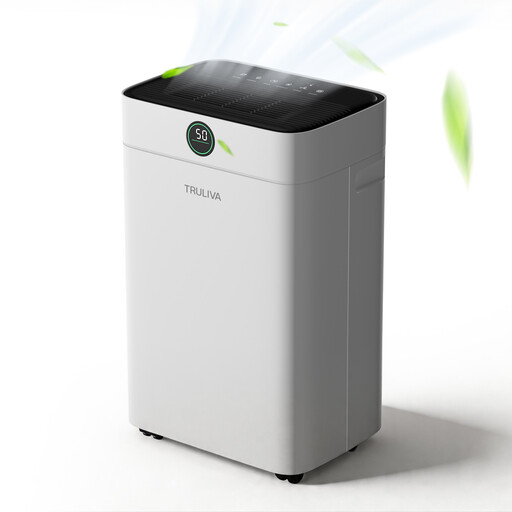 Image unavailable
TRULIVA 25 L/day dehumidifier with laundry mode and 2.8 L tank
If you want to keep using a clothes airer, this model has a laundry mode, a 2.8 L tank and continuous drainage. Its maximum extraction rate of 25 L/day is stated at 95 °F and 90 % relative humidity, so don’t assume it will extract the same amount in your room. The stated noise level in sleep mode doesn’t tell you how noisy laundry mode is. Keep your home ventilated.
View on Joybuy
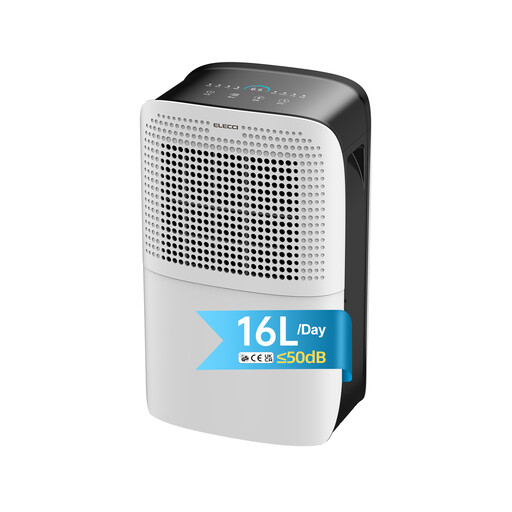 Image unavailable
ELECCI 16 L/day dehumidifier with DRYING mode and 3.1 L tank
DRYING mode is designed for use near a clothes airer. The product page lists a 3.1 L tank and continuous drainage. The stated extraction rate depends on the test conditions. If the room is regularly used, check the noise level and energy consumption in the mode you plan to use, as well as the clearance needed around the appliance. Keep the room ventilated.
View on Joybuy
 Image unavailable
Comfee CD08EHP05W-HR heat pump tumble dryer
According to its product page, this tumble dryer offers several programmes and three drying levels. Before choosing it for your laundry loads, confirm the capacity of this variant: information associated with the model lists both 8 kg and 10 kg. Also check the current energy label, noise level, dimensions and how condensate is handled.
View on Joybuy
Frequently asked questions
Can a dehumidifier replace ventilating the room?
No. It can collect moisture from the air, but it doesn’t refresh it. ADEME recommends ventilating your home regularly and having a system that extracts indoor air. Check that these conditions are met before drying laundry near the appliance.
Which tumble dryer should you consider if you don’t have an external exhaust duct?
Consider a condenser tumble dryer. According to the European Commission, this type of appliance doesn’t need an external air vent. However, check that you have enough space and how the model collects or drains condensate.
How should you compare tumble dryer energy labels?
Compare models using their current A to G labels. The European Commission says this scale has applied to tumble dryers since 1 July 2025. Also check the stated energy consumption, capacity and eco programme duration, rather than focusing on the rating alone.
Why isn’t litres per day enough to help you choose a dehumidifier?
Because the stated extraction rate is based on specific test conditions. For example, De’Longhi France states 14 l/24 h at 30 °C and 80 % relative humidity for the DEXD214RF. Compare these conditions with those in your room, then check the noise level, energy consumption and how you’ll empty or drain the water.


