Households that regularly dry full loads
If you do several loads of washing in a row and your airer is often occupied, start by considering the tumble dryer’s capacity, where it will fit in your home and what’s needed to install it.


If you regularly dry full loads and have a suitable space, compare tumble dryers. If you use a clothes airer, a dehumidifier with a laundry mode can help manage moisture in the room, but it doesn’t replace proper ventilation. If you’re dealing with recurring condensation, mould or signs of water ingress, find out what’s causing the problem before relying on an appliance as a complete solution.
If you do several loads of washing in a row and your airer is often occupied, start by considering the tumble dryer’s capacity, where it will fit in your home and what’s needed to install it.
If you need to dry laundry on an airer indoors, bear in mind the moisture it releases into the room. For indoor drying, ADEME recommends using a large, well-ventilated room or one with suitable mechanical ventilation.
If condensation, stains or damaged surfaces persist even when you’re not doing laundry, look for the cause before choosing an appliance. Qualitel recommends getting the problem properly assessed if the damp persists.
First decide whether you want to dry your laundry in a drum or continue using an airer. Then check the space available, how water is managed and how noisy the model is.
Consider it: if you regularly dry full loads and have a suitable space for one.
Bear in mind: it needs a permanent space, and you should compare the model’s electricity consumption on its energy label.
Consider it: if you still use an airer and need to manage moisture in the room while your laundry dries.
Bear in mind: it works on the air, rather than drying laundry directly in a drum; you’ll need to empty its tank or arrange for continuous drainage.
Keep using one: if you have a large, well-ventilated room or one with suitable mechanical ventilation where you can put the airer.
Bear in mind: your laundry and airer take up space while everything dries, and this option won’t solve persistent damp in your home.
| What matters to you | What to check | Who it matters to |
|---|---|---|
| Regular full loads | Match the capacity in kg to your usual laundry loads; also compare tumble dryer dimensions and energy use in kWh/100 cycles. | If you regularly need to dry several loads, freeing up the space taken by an airer may be a priority; around 46% of consumers would put laundry throughput first. |
| Moisture around the airer | Check the space available, noise levels and how you’ll empty the tank or set up continuous drainage. | If you still need an airer, managing moisture in the room may matter more than choosing a tumble dryer; this would be the priority for around 36% of consumers. |
| Persistent damp | Check whether condensation, stains or damage keep returning when you’re not drying laundry; if they persist, find out what’s causing them. | If signs of damp return even when there’s no laundry on the airer, this changes the decision: around 18% of consumers would prioritise finding a lasting solution. |
Using an appliance near your laundry won’t help you identify a leak or poor ventilation. Stains or recurring condensation need to be addressed separately from drying a load of washing.
If these signs persist, find out what’s causing them before relying on dehumidifying the air alone.
A dehumidifier’s stated extraction capacity won’t tell you whether the appliance, airer and space to move around will all fit in the same room, or how you’ll drain the water.
Measure the space with the airer fully open, then check the model’s dimensions, tank, drainage options and noise level.
Two appliances with a similar capacity can differ in energy use, noise levels and installation requirements. Capacity doesn’t tell you everything about how they’ll work for you.
Check the energy label, dimensions and manual for the exact model, and compare energy use on the same basis.
ADEME notes that air-drying laundry releases a significant amount of moisture into the air indoors. Choosing an appliance doesn’t mean you can overlook ventilation in the room.
If you’re using an airer indoors, choose a well-ventilated room or one with suitable mechanical ventilation, and don’t block any vents.
The EDHF5841EC model featured by Electrolux France offers a point of comparison for heat pump tumble dryers, but it doesn’t represent the entire range.
De'Longhi France’s Tasciugo range is designed to dehumidify enclosed rooms, including spaces where you use an airer.
The DSH520 is an example of a portable dehumidifier whose specifications have been reviewed by Les Numériques.
These Joybuy models cover two options: drying loads in a tumble dryer or continuing to use an airer with a dehumidifier that has a laundry mode. Whichever you choose, check that the room and installation are suitable for the model.
 Image unavailable
Worth considering if you regularly dry full loads and can set aside space for a tumble dryer.
The title lists an 8 kg capacity and a C energy rating. Before deciding where to install it, check the dimensions, required clearances and energy use shown on the label.
 Image unavailable
Another tumble dryer option for regular loads. Compare it based on the space available and installation requirements.
The title lists an 8 kg capacity. Check the clearances required in the manual and compare its energy use with other models on the same basis. Don’t confuse this EDH1018CD with the EDHF5841EC mentioned above.
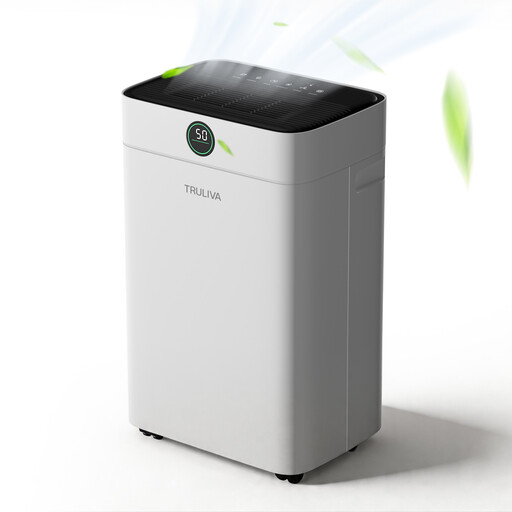 Image unavailable
Worth considering if you still use an airer and have room for an appliance that works on the air in the room.
The title lists a 2.8 L tank and a continuous drainage hose. The stated capacity of 25 L/day is based on conditions of 95 °F and 90% relative humidity; it doesn’t determine how long your laundry will take to dry at home. Also check the clearance required around the appliance. The stated noise level in sleep mode may not apply to laundry mode.
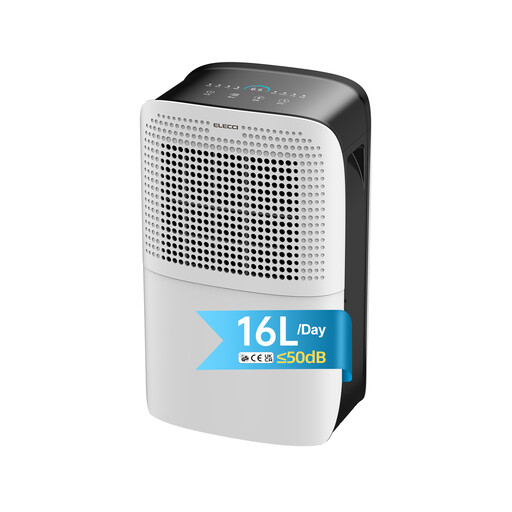 Image unavailable
If you dry laundry on an airer indoors, consider this model if you have space for a dehumidifier in the room and can arrange to collect the water.
The title lists a 3.1 L tank, four modes and continuous drainage. The 16 L/day capacity is stated at 95 °F and 90% relative humidity. Check the dimensions and noise level before deciding where to put it.
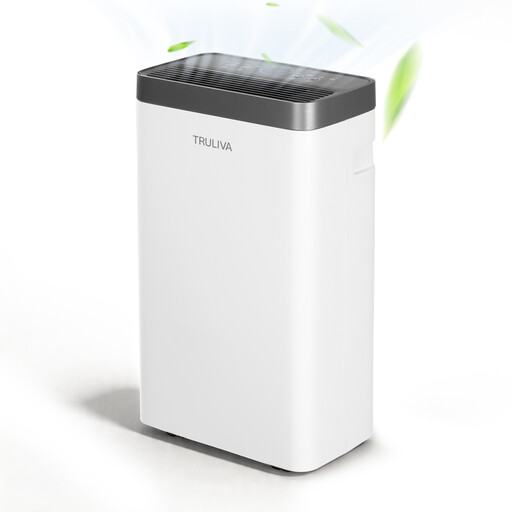 Image unavailable
Worth comparing for a room where laundry is dried on an airer, particularly if you can set up continuous drainage.
The title lists continuous drainage and a laundry mode. Before choosing this model, check its dimensions and noise level for your room, as well as the humidity settings available on the AP10-2012EE.
No. It won’t fix a leak or poor ventilation. If stains, mould or condensation keep returning, Qualitel recommends finding out what’s causing the problem and taking appropriate action. You can still consider a dehumidifier to manage moisture while your laundry dries.
Yes. A dehumidifier doesn’t replace proper ventilation. For laundry dried indoors on an airer, ADEME recommends using a large, well-ventilated room or one with suitable mechanical ventilation. Also check that the ventilation in your home isn’t blocked.
Compare capacity in kg, dimensions, noise level and energy use in kWh/100 cycles, then check the installation requirements. For the tumble dryers covered in the European Union, the European Commission explains the revised energy label that has applied since 1 July 2025. Use the same energy-use basis to compare two models.
Measure the room with the airer fully open, allowing for walkways, access to the tank and space to fit a drainage hose. Then check the dimensions and clearances required in the manual for your chosen model, rather than relying only on a stated room size.