Households that often dry full loads
If you do laundry regularly and can install a second appliance, compare its drying capacity with your usual loads. Noise, where you place it and how you empty the condensed water will also affect your routine.


If you often dry full loads and have space for a second appliance, consider a condenser tumble dryer; check how it needs to be installed and how the collected water is managed. If you only have room for one appliance, a washer-dryer saves you having to transfer laundry, but its drying capacity may be lower than its washing capacity. If you use a drying rack, spin efficiency matters, but it’s no substitute for a suitable, well-ventilated room, as ADEME points out.
If you do laundry regularly and can install a second appliance, compare its drying capacity with your usual loads. Noise, where you place it and how you empty the condensed water will also affect your routine.
If you only have room for one appliance in your kitchen or bathroom, a washer-dryer is worth considering. UFC-Que Choisir points out that its drying capacity is lower than its washing capacity, so check both figures and the dimensions before planning a wash-and-dry cycle.
If you plan to keep hanging your laundry out to dry, check the washing machine’s spin efficiency class. ADEME also recommends using a large, well-ventilated room or one with an extractor for indoor air-drying.
Consider this if: you want to keep air-drying your laundry and don’t want to install a second large appliance.
Bear in mind: laundry still releases moisture into the room as it dries, even after an effective spin cycle.
Consider this if: you have room for two appliances and regularly dry full loads, but don’t have an external vent for a vented tumble dryer.
Bear in mind: you’ll need extra space and a way to manage the condensed water, depending on the model.
Consider this if: you need one appliance to wash and dry your laundry, particularly if your loads suit its drying capacity.
Bear in mind: a full washing load may not be able to go straight through a complete drying cycle.
| Consideration | What to check | Consumers concerned |
|---|---|---|
| Drying full loads | Drying capacity in kg compared with your usual laundry loads; space and how to manage condensed water. | When I have several loads of laundry to get through, I want to dry a load without splitting it because the appliance lacks capacity. Around 33% of consumers concerned would make this their top priority. |
| Keeping space to a minimum | Appliance dimensions, room to open the door, and separate washing and drying capacities. | When I only have space for one appliance, combining washing and drying matters more to me than drying the entire wash load in one go. This would be the priority for around 27% of consumers concerned. |
| Comparing running costs and durability | Energy consumption and the duration of the relevant programme on the label; for applicable washing machines in France, the durability index. | Before choosing an appliance I’ll use regularly, I want to compare its energy consumption and durability information. Around 20% of consumers concerned would make this their top criterion. |
| Keeping a drying rack | Spin efficiency class; available room, ventilation or extraction for indoor drying. | I’d rather keep hanging my laundry out to dry, but I want it to stay damp for less time in my home. This would be a priority for around 20% of consumers concerned. |
An appliance may be able to wash more laundry than it can dry. UFC-Que Choisir highlights this difference, which affects how you plan a wash-and-dry cycle.
Compare both capacities in kg and make sure your load is within the drying limit.
If you exceed that limit, you’ll need to remove some laundry before drying or run an extra cycle.
According to UFC-Que Choisir, a vented model needs an opening to the outside or access to an air duct, unlike a condenser model.
Check the exact technology and installation requirements in the manual before deciding where to put it.
Spinning helps laundry dry faster, but air-drying indoors still releases moisture into your home. ADEME recommends using a large, well-ventilated room or one with an extractor.
If you use a drying rack, check both the washing machine’s spin efficiency class and the room’s ventilation.
The energy class alone won’t tell you whether the capacity, cycle duration or maintenance will suit your laundry routine.
For the models you’re considering, compare the energy consumption information with the capacity and duration of the relevant programme, then check the manual for water collection and maintenance details.
Bosch offers heat pump tumble dryers, including the WQA23300FR, listed with an 8 kg capacity. It’s a range worth exploring if you have space for a separate appliance.
Electrolux offers condenser tumble dryers with heat pumps. The product information for the EW6HI5829SB lets you check the capacity and water collection details for this specific model.
Miele offers tumble dryers and washer-dryers. Compare the two formats based on the space you have and how much laundry you need to dry.
These appliances offer three ways to manage laundry without outdoor space: use a separate tumble dryer, combine washing and drying in one appliance, or keep using a drying rack with a washing machine. Check the model’s specifications and make sure you have a suitable space before choosing.
 Image unavailable
Worth considering if you have room for a separate tumble dryer and your loads are suitable for its listed 8 kg capacity.
Listed energy class: C. Before installation, check its dimensions, required clearances and how to manage the condensed water.
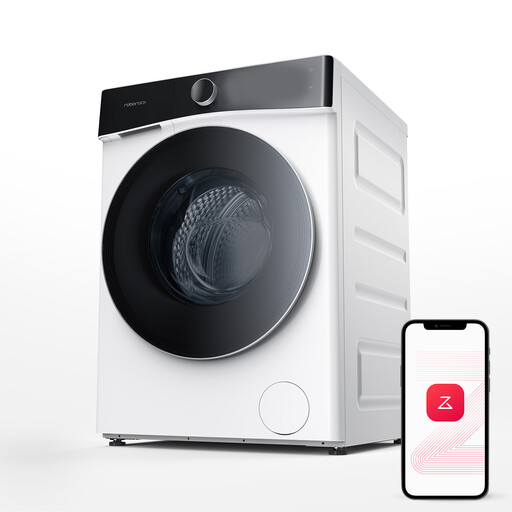 Image unavailable
This two-in-one format lets you wash and dry with a single appliance, provided its dimensions suit the space available.
Listed capacities: 10 kg for washing and 6 kg for drying. So don’t assume a full washing load can be dried in one cycle; also compare the duration and energy consumption of the complete cycle.
 Image unavailable
This separate tumble dryer is worth considering if its listed 8 kg capacity suits your loads and you have a suitable space for it.
Listed energy class: D. Compare the energy consumption of the relevant programme and check the noise level, dimensions and condensed water management for this model.
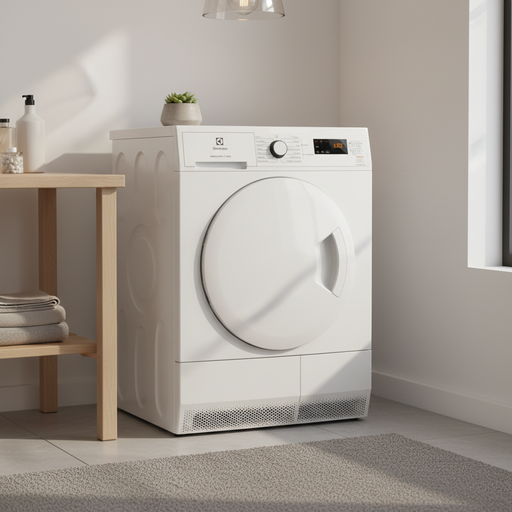 Image unavailable
Compare this model if you want to dry loads suited to its listed 8 kg capacity in a separate appliance.
Check the manual for installation requirements and how to collect or drain the condensed water; don’t assume direct drainage is possible.
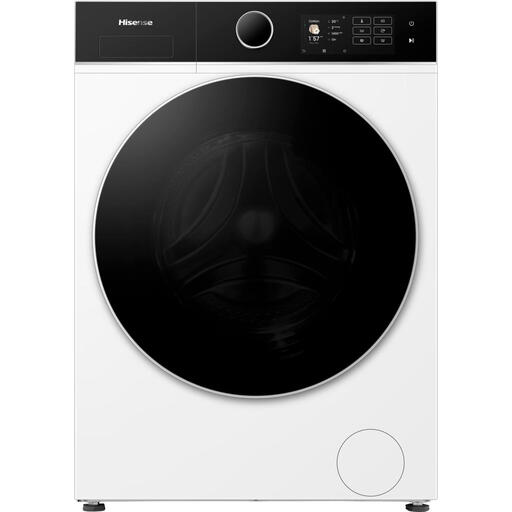 Image unavailable
This washing machine suits a routine where laundry is still dried on a rack; it doesn’t provide mechanical drying.
Its listed maximum spin speed is 1,400 rpm. To assess its spin performance, also check its efficiency class on the label, then make sure you have a suitable, well-ventilated room for your drying rack.
According to UFC-Que Choisir, a condenser tumble dryer with a heat pump doesn’t need the external outlet required by a vented tumble dryer. However, check the manual for clearances, operating conditions and water collection for your model.
Not if the load exceeds its drying capacity. UFC-Que Choisir notes that drying capacity is lower than washing capacity, so check both figures in kg and remove some laundry before drying if necessary.
Follow your model’s manual for cleaning the filter and water tank, along with any other maintenance it specifies. If you want to drain the water directly, check whether a compatible kit is available for your chosen model; Electrolux offers this option for some condenser tumble dryers.
For applicable washing machines in France, check the durability index displayed since 8 April 2025, according to the ministry responsible for ecological transition. This indicator helps you compare these washing machines; don’t assume it applies to tumble dryers or washer-dryers.