What should you look at first?
Start with where you dry your laundry and how often you do a wash, then compare capacity, installation requirements and usage information for each type of appliance.
| Priority |
What to check |
What I need |
| Room humidity |
If you use an airer, check that the room is well ventilated. For a dehumidifier, look at the water tank or continuous drainage option, and the conditions used to determine its stated extraction capacity. |
I dry laundry indoors and want to avoid leaving it in a poorly ventilated room. ADEME identifies indoor air-drying as a significant source of indoor humidity; a dehumidifier is not a substitute for the ventilation recommended by ANSES. |
| How often you do laundry |
Look at spin performance, not just the speed in rpm. For a tumble dryer, compare the rated capacity and eco programme duration shown on the product information sheet. |
When I have loads one after another, I need to know whether my airer will be free in time or whether a dedicated drying appliance would better suit my routine. |
| Energy consumption information |
For tumble dryers covered by the new EU A–G energy label, in force since 1 July 2025, compare weighted energy consumption per cycle and eco programme duration, as advised by the European Commission. For a washer-dryer, check the information for the wash-and-dry cycle. |
I want to compare clearly defined cycles and loads, without treating an old energy rating as equivalent to a rating on the new scale. |
| Space and drainage |
Measure the available space and access routes. Depending on the model, check how to empty a tumble dryer’s condensate or a dehumidifier’s tank, and whether continuous drainage is available. |
In my flat, the appliance needs to fit, and I need to be able to deal with the collected water without assuming that a drainage connection is included. |
| Combined appliance |
Compare the washing and drying capacities in kg separately, then check the duration and consumption information for the full cycle. |
If I can only install one appliance, I want to know how much laundry it can actually dry after washing. |
| Bathroom |
Check where the appliance would sit in relation to the shower or bath, and have the electrical installation checked before placing an appliance there. Promotelec highlights, among other requirements, 30 mA residual-current protection for bathroom circuits. |
If the only possible location is in the bathroom, I need to confirm that it’s suitable for the appliance I’m considering. |
Appliances for different ways of drying laundry
These Joybuy options reflect several of the choices discussed here: dedicated drying, a washer-dryer, help managing humidity near an airer, and washing before air-drying. Compare each appliance in the context of how you plan to use it.
 Image unavailable
Hotpoint CHD84MWBSEE, 8 kg heat pump tumble dryer
A dedicated drying option for regular laundry loads. The product name gives a capacity of 8 kg and a C rating. Before deciding where to put it, check the model’s dimensions, condensate management and cycle energy consumption information.
View on Joybuy
 Image unavailable
Samsung WD11DG6B85BEU3, 11 kg / 6 kg washer-dryer
This combined appliance is a practical option if you don’t have room for two machines. Its stated capacity is 11 kg for washing but 6 kg for drying. Use the lower figure when planning loads, and check the information for the wash-and-dry programme.
View on Joybuy
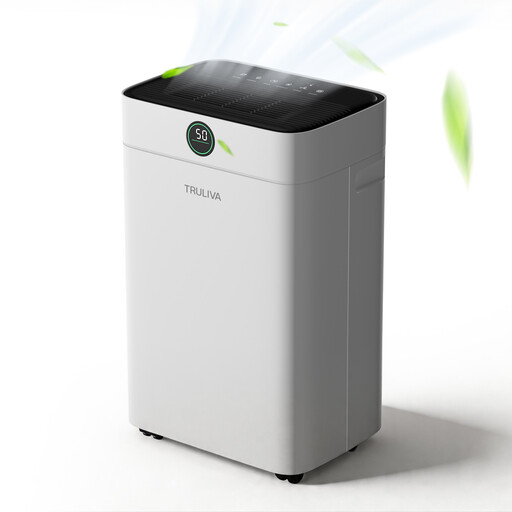 Image unavailable
TRULIVA dehumidifier, 25 L/day, with 2.8 L tank
Worth considering if you’ll still be drying laundry on an airer and want to manage the room’s humidity too. The product lists a laundry mode, a 2.8 L tank and a continuous drainage hose. Its stated 25 L/day capacity depends on the test conditions and doesn’t replace the need for a well-ventilated room.
View on Joybuy
 Image unavailable
Comfee CD08EHP05W-HR, 8 kg heat pump tumble dryer
Another dedicated 8 kg drying option, listed with a D rating. Before comparing it with another tumble dryer or deciding where to put it, check its dimensions, noise level, condensate management and stated energy consumption per cycle.
View on Joybuy
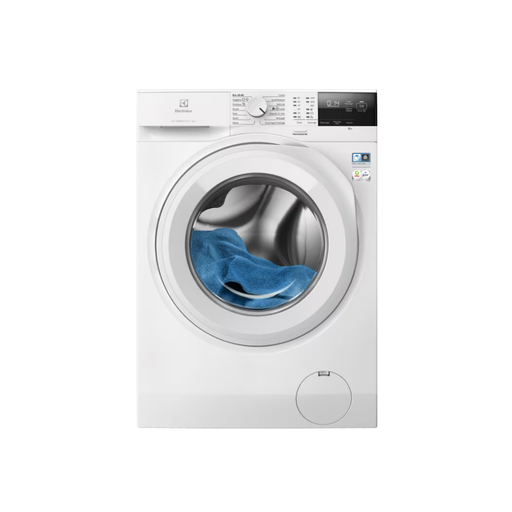 Image unavailable
Electrolux EW6FI4805AW, 8 kg washing machine, 1,400 rpm
If you plan to continue drying laundry on an airer, this model has a stated washing capacity of 8 kg and a spin speed of 1,400 rpm. Spin speed alone doesn’t tell you how much moisture will remain in your laundry, so make sure you have a well-ventilated room for drying too.
View on Joybuy
Frequently asked questions
What should I compare on a tumble dryer’s energy label?
For tumble dryers covered by the new EU energy label, which has applied since 1 July 2025, compare the A–G scale and the model’s information, including weighted energy consumption per cycle, rated capacity and eco programme duration, as set out by the European Commission. Don’t directly compare a rating from the old scale with one on the new scale.
Can a washer-dryer dry as much laundry as it washes?
Not necessarily: washing and drying capacities are different. Check both load sizes in kg on the model’s product information, then look at the wash-and-dry cycle details if you plan to use it regularly.
Does a dehumidifier need continuous drainage?
A tank should be fine if you can empty it as often as needed. For longer periods of use, check whether the model supports continuous drainage and whether there’s a suitable drainage point nearby. Also check which accessories are included.
Where should I dry laundry indoors?
Choose a well-ventilated room rather than an enclosed space. This is ANSES’s recommendation when drying laundry outside isn’t possible. ADEME notes that air-dried laundry adds moisture to the air indoors.
Can you put a washing machine in a bathroom?
The location must meet the electrical safety requirements for bathrooms. Promotelec highlights the need for 30 mA residual-current protection on bathroom circuits. If the machine needs to go near a shower or bath, have the location and installation checked before putting it there.


