Who are these solutions for?
How often you do laundry, the space you have available and the humidity in the room will all help you decide which equipment is right for you.
Households that do laundry frequently and have a dedicated space
If you get through several loads each week, a separate tumble dryer can free up the space taken up by wet laundry more quickly. Before setting aside a spot for one, compare its capacity and dimensions, door clearance, noise level, water management and maintenance requirements.
People with space for just one machine
A washer-dryer combines both functions without the need to install a second appliance. UFC-Que Choisir highlights the space-saving benefit, but you should check the drying capacity separately from the washing capacity, as well as how much water and electricity the full cycle uses.
Airer users dealing with persistent damp
A dehumidifier can work alongside an airer by removing moisture from the room's air. If damp persists, also check the ventilation, airflow and any leaks or water ingress: changing appliances will not fix these underlying causes.
What should you compare before choosing?
Start by measuring the space you can set aside for laundry or a machine, then compare each option with the size of your loads and the humidity in the room.
| Factor |
What to check |
My needs |
| Indoor humidity |
For an airer, choose a room where the air can be refreshed. If you add a dehumidifier, check that it is suitable for the room and find out how to empty the tank or connect the drainage hose. ADEME notes that air-drying laundry releases a lot of moisture into indoor air. |
I want to dry laundry without leaving the room damp for long periods. If the damp persists, I also need to check the ventilation and look for possible water ingress. |
| How often you do laundry |
Compare the drying capacity with the size of your usual loads. With a washer-dryer, check the washing and drying capacities separately and look at the full cycle time. With an airer, allow enough room to space out the clothes. |
I do several loads in a row, so I want to know whether each load will dry before the next one needs the same space. |
| Space available |
Measure the appliance and the space needed to open its door. For an airer, measure how much room it takes up when unfolded, the space left to walk through and where you can store it when folded. |
I only have room for one machine, or I cannot leave an airer unfolded where people need to walk. |
| Electricity and water |
Compare consumption figures for similar cycles and load sizes. UFC-Que Choisir notes that heat pump tumble dryers use less electricity than conventional models, which can generally dry clothes more quickly. Its tests also found that most washer-dryers tested use water during the drying cycle. |
I want to understand how much the programme I will use consumes, rather than estimating running costs from the energy rating alone. |
| Maintenance and drainage |
For a tumble dryer, check the manual for instructions on the filter, condenser and water tank or drainage. For a dehumidifier, check how often the tank needs emptying or what is required for continuous drainage. |
I can set aside space for the appliance, but I need easy access to the parts that require maintenance and a way to manage the collected water. |
A few well-known brands and models
These examples highlight features to compare for each type of solution. Check the details for the exact model and version you plan to buy.
Bosch
The WQG2450SFR is an example of a heat pump tumble dryer designed for a permanent spot. Bosch lists a maximum capacity of 9 kg and dimensions of 842 × 598 × 613 mm for this model.
- Bosch's product details list a water drainage hose: check that it can be connected where you plan to put the dryer.
- Allow for the appliance's depth, the door opening and access to the parts that need maintenance, as set out in the manual.
LG
The Slim F852SV52IRS washer-dryer is an example of a two-in-one solution for a single space. LG lists a washing capacity of 8.5 kg and a drying capacity of 5 kg.
- LG's product details give dimensions of 60 × 85 × 47.5 cm for this model: check that it will fit in your available space.
- As the drying capacity is lower than the washing capacity, you may need to remove some laundry from a full load before drying.
De’Longhi
De’Longhi dehumidifiers are an example of an option to use alongside an airer. They remove moisture from the air rather than replacing the need to hang out your laundry.
- When choosing a model, De’Longhi recommends considering the size of the room. Also check how you will empty the collected water.
- A dehumidifier will not fix water ingress or poor ventilation.
Brabantia
Brabantia's wall-mounted and folding airers are examples of indoor drying without an electric drying cycle, provided you can temporarily set aside an area of your home for laundry.
- Brabantia lists 20 m of drying space and six hanger positions on one HangOn model; check the exact reference.
- Even with plenty of drying space, you will need room for the airer when unfolded and a way to manage the moisture released by the laundry.
Appliances available on Joybuy
These options offer two ways to dry laundry in a flat: keep using an airer and add a dehumidifier, or combine washing and drying in one machine. Compare them based on the space you have and how you manage humidity.
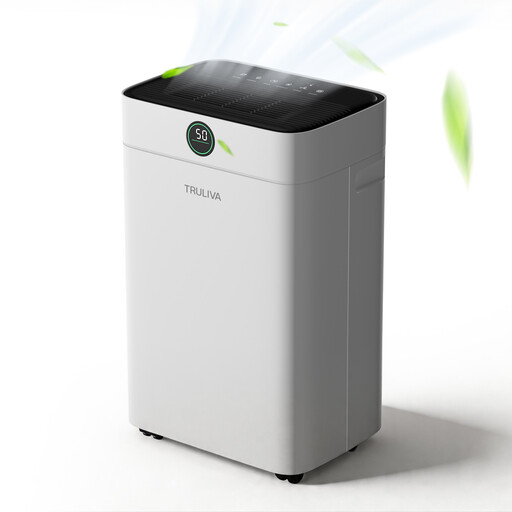 Image unavailable
TRULIVA dehumidifier, 25 L/day, 2.8 L tank
Consider this alongside an airer if you want to remove moisture from the air while laundry dries. The product name lists a laundry mode, a 2.8 L tank, a hose for continuous drainage and automatic defrosting. The 25 L/day figure is given for specific conditions; it is not an amount to expect in every room. Check the test conditions, energy use and noise level for the mode you plan to use.
View on Joybuy
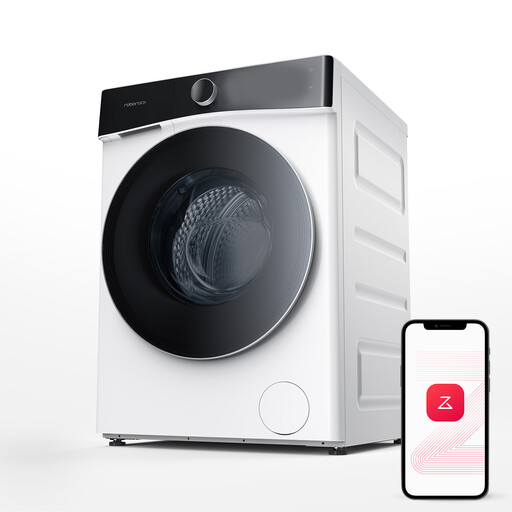 Image unavailable
Roborock Zeo Lite washer-dryer, 10 kg/6 kg
If there is no room in your flat for a second appliance, this model combines washing and drying. Its stated capacities are 10 kg for washing and 6 kg for drying, so you may need to reduce a full wash load before drying. Check the dimensions and full cycle time, as well as water and electricity consumption, before you decide.
View on Joybuy
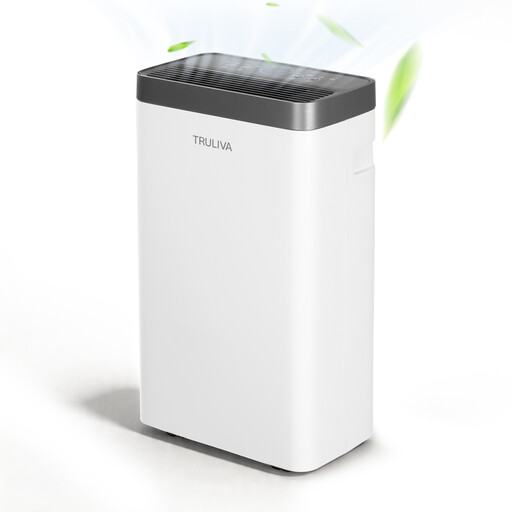 Image unavailable
TRULIVA AP10-2012EE dehumidifier with laundry mode
This dehumidifier has a laundry mode and is designed to be used alongside an airer, not as a replacement for ventilation. Its name mentions a 24-hour timer, automatic defrosting and continuous drainage. Before placing it in the room, check how much space it needs around it, the humidity settings available on this version and the conditions for its stated extraction capacity.
View on Joybuy
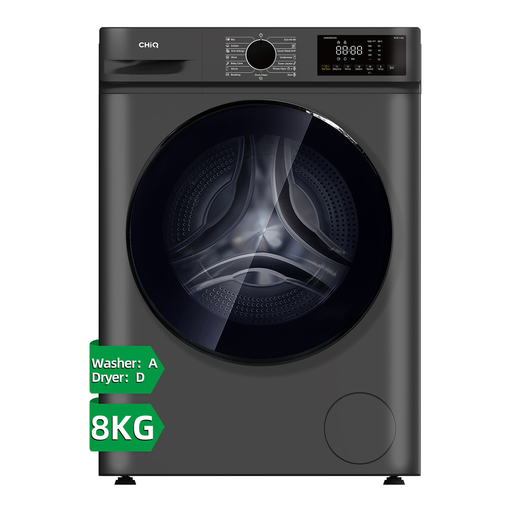 Image unavailable
CHiQ JW85882HG washer-dryer, 8 kg/5 kg
This washer-dryer is designed for anyone who needs to wash and dry with a single machine. It has a stated washing capacity of 8 kg and drying capacity of 5 kg, so you should plan to reduce a full load before drying. Confirm the exact dimensions and installation clearance, then compare the full cycle time and consumption.
View on Joybuy
Frequently asked questions
Can a dehumidifier replace ventilation?
No. It can help with air-drying by removing moisture from the air, but it cannot replace a working ventilation system. If your home remains too damp, the French ministry responsible for ecology recommends checking the air vents and ventilation system, among other things.
When should you look for the cause of damp in your home?
If the damp persists or you notice leaks, water ingress or recurring condensation, changing your drying method will not identify the cause. Check the airflow and ventilation. If you rent your home, ADIL can advise you on the right steps to take based on its condition.
Can you install a vented tumble dryer in a flat?
Only if you can use an outdoor vent that is compatible with both the appliance and your home. UFC-Que Choisir describes this type of tumble dryer as expelling hot, humid air outdoors through a duct. A condenser dryer does not need this duct, but you will need to manage the collected water and carry out maintenance.
Can a washer-dryer dry the entire load it has just washed?
Not necessarily: its drying capacity may be lower than its washing capacity. For example, LG lists a washing capacity of 8.5 kg and a drying capacity of 5 kg for the F852SV52IRS. Always compare both figures for the exact model, as you may need to remove some laundry from a full wash load before drying.
What maintenance does a heat pump tumble dryer need?
Check the model's manual for instructions on the fluff filter, condenser and water tank or drainage connection. Even if the manufacturer says the condenser is self-cleaning, follow any other maintenance instructions it provides.


