How do the options compare?
Your choice will depend first on what matters most to you: how often you do laundry, how much space you have or the drying conditions in the room. A dehumidifier can potentially be used alongside an airer, but it isn’t another way to circulate air.
Heat pump tumble dryer
Worth considering: for regular loads if you can install a dedicated appliance.
Bear in mind: you’ll need extra space, cycles may be lengthy, and the appliance will need the maintenance set out in its instructions. UFC-Que Choisir describes heat pump technology as more energy-efficient than conventional technologies, although that doesn’t tell you how much the model you choose will use.
Washer-dryer
Worth considering: when having washing and drying in one appliance matters more than the amount you can dry at a time.
Bear in mind: drying capacity is lower than washing capacity, and you’ll want to look closely at combined cycles. UFC-Que Choisir highlights these trade-offs in its guide and tests.
Indoor airer
Worth considering: if you can set aside a large, well-ventilated room or one with existing extraction for your laundry.
Bear in mind: the room will be occupied while your laundry dries, and the drying clothes will release moisture, as noted in ADEME’s Q-WASH study.
Dehumidifier as an extra
Worth considering: alongside an airer if indoor humidity is also a concern.
Bear in mind: you’ll need to power and empty the appliance, or connect it to a drain. It doesn’t replace ventilation or existing extraction in your home.
| Priority |
What to check |
Who it matters to |
| Drying time |
Compare the programme time for your fabric and load, then check the drying capacity in kg. A quick programme for a small load doesn’t tell you how long a full load will take. |
When I have back-to-back loads, I need my laundry ready in time to start the next one; around 33% of consumers prioritise speed. |
| Space available |
Measure the space and allow for the door to open. For a washer-dryer, check the washing and drying capacities separately. |
In a small flat, I want to avoid having two appliances without finding out later that my load won’t dry in one go; saving space comes first for around 25% of consumers. |
| Humidity and ventilation |
Check which room you’ll use, whether it can be ventilated and whether it has existing extraction. For a dehumidifier, compare the conditions used to measure its stated extraction rate with how you plan to use it. |
If my airer is set up for a long time, I want to avoid moisture building up in a room with little air circulation; around 25% of consumers put this at the top of their list. |
| Running costs |
Read the label for the exact model and compare the data for the programme you’re interested in. For a washer-dryer, distinguish between the combined cycle and a wash-only cycle. |
When I dry laundry often, I want to know how much energy the cycles I’ll actually use require; this is the main priority for around 17% of consumers. |
Appliances for drying laundry indoors
These products suit three of the needs covered here: combining washing and drying in one appliance, installing a dedicated tumble dryer, or using a dehumidifier alongside an airer. Compare each model with the dimensions of your home, your loads and your ventilation conditions.
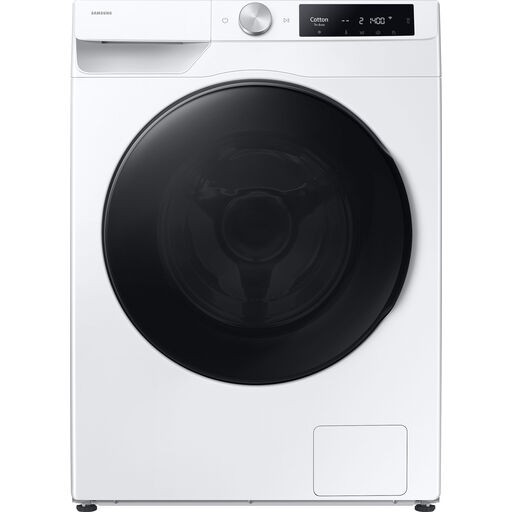 Image unavailable
Samsung WD11DG6B85BEU3, 11/6 kg washer-dryer
Worth considering if washing and drying need to fit into a single space.
Stated capacities: 11 kg for washing and 6 kg for drying. If you wash a load larger than 6 kg, you’ll need to reduce it before drying. Check that the specifications shown match the U3 variant on offer.
View on Joybuy
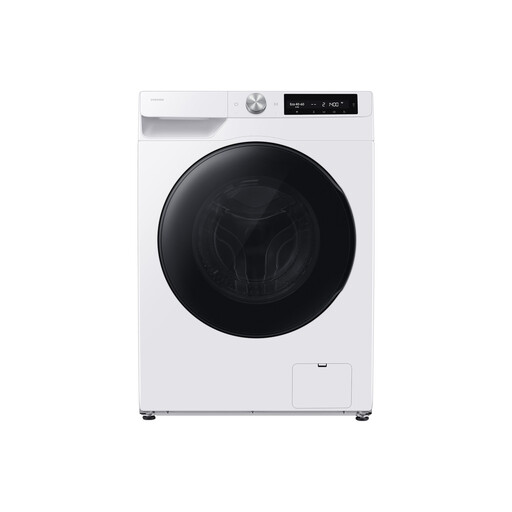 Image unavailable
Samsung WD10HG6U34BEU3, 10/6 kg washer-dryer
Worth looking at if you want to wash and dry with a single appliance.
Stated capacities: 10 kg for washing and 6 kg for drying. To see whether the combined cycle suits your laundry routine, check its duration and energy consumption details for the exact model.
View on Joybuy
 Image unavailable
Hotpoint CHD84MWBSEE, 8 kg heat pump tumble dryer
Worth considering if you regularly dry loads in a dedicated appliance.
Stated capacity: 8 kg. Compare the duration and energy consumption of the cycle you’ll use, then check the installation dimensions and maintenance instructions.
View on Joybuy
 Image unavailable
TRULIVA, 25 L/day dehumidifier with 2.8 L tank and continuous drainage hose
Worth considering as an extra alongside an airer if indoor humidity is also a concern; it doesn’t replace ventilation.
The stated capacity of 25 L/day is based on conditions of 90% relative humidity and 95 °F, so don’t assume it will achieve the same results in your room. Also check the noise level and energy consumption in the mode you plan to use.
View on Joybuy
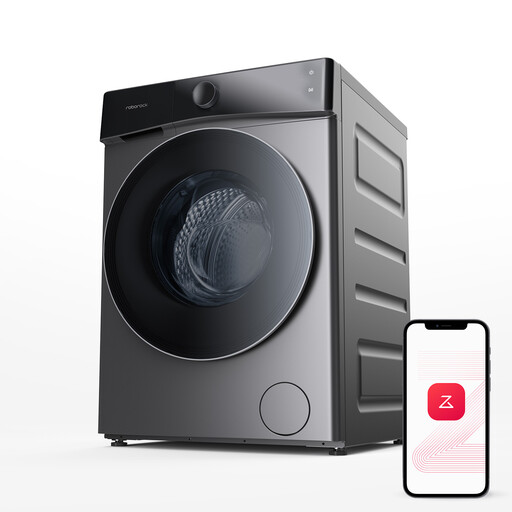 Image unavailable
Roborock Zeo Lite grey, 10/6 kg washer-dryer
Compare it with other washer-dryers if the space available is a key factor in your decision.
Stated capacities: 10 kg for washing and 6 kg for drying. Adjust the load for drying and check the dimensions, cycle time and energy consumption for the combined cycle on the model being offered.
View on Joybuy
Frequently asked questions
Can a washer-dryer dry the entire load it has just washed?
Not if the load exceeds its drying capacity, which is generally lower than its washing capacity, according to UFC-Que Choisir. Check both figures in kg and remove some laundry before drying if necessary. Also look at the combined cycle time and energy consumption.
How can you use an airer without overlooking ventilation?
Dry your laundry in a large, well-ventilated room or one with an existing extraction vent, in line with the conditions set out in ADEME’s Q-WASH study. For everyday ventilation, ADEME recommends opening windows wide for a short time rather than leaving them slightly ajar, while taking your home into account.
Can you stack a tumble dryer on top of a washing machine to save space?
Yes, provided the appliances and stacking kit are compatible and the installation follows the instructions. UFC-Que Choisir specifies that the tumble dryer goes on top of the washing machine, never the other way round. Also check that the support and access are suitable for use and maintenance.
What should you check on the energy label before choosing?
For a new appliance that requires an energy label, check the data for the exact model and programme you’re interested in, rather than looking at its rating alone. The European Union requires this label to be displayed at the point of sale, including online. Depending on the appliance category, information to compare includes energy consumption, noise levels and water use.
Does a dehumidifier replace ventilation while laundry is drying?
No. Think of it as an extra measure to help manage indoor humidity, while continuing to use existing ventilation and extraction. ADEME explains that mechanical ventilation continuously removes moisture and pollutants; this isn’t the same as collecting water in a dehumidifier.


