If you do laundry frequently and have room for a second appliance, consider a heat-pump tumble dryer. UFC-Que Choisir highlights its low electricity consumption, although programme times are also worth comparing. If you can only fit one appliance, a washer-dryer avoids having to transfer your laundry, provided you keep the load within its drying capacity, which is lower than its washing capacity. If you want to keep using your airer, a dehumidifier reduces moisture in the air, but it does not replace tumble drying or airing your home.
Which option is right for you?
Households that do laundry frequently
If your airer regularly takes up space and you can fit a second appliance, a heat-pump tumble dryer is worth considering. UFC-Que Choisir notes that this technology uses less electricity; also compare the capacity and programme times with your laundry routine.
People with space for just one appliance
A washer-dryer combines both functions, so you do not have to transfer your laundry. However, its drying capacity is lower than its washing capacity, as UFC-Que Choisir points out. Check both figures before planning a full wash-and-dry cycle.
People who want to keep using an airer
A dehumidifier can remove moisture from the air around laundry drying on an airer, but it does not dry clothes in a drum. ADEME notes that air-drying releases moisture into your home, so make sure the room is properly ventilated.
What should you compare?
Heat-pump tumble dryer
Consider this if: you do laundry regularly, have room for a dedicated appliance and electricity consumption is an important factor in your decision.
Bear in mind: you will need space to install a second appliance, and its capacity and programme times should suit your usual loads.
Washer-dryer
Consider this if: you only have space for one appliance and want to wash and dry your laundry without transferring it.
Bear in mind: the drying capacity is lower than the washing capacity, according to UFC-Que Choisir. A full wash load may need to be dried in two batches.
Airer and dehumidifier
Consider this if: you want to keep drying clothes on an airer and reduce moisture in the room.
Bear in mind: your laundry will still need to air-dry. You will also need to deal with the collected water and keep your home ventilated.
| Priority | What to check | My needs |
|---|
| Capacity |
Compare your usual load with the drying capacity. For a washer-dryer, check the washing and drying capacities separately: UFC-Que Choisir notes that the drying capacity is lower. |
I would rather avoid removing some of the laundry after washing or running several drying cycles. |
| Space and installation |
Measure the height, width and depth, allowing for the clearance specified in the instruction manual. Also check how condensate is collected or whether the model can be connected to a drain. |
The appliance needs to fit in the available space without blocking access or interfering with connections. |
| Energy consumption and programme times |
Compare the energy figures of appliances in the same category, then check the programme times for your typical loads. UFC-Que Choisir associates heat-pump tumble dryers with low electricity consumption, but you should still check how long they take to dry your laundry. |
I can wait longer for some loads, or I need to get my laundry dry quickly. The programme you use matters just as much as the technology. |
| Room humidity |
If you use an airer, check how to empty the dehumidifier’s tank or set up continuous drainage. ADEME notes that air-drying releases moisture into your home, so do not block ventilation. |
I want to keep using my airer while taking account of moisture released into the room, without confusing dehumidifying with tumble drying. |
Which mistakes should you avoid?
-
Choosing a washer-dryer based only on its washing capacity
A full wash load may exceed the appliance’s drying capacity. UFC-Que Choisir highlights the difference between the two functions.
Compare the two capacities listed for the model and start with the amount of laundry you want to dry in one go.
-
Confusing a dehumidifier with a compact tumble dryer
A dehumidifier removes moisture from the air, while your laundry stays on the airer. It does not provide the same automated cycle as a tumble dryer.
Make room for the airer and check whether the water is collected in a tank or drained through a hose.
-
Assuming a heat pump means faster drying
UFC-Que Choisir distinguishes the low electricity consumption of heat-pump tumble dryers from the generally faster drying times of conventional condenser or vented models.
Compare energy consumption and programme times for the cycles you plan to use, rather than judging speed by the technology alone.
-
Blocking ventilation when using a dehumidifier
ADEME identifies air-drying laundry as a source of indoor moisture. The French decree of 24 March 1982 requires air to circulate from main rooms to utility rooms in the homes it applies to.
Keep air inlets and outlets clear. If your ventilation is not working properly, address that separately from choosing an appliance.
A guide to some brands
These examples highlight features to compare on specific models; they are not representative of each brand’s entire range.
Bosch
The WQG24502FR is an example of a heat-pump tumble dryer designed for a dedicated space.
- Bosch lists a capacity of 8 kg and dimensions of 842 × 598 × 613 mm for this model.
- Measure the space and check the instruction manual for the required clearances.
AEG
The LWR98B166X is an example of a washer-dryer for homes with space for just one appliance.
- AEG lists a washing capacity of 10 kg and a drying capacity of 6 kg for this model.
- So a 10 kg wash load cannot be dried in one go in this model.
De'Longhi
The DD230P is an example of a dehumidifier to use alongside an airer, rather than as a tumble dryer.
- De'Longhi specifies a 5 m hose for continuous drainage of condensate on this model.
- The hose needs to be installed correctly, and this feature does not determine how long your laundry takes to dry.
Joybuy products to consider
This selection includes dedicated tumble dryers and dehumidifiers to consider alongside an airer. For each one, check the available space and installation requirements. Dehumidifiers do not replace a tumble-drying cycle.
 Image unavailable
Hotpoint CHD84MWBSEE, 8 kg heat-pump tumble dryer
Designed for regular laundry drying, this dedicated appliance has a listed capacity of 8 kg and can be connected directly to a drain. Check its dimensions and programme times to make sure it suits your home. The energy-efficiency class details on the product page are inconsistent, so check the label on the model being sold.
View on Joybuy
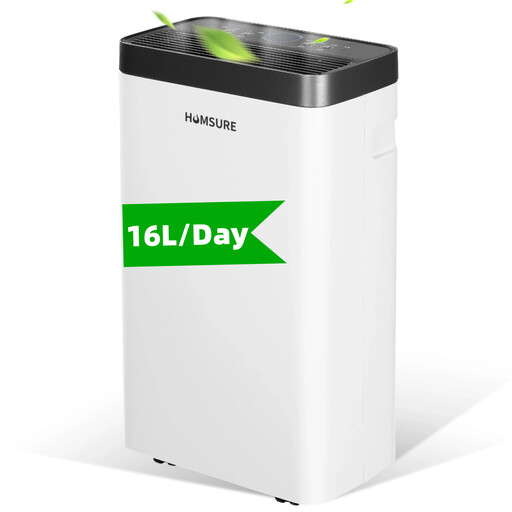 Image unavailable
HUMSURE dehumidifier with a 1.4 L tank
Designed to complement an airer, the description mentions a laundry mode, a 1.4 L tank and continuous drainage through a hose. The appliance measures 28 × 17 × 50 cm; check the space available and the modes listed for the exact model. Its stated extraction capacity does not tell you how long your laundry will take to dry at home.
View on Joybuy
 Image unavailable
Electrolux EDH1018CD GentleCare, 8 kg condenser tumble dryer
This dedicated tumble dryer has a listed capacity of 8 kg, a water collection tank and dimensions of 60 × 65 × 85 cm. Check the clearances required in the instruction manual, as well as the drying technology and condensate handling for the exact model. The term ‘condenser’ alone does not confirm that it uses a heat pump.
View on Joybuy
 Image unavailable
Comfee CD08EHP05W-HR, 8 kg heat-pump tumble dryer
This dedicated appliance has a listed capacity of 8 kg and three drying levels. Before deciding where to put it, check its dimensions, required clearances, condensate handling and programme times in the instruction manual for the model being sold.
View on Joybuy
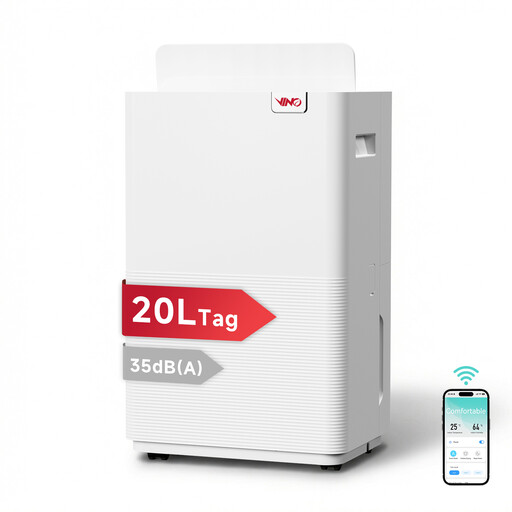 Image unavailable
VINO WiFi dehumidifier with a 2.5 L tank
The description includes a laundry mode for use alongside an airer, plus a 2.5 L tank or hose drainage. Check the dimensions and noise level of the exact model before installing it in a living space: the noise figures on its product page are inconsistent. It reduces moisture in the room but does not automate the drying of your laundry.
View on Joybuy
Frequently asked questions
Does a heat-pump tumble dryer need an external vent?
Do not plan for an external duct without checking the model you have chosen. Consult the instruction manual to find out how condensate is collected or drained, and what clearances are needed for installation.
Can you dry a whole wash load in a washer-dryer?
Not necessarily: UFC-Que Choisir notes that drying capacity is lower than washing capacity. For example, AEG lists a washing capacity of 10 kg and a drying capacity of 6 kg for the LWR98B166X. If you want to run both functions one after the other, keep the load within the drying capacity.
Can a dehumidifier replace a tumble dryer?
Not if you want an automated tumble-drying cycle. As De'Longhi explains, a dehumidifier removes moisture from the air, but your laundry stays on the airer. Spin speed, load size and room conditions still matter.
Can you close the air vents while your laundry is drying?
Do not block air inlets or outlets while drying laundry, even if you are using a dehumidifier. ADEME notes that air-drying releases moisture; the French decree of 24 March 1982 requires air to circulate in homes covered by its provisions. If your ventilation is faulty, address that separately from choosing an appliance.


