One person or a busy pair
If you want a snack without putting the oven on, look for ready-baked croissants and smaller packs. Carrefour offers a pack of two croissants, while Lidl describes a ready-baked, all-butter croissant.


If you’re buying for one or two people and want to eat straight away, a pack of two croissants or a ready-baked croissant saves you having to put the oven on and leaves you with fewer pastries to manage. A pack of frozen croissants to bake is a better choice if you have a freezer and an oven and are planning several snacks. Just check the preparation and storage instructions on the pack.
If you want a snack without putting the oven on, look for ready-baked croissants and smaller packs. Carrefour offers a pack of two croissants, while Lidl describes a ready-baked, all-butter croissant.
A pack of frozen croissants can provide pastries for several occasions, as long as you have a freezer and are happy to bake them. Auchan and Aldi each offer a pack of six ready-to-bake croissants.
Before choosing a format, check the ingredients, allergens and any ‘may contain’ warnings for the specific product. Depending on the product, the listings we reviewed mention wheat, milk and eggs, among other ingredients.
For a late-night snack in a small household, first decide whether you want something you can eat straight away or several pastries to keep for later. Then compare the pack size and the instructions on the packaging.
| Criterion | What to check | Who is it for? |
|---|---|---|
| Quantity | Number of croissants and pack weight. | If I’m only having one or two croissants, I want to avoid leaving a large pack open. Around 31% of consumers rank this smaller quantity as their top priority. |
| Ready to eat | Look for ‘ready-baked’ or ‘ready to eat’, and check availability when you buy. | Late at night, I’d rather eat without switching on the oven or waiting for something to bake. This would be the top priority for around 25% of consumers. |
| Stock to bake | Storage conditions and preparation instructions for the pack you choose. | With a freezer and an oven, I can plan for several snacks rather than buying something to eat straight away. Around 19% of consumers would prioritise this approach. |
| Ingredients and allergens | Ingredients list, highlighted allergens and any ‘may contain’ warnings on the pack. | If an ingredient or allergen affects what I can buy, I need to check the exact product before considering its format. Around 25% of consumers would put this check first. |
‘Half loaf’ or ‘half-loaf’ isn’t a specific pack size to compare among the croissant products we looked at. The term could lead you to bread rather than the pastry you’re after.
Search for a specific format, such as two croissants, a ready-baked pastry or a pack of frozen croissants to bake.
A ready-to-bake croissant takes time and needs an oven. For its pack of six, Auchan recommends defrosting first and specifies a baking time of 15 to 20 minutes at 180 °C.
If you don’t want to prepare anything that evening, choose a ready-baked product. Check the instructions on the specific pack before baking a different product.
You’ll also need space in your freezer while the pack is stored frozen.
This tells you neither how many croissants you need nor the full list of ingredients and allergens. Ingredients vary between products.
Compare the pack size and labelling of the croissant you choose, paying particular attention to allergens and any ‘may contain’ warnings.
Keeping food frozen matters when you plan to use a pack on more than one occasion. Anses advises against refreezing food once it has been defrosted.
Follow the transport and storage conditions on the packaging, as well as the instructions for after defrosting.
The retailer offers a pack of two all-butter croissants, a format worth considering if you’re buying for one or two people.
The product we looked at is a 360 g pack of six frozen, all-butter croissants, ready to bake.
Aldi offers a 360 g pack of six frozen MANNAPAIN® all-butter croissants, ready to bake.
The product listing we consulted describes a ready-baked, all-butter croissant that’s ready to eat.
The product we consulted is an 80 g raw croissant that needs to prove and then bake, offered by Bridor for the hotel trade.
These products are for oven-baked snacks you can enjoy on several occasions if you have a freezer. If you want to eat without baking, choose a ready-baked croissant or a small pack that’s ready to eat.
 Image unavailable
Worth considering if you have a freezer and an oven and are planning several snacks. The pack contains six croissants weighing 420 g in total, so it’s more than a one- or two-croissant portion. Check the baking instructions on the packaging before preparing them.
 Image unavailable
This 360 g pack of six croissants to bake is for households planning several snacks rather than eating them straight away. You’ll need a freezer and an oven. Then follow the baking instructions on the packaging.
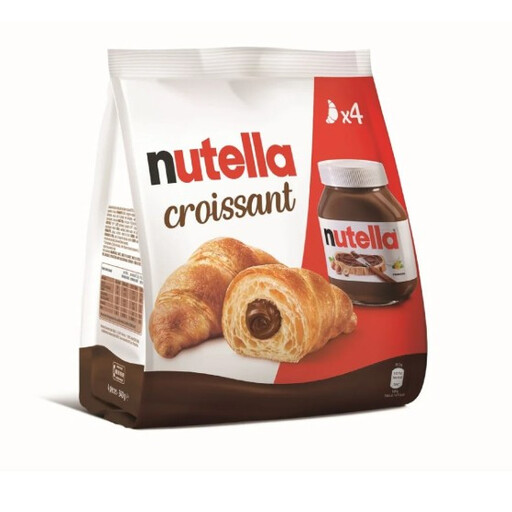 Image unavailable
This pack contains four filled croissants weighing 340 g in total, for several snacks if you have a freezer and an oven. The hazelnut and cocoa filling makes them different from a plain croissant. Check the ingredients and baking instructions on the packaging.
It means you’ll have fewer croissants to manage if you plan to eat one or two, although it can’t guarantee that you’ll finish them all. Compare the number of pastries and the pack weight with what your household actually expects to eat, then check whether the product is available at your store.
Don’t refreeze a defrosted product. Auchan says this for its frozen croissants, and Anses also advises against refreezing food after it has defrosted. Follow the storage instructions for the pack you choose.
Read the label for the specific product: the products featured may list wheat, milk or eggs, among other ingredients, and may also carry warnings about traces of other allergens. In France, the Directorate-General for Competition Policy, Consumer Affairs and Fraud Control says that allergenic ingredients must be highlighted on food labels.
In France, the Ministry of the Economy distinguishes between a use-by date (DLC), which must be strictly observed, and a best-before date (DDM), which relates to how long the product retains its quality. In either case, also follow the storage conditions on the packaging.