Anyone keeping an eye on their budget
If you’re making a snack with plain crêpes, remember to factor in the filling too. The number of crêpes in the pack and how many you’ll use matter just as much as the pack size.


For a late-night snack that won’t break the bank, choose plain crêpes if you already have something to fill them with, or a sweet, ready-to-eat option if you don’t want to prepare anything. Frozen savoury crêpes are another option, provided you can store and reheat them as directed on the packaging. In every case, compare the pack size with the amount you’ll actually eat, and check the ingredients and storage instructions.
If you’re making a snack with plain crêpes, remember to factor in the filling too. The number of crêpes in the pack and how many you’ll use matter just as much as the pack size.
A ready-to-eat option saves you the effort of preparing a filling. If you’re having just one late-night snack, though, check that you can store the opened pack as instructed by the manufacturer.
Plain, sweet and filled savoury crêpes won’t necessarily contain the same ingredients. Check the allergens, nutritional information and storage instructions for the specific product you choose.
First, choose between plain crêpes to fill yourself, ready-to-eat sweet crêpes and frozen savoury crêpes. Then check the quantity you’ll use, the preparation time and the label on the specific product.
Worth considering: if you already have a filling and want to put together your own snack.
Bear in mind: you’ll need to factor in the filling and its preparation as well as the pack of crêpes.
Worth considering: when you fancy something sweet without having to prepare a filling; Auchan, for example, offers individual portions.
Bear in mind: the recipe is already set, so compare the sugar content and the portion you plan to eat.
Worth considering: for a filled savoury snack, if you have a freezer and enough time to reheat them.
Bear in mind: the filling means you’ll need to check the ingredients, and you can’t adapt the recipe as easily.
| What matters to you | What to check | Who is it for? |
|---|---|---|
| Snack budget | Compare products intended for the same use, taking into account their weight, how many crêpes you’ll actually eat and whether you’ll need a filling. Carrefour and E.Leclerc advise checking the terms that apply at your chosen store. | If you add a filling, you’ll want to know the cost of the complete snack without buying a large pack that will be left open. Around 36% of consumers rank the total cost as their main consideration. |
| Ready to eat | Check whether the product can be eaten as it is, needs reheating or requires a filling. Also check how to store it after opening. | Late at night, you may prefer something you can eat without cooking or a lengthy preparation. Speed is the main consideration for around 29% of consumers. |
| Ingredients | Read the ingredients list, allergens and nutritional values per 100 g, then consider how much you’ll eat. | If you need to avoid an ingredient or compare two sweet recipes, the ingredients matter more than the format. This is the top priority for around 21% of consumers. |
| Fancy a savoury snack | Check the filling, freezing instructions and reheating guidance for the product you choose. | After an evening out or a long day, you may be looking for a filled savoury crêpe rather than a ready-to-eat sweet treat. This is the main consideration for around 14% of consumers. |
Two packs may contain different weights and numbers of crêpes. Buying a filling separately also changes the cost of the complete snack.
Compare crêpes intended for the same use and choose a quantity that suits the snacks you have planned.
Fresh crêpes don’t necessarily have the same storage instructions as cupboard or frozen products. The Bernard Jarnoux fresh crêpes featured by Auchan should be kept between 0 and 8 °C and eaten within 48 hours of opening.
Follow the date and instructions on the packaging you buy, especially if you’re only using some of the pack.
An opened pack of fresh crêpes could go to waste if you don’t eat the rest within the stated time.
The filling affects which ingredients you need to take into account. E.Leclerc’s ECO+ frozen ham and Emmental crêpes contain pork and milk-derived ingredients, among other things.
If you avoid certain ingredients, check the full ingredients list and allergens for the exact product before choosing it.
A claim such as ‘no preservatives’ doesn’t tell you about the product’s sugar, fat, salt or allergens.
Also check the ingredients list, nutritional information and the portion you plan to eat.
Carrefour’s range includes fresh crêpes in several pack sizes, as well as chilled deli options.
Auchan’s range includes plain, sweet and filled crêpes, in individual and family-sized packs.
E.Leclerc’s ECO+ range includes frozen ham and Emmental crêpes in a 1 kg pack.
If you’re after a snack that needs no preparation, this selection features a crunchy, crêpe-style egg snack. Its texture sets it apart from soft crêpes to fill yourself and the frozen savoury crêpes mentioned above.
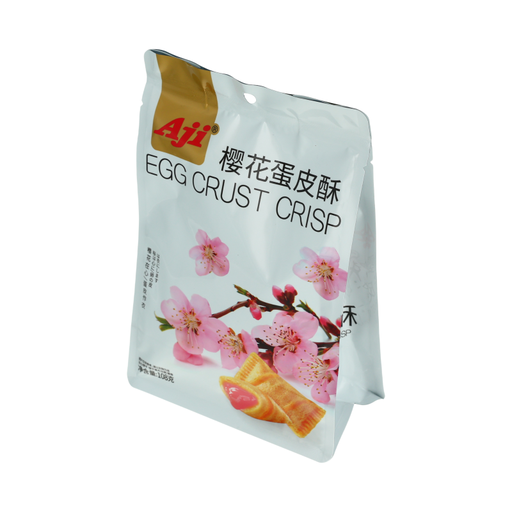 Image unavailable
Worth considering if you’re after a crunchy snack that needs no preparation, rather than a soft crêpe to fill yourself. The pack contains 108 g. Check whether this amount suits the snacks you have planned, and read the packaging for allergen and storage information.
Start by comparing products intended for the same use, then look at the weight, how many crêpes you’ll eat and whether you’ll need a filling. Before deciding, check the terms for your chosen store and collection method: Carrefour and E.Leclerc say these can vary.
Yes, but only if the product’s instructions allow it and you follow its date and storage guidance. For example, the Bernard Jarnoux fresh crêpes featured by Auchan should be kept between 0 and 8 °C and eaten within 48 hours of opening.
Read the ingredients list for the exact product, rather than relying on the name of the filling. The DGCCRF states that allergens must be highlighted in the ingredients list of prepacked foods sold in France.
Check the sugar, fat and salt per 100 g, then consider how much you’ll actually eat. Manger Bouger recommends limiting how often you eat foods that are high in fat, sugar and salt; no single nutritional value tells you everything about a recipe.