What matters when you do laundry frequently?
Start with the loads you actually wash regularly, then weigh up wash times against the space and time you have available for drying.
Large drum
Worth considering: large loads regularly fill the machine; Que Choisir highlights capacities of 10 to 12 kg in particular for households doing successive loads.
Bear in mind: sorted small loads won’t necessarily make full use of the stated capacity.
Standard machine
A good fit if: your loads are small because fabrics need to be separated.
Plan for: multiple cycles, with time set aside for washing and drying.
Separate tumble dryer
Worth considering: washed laundry has to wait its turn to dry, and you have room for two appliances.
Check: the space they’ll take up and, if stacking them, that the appliances and stacking kit are compatible.
Washer-dryer
Worth considering: there’s no room for two appliances, and your household can manage with a smaller drying load than washing load.
Bear in mind: you may need to split a washed load before drying, as shown by the separate capacities of the Electrolux EW7IW2856BG.
| Consideration | What to check | Who it’s for |
|---|
| Usable capacity |
Note the size of your regular large loads, then check the maximum loads for the programmes you use. |
If bedding and towels often fill the machine, combining laundry can help avoid extra loads; around 31% of consumers rank this need as a priority. |
| Cycle times |
Compare the Eco 40-60 programme duration and, if relevant, the noise level with the times you plan to run the machine. |
If you need to fit several loads into a busy day, how long the machine is occupied matters just as much as its size; this is the main concern for around 25% of consumers. |
| What happens after washing |
Check the washing and drying capacities separately on a washer-dryer, or find out how much space two appliances need. |
If clean laundry piles up because there’s nowhere to dry it, increasing washing capacity may simply shift the wait to the next stage; around 25% of consumers prioritise the transition from washing to drying. |
| Energy use and lifespan |
For comparable models, check the kWh per 100 cycles and litres per cycle; also look at the durability index shown. |
If you use your machine often, energy-use figures and maintenance options are important considerations; around 19% of consumers see them as their top priority. |
Brands and models to consider
These examples show different configurations; their features don’t apply to every appliance from each brand.
Bosch
Two models to compare, depending on whether you’re looking for a front-loading washing machine or an appliance that also dries.
- Bosch lists the WGB256A2FR washing machine as having a 10 kg capacity and a spin speed of 1,600 rpm.
- The WDU8H500FF washer-dryer is rated for 10 kg of washing, but 6 kg of drying.
LG
The F14R31WHSA front-loader lets you consider a stated capacity of 11 kg with a depth of 565 mm.
- LG lists dimensions of 600 × 850 × 565 mm and a maximum spin speed of 1,360 rpm for this model.
- Check the space needed for installation and the load limits for the programmes you use.
Samsung
Samsung describes the WW11DG5B25AHEF as an 11 kg, A-rated washing machine with connected features.
- Connected features may be worth considering if you expect to use them.
- According to Samsung, AI Energy Mode requires Wi-Fi and a Samsung account, and only applies to certain programmes between 20 and 40 °C; results vary depending on use.
Electrolux
The EW7IW2856BG washer-dryer is an example of a single-appliance option when there isn’t room for a separate tumble dryer.
- Electrolux lists this model as having an 8 kg washing capacity and a 5 kg drying capacity.
- Its label gives it an A rating for washing and a D rating for washing and drying. If stacking two appliances, check that the kit is compatible with the specific model numbers.
Joybuy appliances for large loads or drying
This selection includes 10 or 11 kg washing machines to consider for regular large loads, as well as a washer-dryer for households looking to combine both jobs in one appliance. Check each programme’s capacity and how you’ll manage drying against your usual routine.
 Image unavailable
Haier X Series 11 HW100-BD14397PGU1, 10 kg
Worth considering if you regularly fill the machine with large loads and need to plan how to dry them afterwards.
Stated capacity of 10 kg, spin speed of 1,400 rpm and an A rating. The model name also mentions AutoDose and Wi-Fi; check the manual for the permitted loads on each programme.
View on Joybuy
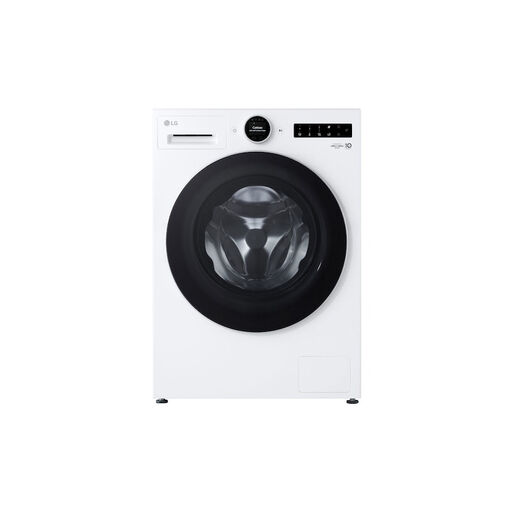 Image unavailable
LG F4WX851Y, 11 kg, white
Worth considering if large loads come up often enough for you to make use of the stated capacity.
An 11 kg, A-rated front-loading washing machine. If you’re choosing it for laundry that needs a lot of sorting, check the maximum loads and cycle times for the programmes you’ll use.
View on Joybuy
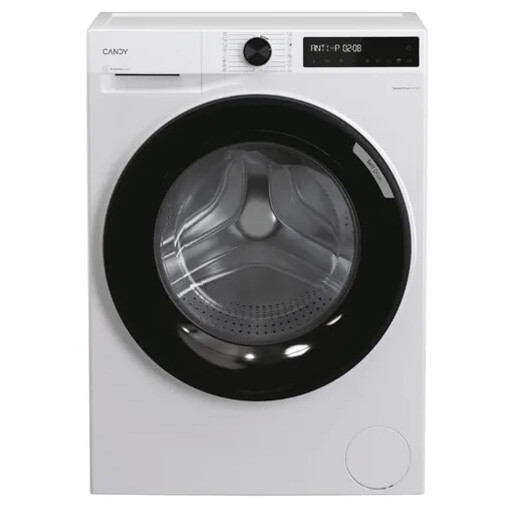 Image unavailable
Candy BR 411BL9-S, 11 kg, white
Worth considering for frequent large loads, rather than a series of small loads.
An 11 kg, A-rated front-loading washing machine. Check the manual for the permitted load for each fabric type and the duration of the cycle you’ll use.
View on Joybuy
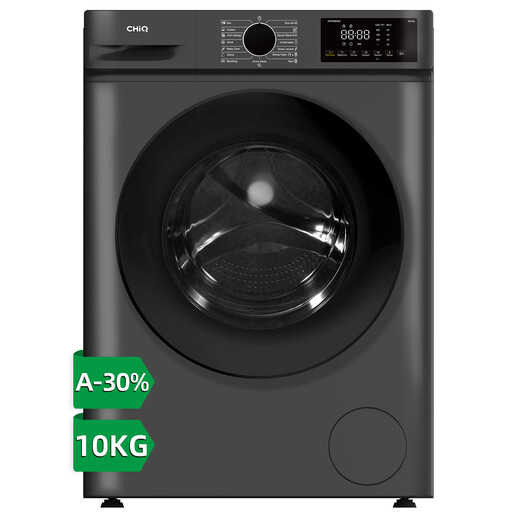 Image unavailable
CHiQ JW105883G, 10 kg, dark grey
Worth considering if your large loads regularly fill a 10 kg washing machine.
Stated spin speed of 1,400 rpm and 16 programmes. Check the label for the duration and energy and water use of the Eco 40-60 cycle, and the manual for the load limits for each programme.
View on Joybuy
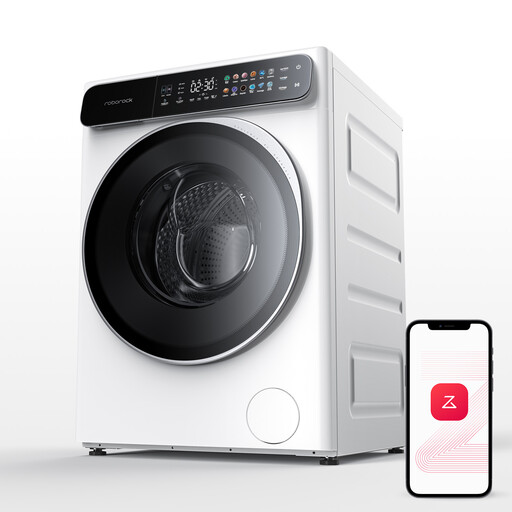 Image unavailable
Roborock Zeo One, 10 kg washing and 6 kg drying
Worth considering if you want to wash and dry with one appliance and can plan around a 6 kg drying load.
Stated capacity of 10 kg for washing and 6 kg for drying, so a maximum washing load can’t be dried in one go at full capacity. Check the dimensions and label information before installation too.
View on Joybuy
Frequently asked questions
Should I move up to 10 or 12 kg if I do several loads in a row?
Not just because the machine runs frequently. According to Que Choisir, this capacity is useful when large loads come up regularly. If your loads stay small because you sort your laundry, first check their actual size and the programme limits.
Does the stated 10 kg capacity apply to every programme?
No. The stated capacity generally applies to cotton or Eco 40-60, while other programmes take smaller loads, Que Choisir points out. Check the load chart in the manual for the fabrics you wash regularly.
What should I compare on the energy label?
For washing machines suited to the same loads, compare the energy rating, kWh per 100 cycles, litres per cycle, Eco cycle duration and noise level. ADEME presents these figures as useful points of comparison; check the washing and washing-and-drying information separately for a washer-dryer.
Can I stack a tumble dryer on top of a washing machine?
Only if the appliances and the stacking kit you choose are compatible. Check the model numbers, dimensions and manuals for both machines; Electrolux’s stated depth requirements for one of its kits don’t apply to every kit.
How can the durability index help me choose?
It gives you another way to compare washing machines, particularly for repairability, reliability and maintenance, as ADEME explains. Consider it alongside programme capacities and label information, rather than as a replacement for these factors.


