
Livraison le jour même ou le lendemain

Qualité garantie

Débloquez vos offres de bienvenue: Livraison GRATUITE | Jusqu'à -80 % | 30 jours d'essai gratuits à JoyPlus
Téléchargez l'application
Breathing healthier air at home has become a priority, especially in large living spaces where family, pets, and daily activities constantly stir the air. With a dizzying array of options, choosing the right smart air purifier for a large room can often be a real headache. Between marketing hype and confusing spec sheets, it's easy to make the wrong choice.
As a product expert at Joybuy, my mission is to guide you. Let's cut through the technical jargon and focus on what truly matters. Here are the 3 most common pitfalls to avoid to make an informed and, most importantly, future-proof decision.
To avoid these traps, here are the essential checkpoints. They are your guarantee of genuinely cleaner air and a smart investment.
A high-performance filtration system relies on the combination of three complementary stages:
The CADR (Clean Air Delivery Rate) is expressed in cubic metres per hour (m?/h). It indicates the volume of air the device can process in one hour. For a large room like a living room or an open-plan space up to 100m?, the calculation is simple:
Recommended CADR (m?/h) = Room Area (m?) × Ceiling Height (m) × 5
The number 5 corresponds to five complete air changes per hour (ACH), a rate recommended for sensitive or allergic individuals. For general use, an ACH of 3 may be sufficient.
Efficiency should never come at the expense of your peace and quiet. For a bedroom air purifier, silence isn't an option—it's a non-negotiable criterion.
Every home has specific needs. Here is a selection of products designed for different profiles, always keeping our performance criteria and the pitfalls to avoid in mind.
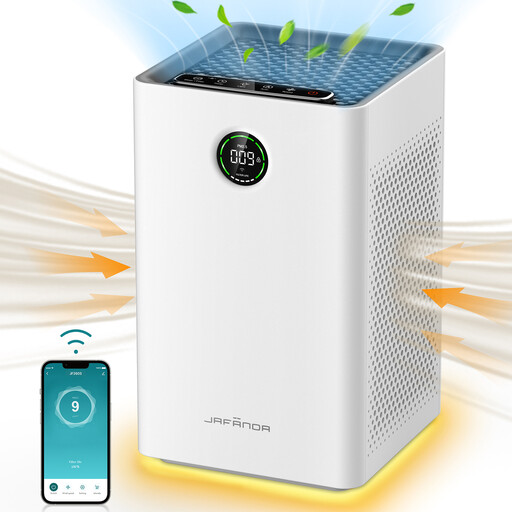
Why we chose it: Perfect for those who want to integrate air purification into their smart home ecosystem. It covers large volumes, works with voice assistants, and provides precise air quality tracking via its app.
Here, connectivity isn't a gimmick. The integrated PM2.5 sensor genuinely controls the fan in automatic mode, making the "smart" function finally useful and autonomous. Its 23 dB sleep mode solves the eternal power-versus-noise dilemma.
Complete smart home integration (Alexa air purifier, Google Assistant, app) and real-time air quality monitoring for hassle-free management.
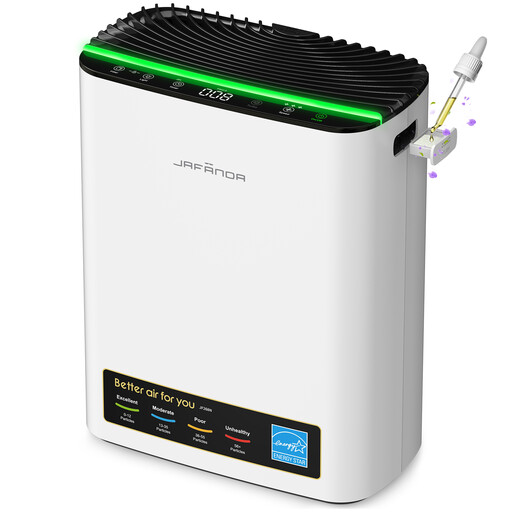
Why we chose it: For those who demand high-performance purification in a large room (up to 113 m?) without the complexity of an app. It gets straight to the point: a truly intelligent auto mode and nearly silent operation.
It focuses entirely on pure performance (268 m?/h CADR) and the autonomy of its PM2.5 sensor, without the added cost of connectivity. The filter's 3000-hour lifespan helps keep the long-term budget under control.
An optimal performance-to-area ratio, with an impressively silent sleep mode at just 20 dB. It's the champion for bedrooms and living rooms where tranquillity is paramount.
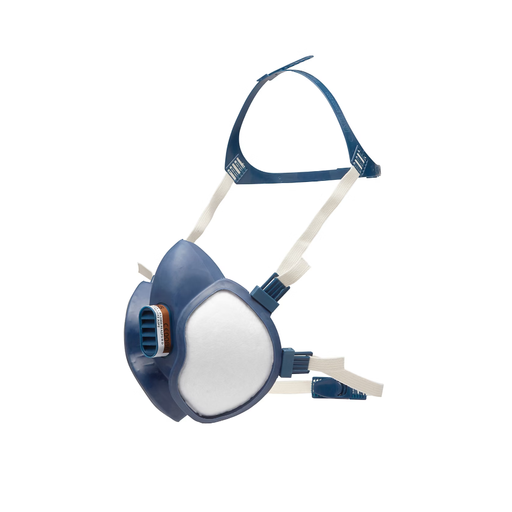
Why we chose it: Note, this is not a room air purifier, but essential personal protective equipment (PPE) for tasks that generate high levels of pollution: painting, sanding, or handling chemicals. It directly protects your respiratory system.
It addresses a specific, intense need that a room purifier cannot handle. Instead of saturating a room filter in minutes, this mask provides certified, targeted protection. It's the right tool for the right job.
Professional-grade A2P3 protection against gases, vapours, and fine particulates for maximum safety during high-risk tasks.
Purifying your air also means maintaining your everyday appliances. A clean vacuum cleaner filter, for example, is a crucial first step. Discover our selection of compatible filters.
How long does a HEPA filter last and what is the replacement cost? A HEPA filter's lifespan varies depending on usage and the ambient pollution level. Generally, a replacement is recommended every 6 to 12 months. For the Jaf?nda models in our selection, the manufacturer states 3000 hours of use, which is about 4 months of continuous (24/7) operation or over a year for 8 hours of daily use. Remember to check the replacement filter cost before buying—it's a key factor in managing your long-term budget.
Is an air purifier really effective against pet dander and pollen allergies? Absolutely, provided the device is equipped with the right filtration system. The pre-filter plays a crucial role by capturing pet dander and large dust particles. Behind it, the H13 HEPA filter is specifically designed to trap microscopic allergens like pollen, dust mites, and pet dander, which are often the cause of allergic reactions.
Where should I place my air purifier in a large room for maximum efficiency? For maximum efficiency, the device needs to "breathe". Place it in an area with free-flowing air, not stuck in a corner, behind a sofa, or under a table. A golden rule: leave at least 30 to 50 cm of free space all around it. In a large living room or open-plan area, positioning it near your main living zone (sofa, desk) is the best strategy.