
Same-day & Next-day Delivery

Quality Guaranteed

Unlock Your Welcome Offers: FREE Delivery | Up to 80% OFF | Free 30-day JoyPlus trial
Download the APP
Choosing a large outdoor planter might seem trivial, but it's a real investment for your terrace, balcony, or garden. A poor choice can quickly lead to disappointment?: a pot that cracks at the first frost, a colour that fades in the sun, or worse, a plant that withers due to poor water management. To avoid these setbacks, it's essential to know the most common pitfalls.
The market is flooded with options, but not all are created equal. Here are two classic mistakes to avoid to make an informed and lasting choice.
To ensure the longevity of your planter and the health of your plants, two criteria must be scrutinised?: material and functionality.
A planter's resistance to weather conditions depends directly on its composition. For a durable outdoor setup, certain features are non-negotiable.
Once filled, a large planter becomes heavy and difficult to handle. Fortunately, some innovations can be a game-changer.
To help you make an informed decision, here’s how these criteria apply in practice through a few typical profiles.
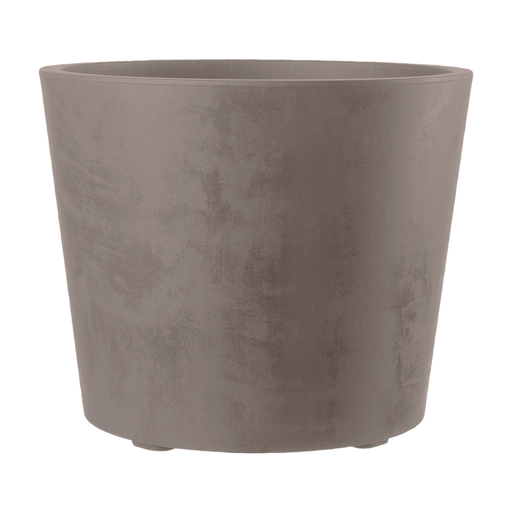
Why this choice : Ideal for those managing a large terrace or garden who are primarily looking for flexibility. This planter makes it easy to move large shrubs, whether for cleaning, protection, or simply to follow the sun's path.
Thanks to its integrated water reservoir, it solves the watering puzzle. Meanwhile, its discreet wheels put an end to the problem of large, immobile planters.
The combination of a water reservoir + wheels offers unbeatable ease of use for a planter of this size.
Why this choice : Perfect for those who want a "set it and forget it" solution. A product designed to last for years without maintenance, all while being eco-conscious.
Its design in recycled and recyclable polymer, which is frost and UV resistant, protects it from premature degradation—the weak point of entry-level pots.
Rock-solid durability and an eco-friendly design, making it a long-term investment.
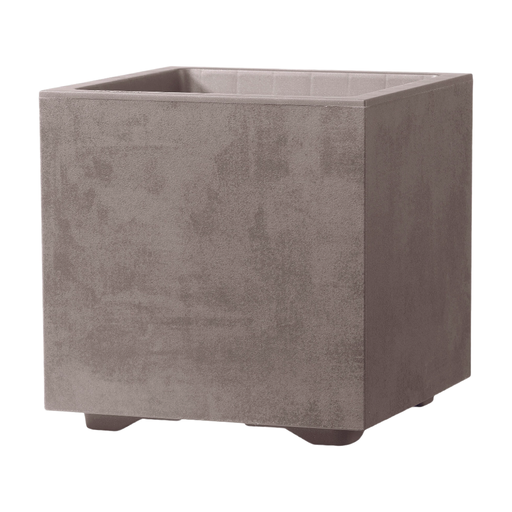
Why this choice : For those with more limited space, like a balcony, who refuse to compromise on style and quality. Its contemporary cubic shape optimises floor space.
It packs all the benefits of a large planter (frost/UV resistance, water reservoir) into a compact and stylish design.
A designer terrace planter that combines contemporary aesthetics with smart features, designed for small spaces.
We have selected a full range of products that meet our strict criteria for quality and durability.
Look for an explicit statement from the manufacturer. High-quality polypropylene or resin planters are generally a safe bet. Terracotta must be specified as "frost-proof," which means it has been fired at a very high temperature to reduce its porosity. When in doubt, a modern composite material planter is often a more reliable option for climates with harsh winters.
Most outdoor plants appreciate a regular water supply and benefit from a water reservoir, especially thirsty plants like hydrangeas or flowering annuals. However, for plants that are sensitive to stagnant moisture (such as succulents, cacti, and lavender), it's best not to use the reservoir or to ensure the planter also has excellent drainage (a drainage hole) to prevent any excess water.
A 60?cm diameter planter filled with damp soil can easily weigh over 70?kg. If it doesn't have built-in wheels, the easiest solution is to use a dolly or a wheeled plant stand. Ideally, you should place the planter on the stand before filling it. If you need to move it later, empty some of the soil to lighten it before attempting to lift it.