
Livraison le jour même ou le lendemain

Qualité garantie

Débloquez vos offres de bienvenue: Livraison GRATUITE | Jusqu'à -80 % | 30 jours d'essai gratuits à JoyPlus
Téléchargez l'application
Hands or feet hanging off your mat in the middle of Downward-Facing Dog? It's a frustration many practitioners know all too well. This lack of space disrupts concentration and restricts your range of motion. If you're looking for a large non-slip yoga mat, you've already done the hardest part: identifying the problem.
But the market is full of pitfalls that can turn a promising purchase into a real disappointment. To make the right choice, it's best to know the most common traps:
To avoid these pitfalls, focus on the technical specifications that truly make a difference. They will help you choose an exercise mat that is both durable and comfortable.
The choice of material is crucial for your mat's grip, durability, and comfort.
A standard yoga mat measures about 183 x 61 cm. For many people, especially taller individuals or those who practice dynamic flows (Vinyasa, fitness), these dimensions quickly prove to be inadequate.
Opting for an XXL yoga mat, such as a 190x100 cm gym mat, radically transforms the experience. You gain complete freedom of movement without ever having to readjust your position. This extra space is a real boost for concentration and flow.
A good non-slip fitness mat is more than just its material; its surface texture should also be considered. A dual texture is a real bonus: one textured side for hand and foot grip, and another designed to grip the floor.
Finally, a detail like an included carrying strap is a game-changer for those who travel with their mat. It's a simple accessory that makes a world of difference in your daily routine.
Enough theory—let's get practical. Here are a few models that meet specific needs, selected based on the criteria we've just discussed.
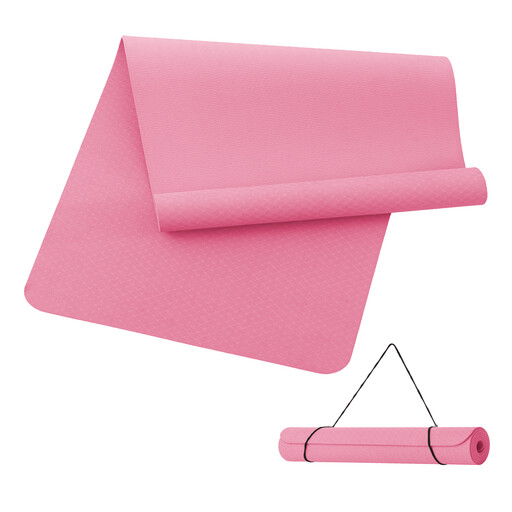
Why we chose it: Ideal for juggling yoga, Pilates, and strength training. Its generous dimensions and TPE material make it a stable and comfortable base for a multitude of floor exercises.
Its high-density TPE construction and dual-sided texture (leaf and wave patterns) directly address the problem of slippery mats. It's a more durable investment than low-end PVC or NBR options.
Versatility and space. The 190 x 100 cm dimensions offer unmatched comfort for all types of movement, while the carrying strap makes it easy to store and transport.

Why we chose it: Perfect for taller individuals or anyone who wants absolute freedom of movement. This mat transforms any corner of your home into a personal studio.
Its 6 mm thickness of dense TPE provides protective cushioning for the joints without creating the instability of an overly soft mat. It solves the dilemma between comfort and balance.
A generous practice space. The nearly 2 m? surface allows you to perform any pose without ever touching the floor, enhancing concentration and immersion in your session.
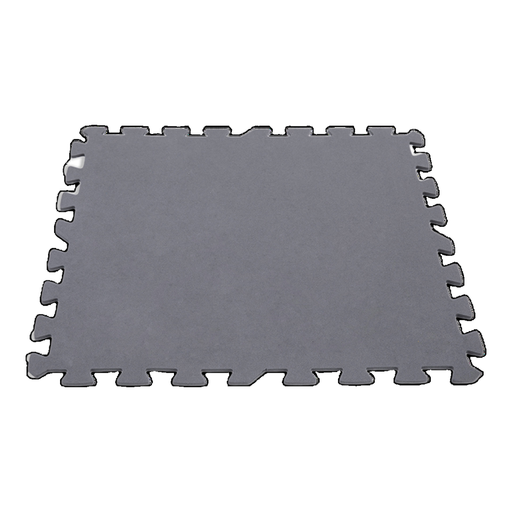
Why we chose it: For those who don't want a roll-up mat, but a solution for creating a permanent or semi-permanent training area at home. Perfect for protecting the floor and defining a fitness space.
Unlike a single mat, this modular system allows you to cover a custom-sized area. The interlocking tiles create a stable surface that won't shift, solving the problem of mats moving during dynamic exercises.
Modularity and protection. The 8-tile set covers 2 m? and can be expanded. It's a perfect solution for placing under fitness equipment or for creating a large play or exercise area.
For more specific needs, such as gymnastics or high-impact workouts, explore our selection of dedicated products.
It's incredibly simple. After your session, wipe it down with a damp cloth, using a drop of mild soap if needed. Rinse with another damp cloth to remove any soap residue, then let it air-dry. Just avoid exposing it to direct sunlight, which can degrade the material over time, and steer clear of harsh chemicals or machine washing.
With proper care, a high-quality TPE mat will last for several years, even with regular practice. Its resistance to wear and deformation is far superior to that of PVC or NBR models. In short, it's an investment built to last.
Yes, as long as the material is dense enough. A thickness of 6 mm in TPE is an excellent compromise. It offers enough cushioning to protect your knees, wrists, and spine, while remaining firm enough to ensure good stability in balancing poses. The key isn't just the thickness, but the material's ability to absorb impact without bottoming out.