
Livraison le jour même ou le lendemain

Qualité garantie

Débloquez vos offres de bienvenue: Livraison GRATUITE | Jusqu'à -80 % | 30 jours d'essai gratuits à JoyPlus
Téléchargez l'application
A large Moleskine notebook can find its place in a student's bag, on a work desk, or alongside a creative project. Note-taking, meetings, sketches, bullet journals or daily organisation: the available surface area genuinely changes how you use it. But you still need to choose the right model. With names like "Large" and "XXL", different ruling types, and accessories of varying usefulness, a few checks are in order before you place your order.
Two notebooks presented as "large" can have noticeably different dimensions. The Large format generally suits everyday note-taking, while an XXL model offers more room for plans, diagrams and drawings. So don't rely solely on the collection name: check the exact dimensions listed on the product page.
A lined notebook remains the simplest choice for meeting minutes, lectures and continuous text. A plain notebook gives you complete freedom for drawing, creating mind maps or keeping a creative journal. In between, the dotted grid notebook helps you structure the page without imposing lines that are too prominent. For writing long notes, a squared notebook can quickly become tiresome; conversely, a plain notebook isn't ideal for neatly aligning tables or lists.
A hard cover withstands repeated travel better and effectively protects the pages inside a bag. A soft cover, on the other hand, is lighter and more pleasant to slip anywhere. Also consider the binding, whether it lies flat, the presence of an elastic closure, a bookmark and an inner pocket. It's these details that make the difference day to day.
For versatile use, the Large format offers a good compromise between writing space and ease of transport. The XXL notebook is more suited to architects, students who create lots of diagrams, or professionals who want to bring several subjects together in one volume. If the notebook needs to travel in a rucksack or messenger bag, also check its weight and thickness.
The A4 format, like the Clairefontaine Zap Book, is particularly well suited to drawings and large documents. However, it's less practical for short trips and on-the-go note-taking.
Paper weight refers to the weight of the paper, expressed in grams per square metre. The models shown here use paper of 70, 90, 100 or 120 g/m². A higher weight often feels denser and more premium, but it doesn't guarantee that a paper will perfectly withstand a fountain pen, felt-tip pen or marker.
Acid-free paper is designed to resist yellowing better over the years. The FSC and PEFC labels provide, depending on the product, information about certification and responsible material sourcing. They don't predict writing comfort, but they help you better understand the origin of the paper used.
A 180° opening makes writing near the spine easier and lets you make full use of both pages of a spread. The expandable pocket can hold a few sheets, tickets or cards. As for the detachable last pages, they're handy for passing on a note or getting rid of a draft.
For heavy use, also look at the quality of the elastic closure, the sturdiness of the stitching, and the notebook's ability to stay open without needing to be held down constantly.
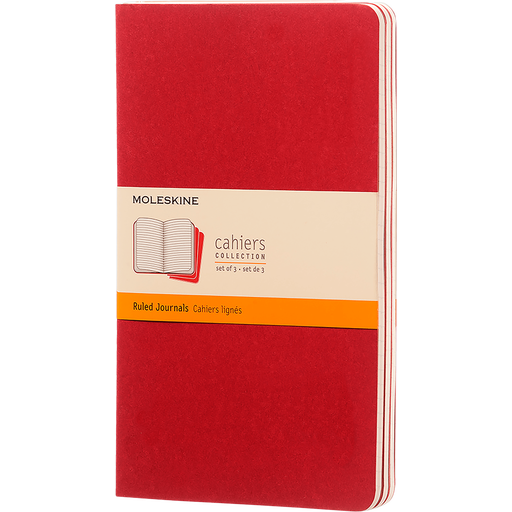
Why this choice suits this profile: This set lets you reserve one notebook for lectures, another for work and a third for personal ideas, without exceeding the budget of a single, more sophisticated model.
The lined ruling is clearly stated, while the three volumes prevent different uses from having to coexist in a single notebook.
Acid-free ivory paper at 70 g/m², hard cover, visible stitching and 16 detachable last sheets.
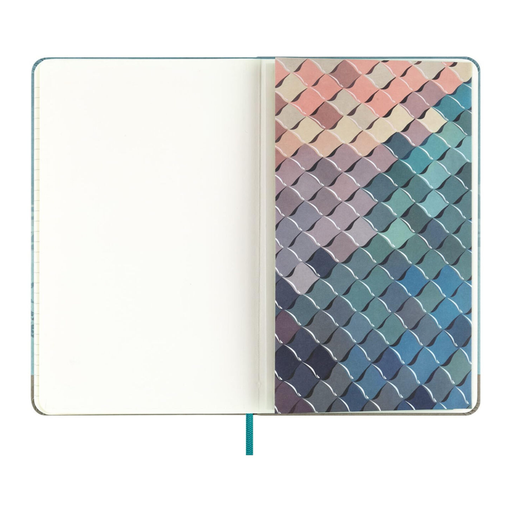
Why this choice suits this profile: Its cover inspired by Casa Batlló will appeal to lovers of art, architecture and fine stationery.
The product page details the cover, ruling and accessories: the aesthetics don't stand in for the technical specifications.
Lined ivory paper at 100 g/m², elastic closure, bookmark, expandable pocket and lies flat.
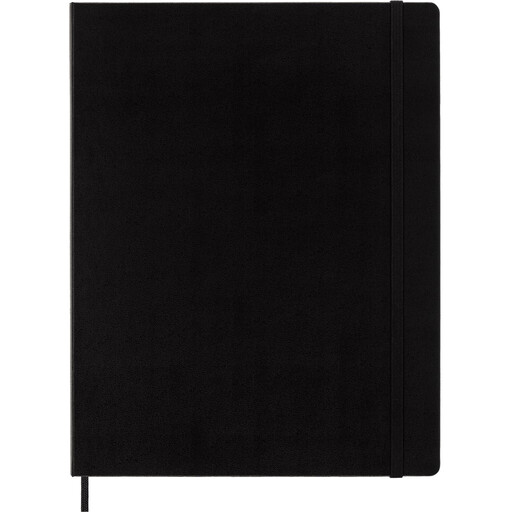
Why this choice suits this profile: Its very large surface area is ideal for architects' plans, detailed projects, large-scale sketches and particularly extensive note-taking.
The XXL format is explicitly stated and the hard cover offers better protection during regular travel.
Acid-free ivory paper at 70 g/m², inner pocket, bookmark, elastic closure and 180° opening.
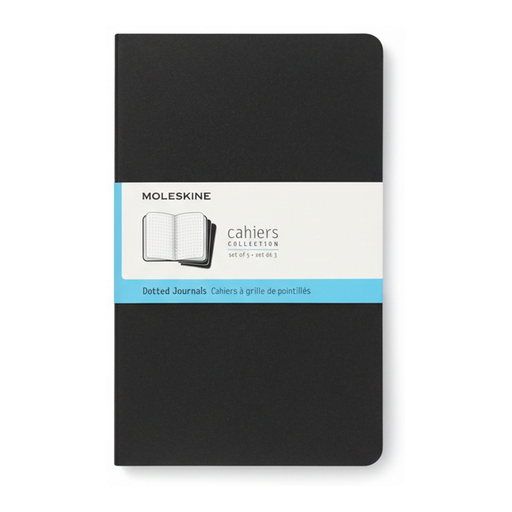
Why this choice suits this profile: The dotted grid lends itself to bullet journals, sketches, diagrams and fully customised pages.
The dots serve as a discreet guide, without the sometimes overpowering effect of very visible squares in a creative layout.
Set of three notebooks, acid-free dotted ivory paper at 70 g/m² and detachable last pages.
Find a complete and up-to-date selection of products that meet these criteria, while also taking European safety requirements into account.
Lined paper remains the most suitable for meeting minutes, lectures and continuous text. If you want to mix writing, diagrams and visual organisation, the dotted grid offers more freedom. Plain paper is best for drawing, sketching and layouts without constraints.
A hard cover protects the pages better in a messenger bag or rucksack and can provide a more stable surface for writing. However, it does make the notebook heavier. When you're on the move, weigh up the level of protection you need against the lightness of a soft cover.
It all depends on how often you use it, the storage conditions and how the notebook is handled. Keep it in a dry place, away from direct sunlight and moisture. Avoid pulling too hard on the elastic closure and remove the detachable sheets carefully.