Who are these options suited to?
The right capacity depends mainly on the loads you wash regularly, while your drying needs and available space may affect the type of appliance you should choose.
Households with lots of bedding and towels
If sheets, towels and clothes often fill several laundry baskets, compare usable capacity and programme duration before settling on a large front-loader. A bigger drum is only worthwhile if it suits the loads you usually wash.
Households that wash and dry loads back to back
If you need to finish several loads in a day, separate washing machine and tumble dryer allow one load to dry while the next is being washed, provided you have space for both appliances. UFC-Que Choisir points out that a washer-dryer can dry less laundry than it can wash, and takes longer to dry a load than a conventional tumble dryer.
Households short on width
A top-loading washing machine is worth considering if a front-loader won’t fit in the space available. Check its capacity against the large loads you usually wash: a smaller-capacity appliance could mean running more cycles.
What should you compare before choosing?
First choose the set-up that works for your loads and your space, then compare the figures for the specific models you’re considering.
Large-capacity front-loader
Worth considering: if you regularly wash large loads and have room for a front-loader.
Trade-off: a larger capacity doesn’t necessarily mean shorter washes; UFC-Que Choisir notes that greater capacity in front-loaders can go hand in hand with longer programmes.
Top-loader
Worth considering: if there isn’t enough width for a front-loader or you prefer to load laundry from the top.
Trade-off: check that the model’s capacity is suitable for the large loads you wash regularly.
Washer-dryer
Worth considering: if you want to wash and dry with a single appliance, particularly if your drying loads are modest.
Trade-off: according to UFC-Que Choisir, drying capacity is lower than washing capacity, and drying takes longer than with a conventional tumble dryer.
Separate tumble dryer
Worth considering: if you need to process several loads at once and have room for two appliances.
Trade-off: stacking appliances requires compatible models and a stacking kit, as UFC-Que Choisir points out.
| Criterion | What to check | Your needs |
|---|
| Usable capacity |
Compare the advertised capacity in kilograms with your usual loads, then check the appliance dimensions and, if stated, the drum volume. |
My laundry baskets are often full; I want to combine loads without buying a large drum that would usually be underfilled. |
| Turnaround time |
Check the duration of the Eco 40-60 programme for the exact model. With a washer-dryer, compare washing and drying capacities and durations separately. |
When I have several loads waiting, I need to know how long each cycle will keep the machine occupied. |
| Water and energy |
Check the energy label: compare kWh per 100 cycles and litres per cycle across appliances of the same type and with similar capacities. ADEME recommends using this label when choosing an appliance. |
I do laundry every week, so I want to check the stated water and electricity use, not just the energy rating. |
| Spin noise |
Compare the declared spin noise level in dB and check the manufacturer’s installation requirements. |
The machine will often be running while people are at home, so spin noise matters to me. |
| Maintenance |
Check the manual for access to the filter, door seal and detergent drawer. In France, the durability index has applied to washing machines since 8 April 2025, according to the ministry responsible for ecology. |
I’ll use the appliance regularly, so I want to be able to carry out routine maintenance and compare durability information. |
| Installation |
Measure the available width and depth, as well as the clearance needed. If stacking two appliances, check they are compatible and find out which kit is required. |
I need to be able to open and use the appliance without blocking access, even if I choose two machines. |
Which brand models should you consider?
These examples show different configurations you can compare; the specifications refer to the models listed, not every appliance from each brand.
Bosch
The WNG254AQFR washer-dryer and the separate WQH246CSFR tumble dryer show two ways to organise your drying.
- Bosch lists a washing capacity of 10,5 kg on its own, but 6 kg for washing and drying in one go with the WNG254AQFR.
- Bosch’s specifications for the WQH246CSFR list a capacity of 9 kg: check how much room it needs and whether it’s suitable for the washing machine you’re considering.
LG
The F24962WH is an example of a front-loader to consider when comparing capacity and overall size.
- LG lists a 12 kg capacity, a 77 L drum and a 1 400 tr/min spin speed for this model.
- Its stated depth is 64 cm; remember to measure the clearance needed for installation too.
Miele
The WWD380 WCS is another front-loader to consider if a 9 kg capacity suits your loads.
- For this model, Miele lists a 9 kg capacity, a 1 400 tr/min spin speed and a 49-minute QuickPowerWash programme.
- The 49-minute duration applies to this specific programme; check the Eco 40-60 duration too, so you can compare it with your usual use.
Which appliances should you look at on Joybuy?
These options include 10 kg front-loading washing machines and washer-dryers with a 10 kg washing and 6 kg drying capacity. Compare them based on the size of your usual loads and how much laundry you want to dry.
 Image unavailable
Haier X Series 11 HW100-BD14397PGU1, 10 kg
This front-loader is worth comparing if you regularly wash large loads. Its product title lists a 10 kg capacity, 1 400 tr/min spin speed, an A rating and AutoDose; check the programme durations against how often you do laundry.
View on Joybuy
 Image unavailable
Electrolux EWF1410N2, 10 kg front-loader
This model is worth considering if a 10 kg washing capacity suits your usual loads. Its product title mentions TimeSave; check the duration of the programme you’ll use, especially Eco 40-60, rather than assuming how long it takes from the name of this feature.
View on Joybuy
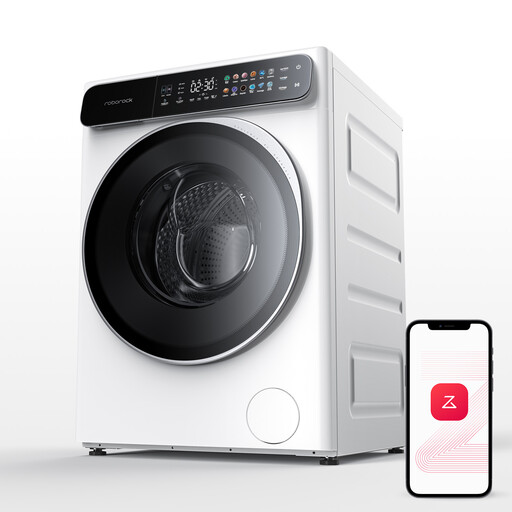 Image unavailable
Roborock Zeo One, white, 10 kg washing and 6 kg drying capacity
This washer-dryer combines both functions in one appliance. Its product title lists a 10 kg washing capacity and a 6 kg drying capacity, so a load washed at full capacity won’t fit in the dryer all at once. Check the dimensions and cycle durations to see if it suits your space and routine.
View on Joybuy
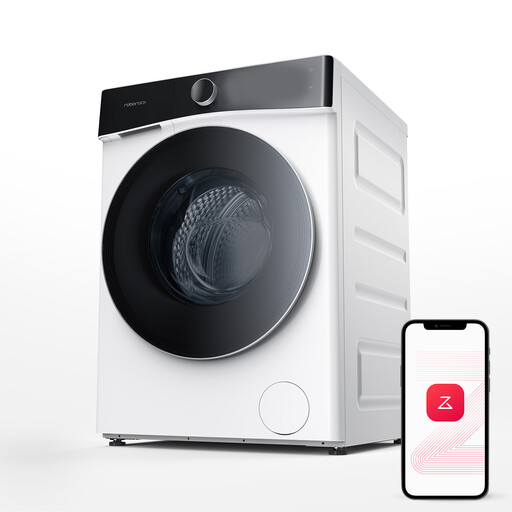 Image unavailable
Roborock Zeo Lite, white, 10 kg washing and 6 kg drying capacity
This washer-dryer is worth considering if you want one appliance for both tasks. It lists a 10 kg washing capacity and a 6 kg drying capacity, so you’ll need to split a larger load if you plan to dry it afterwards. Compare the model’s cycle durations and dimensions before choosing.
View on Joybuy
 Image unavailable
Samsung WD10HG6U34BEU3, 10 kg washing and 6 kg drying capacity
This washer-dryer gives you another all-in-one option to compare. Its product title lists a 10 kg washing capacity, a 6 kg drying capacity and a D rating; check the washing and wash-and-dry cycle durations separately if you need to process loads back to back.
View on Joybuy
Frequently asked questions
What capacity should I choose if I regularly wash large loads?
Start by matching the capacity to your usual loads, rather than automatically choosing the biggest drum. If you regularly wash large loads, also check the appliance’s depth, Eco 40-60 duration, water use per cycle and noise level; UFC-Que Choisir notes that a larger front-loader capacity can go hand in hand with longer programmes.
Can a washer-dryer dry a whole load after washing it?
Not if the load exceeds its drying capacity. UFC-Que Choisir points out that this is lower than the washing capacity. For example, Bosch lists a 10,5 kg washing capacity on its own, compared with 6 kg for washing and drying in one go on the WNG254AQFR. Check both figures for the model you choose.
When should I choose a separate tumble dryer?
A separate tumble dryer makes it easier to get through several loads in the same day, if you have enough room: one load can dry while the next is being washed. UFC-Que Choisir notes that a washer-dryer can dry less laundry than it can wash, and takes longer to dry a load than a conventional tumble dryer.
Can I stack a tumble dryer on top of a washing machine?
Yes, as long as both front-loading appliances and the installation are compatible. UFC-Que Choisir notes that stacking appliances requires a stacking kit; check the manuals for the models you’re considering and measure the space before ordering.
What is the durability index for washing machines in France?
It helps you assess durability alongside the washing specifications. According to the ministry responsible for ecology, the index has applied to washing machines in France since 8 April 2025 and provides information on reliability, repairability, spare parts and maintenance, among other things. It doesn’t replace comparing the capacities, cycles and dimensions that suit your household.


