How do capacities compare?
Start by considering how often you fill the drum, then check the load limits for each programme and the space available. To compare energy use, ADEME recommends looking beyond the energy class alone.
| What to consider | What to check | Who is it for? |
|---|
| How often you wash large loads |
Look at your usual cotton and household linen loads, and compare them with capacities of 8 to 9 kg and 10 to 12 kg. |
If your baskets are regularly full, reducing the number of cycles becomes the main priority. Around 31% of consumers would prioritise a capacity that suits their frequent large loads. |
| Bulky items |
Check the maximum load for the programme designed for duvets or throws, and measure the clearance needed for the door. |
If you often wash thick duvets or large throws at home, make sure the item fits in the machine and is suitable for the programme you choose. Around 19% of consumers would make this a priority. |
| Space and versatility |
Measure the access route, the machine’s depth and the space needed with the door open; check the maximum load for other programmes. |
If space is limited, I want to be able to wash large loads without choosing a machine that’s too deep to install and use. This would be a priority for around 25% of consumers. |
| Part-loads |
Compare the Eco 40-60 figures on the energy label and check the conditions for any load-adjustment features. |
If you alternate between small and large washes, extra capacity shouldn’t be your only consideration: energy and water use and programmes matter too. Around 25% of consumers would make this flexibility their main concern. |
Brands to consider
These examples highlight features to check on a specific model; they don’t tell you how every model from a particular brand will perform.
Bosch
The WGG254FAFR is a 10 kg front-loading model. Bosch France lists its dimensions as 845 × 598 × 588 mm.
- The stated dimensions let you check whether this model will fit in your chosen space.
- Also check the clearance needed to open the door and the load limits for the programmes you usually use.
LG
LG France lists the F14R76PLST as an 11 kg model with load detection and automatic water-level adjustment.
- These features are worth looking at if the size of your loads often varies.
- Their presence alone doesn’t show how much energy and water the machine uses on part-loads or how well it rinses.
Samsung
Samsung France describes the WW11DG6B25LEU3 as an 11 kg connected washing machine with AI Energy mode.
- Samsung says this mode lets you monitor energy use and estimate your bill.
- Check which programmes support the mode and the conditions for using it. This description isn’t an independent measure of the savings you’ll make.
Haier
Haier France lists the HW100-B14959U1 as a 10 kg model with a 1 400 rpm spin speed and dimensions of 595 × 583 × 850 mm.
- These specifications help you compare this model’s stated capacity and dimensions.
- Before choosing, check the door clearance, energy label and programmes that suit your household.
Washing machines to consider on Joybuy
These 9, 10 and 11 kg front-loading washing machines are suited to households that regularly wash large loads. The right choice also depends on the items you wash, the load limits for each programme and the space available.
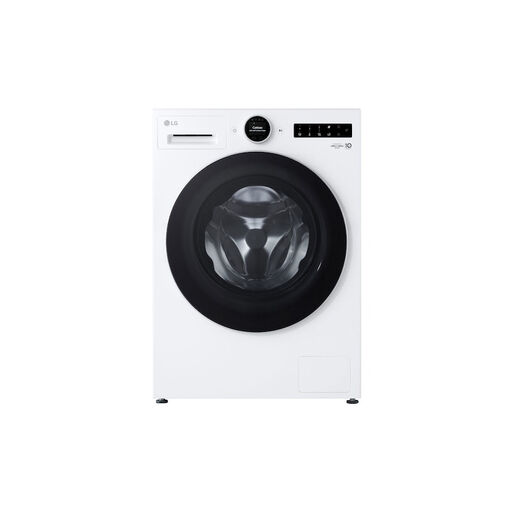 Image unavailable
LG F4WX851Y, 11 kg, A rated
Worth considering if you often wash large loads and want to look at features designed for varying load sizes. This front-loading model is listed with an 11 kg capacity and an A energy rating. Check the manual for the load limits of each programme, and measure the space needed for the door.
View on Joybuy
 Image unavailable
Haier X Series 11 HW100-BD14397PGU1, 10 kg
A capacity to consider if your baskets are often full, but you don’t need an 11 kg drum. The model name indicates a 10 kg capacity, a 1 400 rpm spin speed and an A energy rating. Check the load limits for each programme and the clearance needed for installation.
View on Joybuy
 Image unavailable
Electrolux EWF1410N2, 10 kg
This 10 kg front-loading machine is suited to households that regularly wash large loads. To check whether it’s also suitable for your woollens or delicates, look at the maximum load for each programme. Also check that you have enough space with the door open.
View on Joybuy
 Image unavailable
Electrolux EW7FI259160V, 9 kg, 1 600 rpm
A mid-sized capacity to consider if you sometimes wash large loads but don’t regularly fill a 10 to 12 kg drum. This model is listed with a 9 kg capacity and a maximum spin speed of 1 600 rpm. Check the load limits for your laundry and the space needed for installation.
View on Joybuy
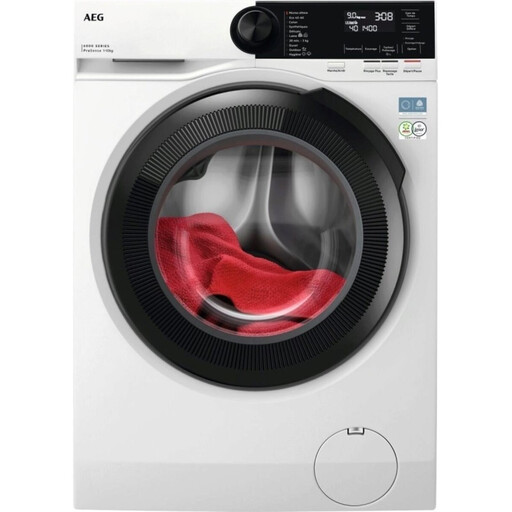 Image unavailable
AEG LFR62E114S, 10 kg, A rated
Worth considering if your usual laundry loads call for a 10 kg drum. This front-loading model is listed with a maximum spin speed of 1 400 rpm and an A energy rating. Compare the detailed figures on the energy label, and measure the access route and the space needed to open the door.
View on Joybuy
Frequently asked questions
Does the stated capacity apply to every programme?
No. UFC-Que Choisir points out that the stated capacity refers to dry laundry for reference programmes, particularly cotton or Eco 40-60. The maximum loads may be lower for synthetics, wool and delicates. Check the programme table for the model you’re considering.
How do you compare two A-rated washing machines with large capacities?
Compare like for like: kWh per 100 cycles, litres per cycle, Eco 40-60 cycle duration, noise and spin information. The European energy label shows these details, but it isn’t enough to establish how well other programmes wash or rinse.
Do the energy-use figures take half-loads into account?
Yes. The weighted regulatory figures for the Eco 40-60 programme take the stated capacity, half-load and quarter-load into account, under the framework set out by the European Commission. However, they don’t show the energy and water use of every other programme. Check the model’s product information sheet to compare it with your usual use.
Which durability rating should I check for a washing machine in France?
Check the durability rating shown for the model. According to ADEME, displaying this rating has been compulsory in France for the washing machines covered since April 2025. It relates to reliability and repairability. Read the information that accompanies the rating rather than treating it as a guaranteed lifespan.
Does the legal guarantee also cover a second-hand washing machine?
Yes. In France, when a business sells a washing machine to an individual, the legal guarantee of conformity applies to new, second-hand and refurbished goods, according to the French Ministry of the Economy. This is separate from a commercial warranty offered by the seller or manufacturer. Keep the product description and your proof of purchase.


